
🪶 Hindu Festivals
Janmashtami Puja Guide: Krishna Birth Celebration at Home
Last updated: September 26, 2026
Janmashtami celebrates Krishna's birth through prayer, song, stories, and remembrance of divine wisdom, playfulness, and compassion.
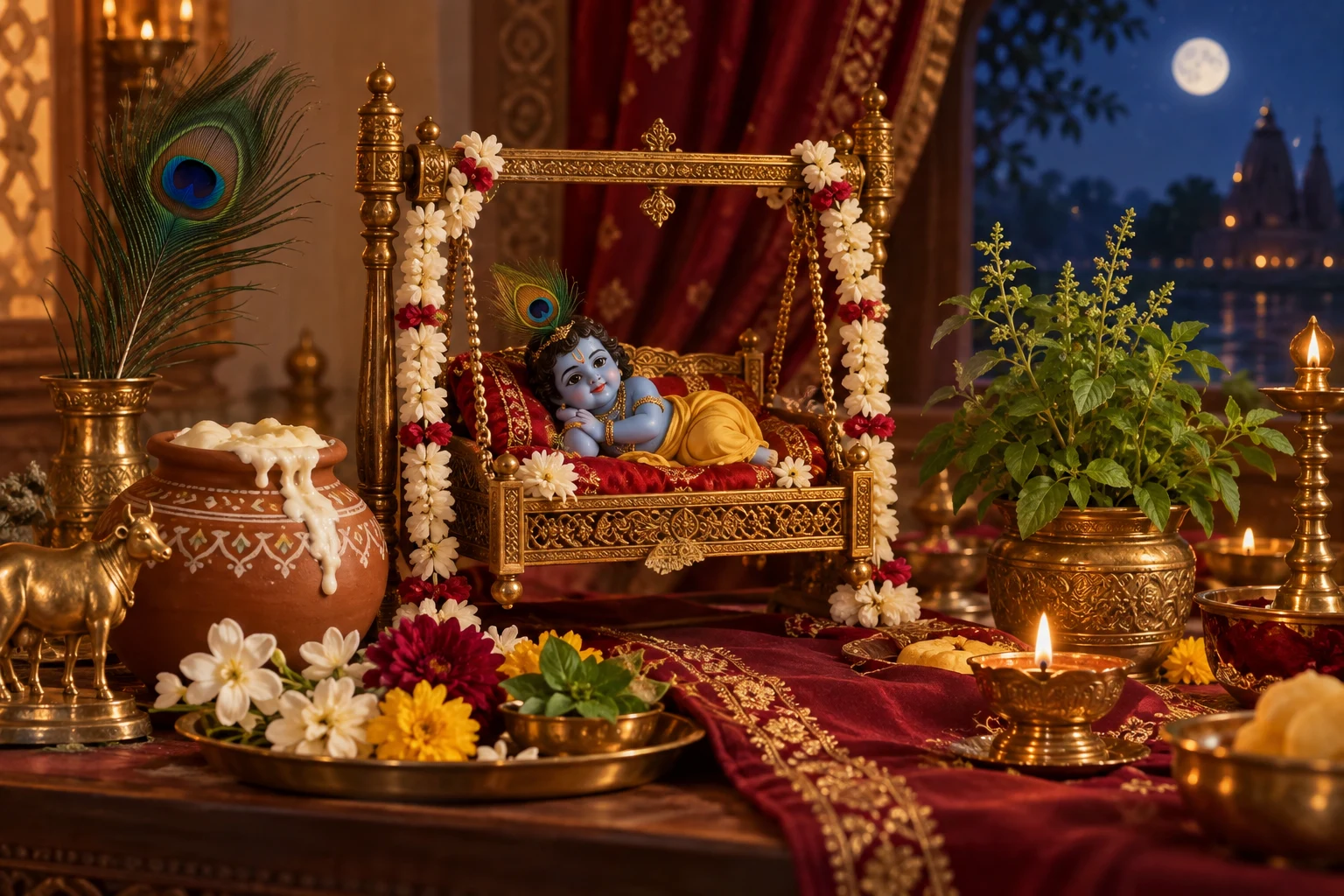
Janmashtami celebrates the birth of Krishna with prayer, music, sacred stories and joyful hospitality. Many households fast during part of the day, decorate a small cradle, and mark the birth at midnight. Other families worship earlier or attend a temple. Regional and sampradaya traditions differ, so this guide offers a flexible home framework rather than one compulsory ritual.
Krishna’s childhood stories express affection, protection and divine play, while the Bhagavad Gita presents him as Arjuna’s teacher of discernment and disciplined action. A balanced Janmashtami remembers both dimensions: delight in the divine child and attention to the wisdom Krishna teaches.
What to prepare
Use what you already have rather than treating puja as a shopping requirement:
- an image or murti of baby Krishna or Krishna
- a clean cloth and a stable altar or low table
- a diya, used only where it can burn safely, or an electric lamp
- fresh water, flowers and fruit
- a simple vegetarian sweet or family offering
- a small cradle, peacock feather or flute decoration if customary
- a bell, aarti lamp and scripture if these belong to your practice
Freshness and care matter more than quantity. Do not place milk, oil or other substances on a murti unless it is designed for ritual bathing and you know how to clean it safely.
Simple Janmashtami puja steps
- Prepare yourself and the space. Bathe or wash hands and face, tidy the altar and sit quietly for a few breaths.
- State your intention. Pray for clarity, compassion and devotion, or name a quality of Krishna you want to cultivate.
- Welcome Krishna. Light the lamp safely and offer water, flowers and food one by one. A child can place a flower or gently rock the decorated cradle.
- Chant or sing. Repeat a Krishna name, sing a familiar bhajan, or use the Hare Krishna Maha Mantra. Pronounce sincerely rather than rushing for a high count.
- Read with context. Choose a short episode from the stories of Lord Krishna or a few Gita verses. Discuss what the passage asks of you in ordinary life.
- Perform aarti. Sing the Krishna aarti if it is part of your tradition. Keep flame away from loose clothing and children.
- Close and share. Offer gratitude, bow, and distribute the food as prasad without waste.
If your family observes the birth at midnight, the cradle may be rocked and songs sung at that time. A shorter daytime puja is a sensible alternative when late-night worship would harm health or disrupt necessary responsibilities.
Fasting with care
Janmashtami fasts range from avoiding particular foods to taking fruit and milk or abstaining until the chosen worship time. Follow a trusted family or spiritual guide, not an anonymous rigid rule. Children, pregnant or breastfeeding people, older adults, people taking medication, and anyone managing diabetes or another health condition should seek appropriate medical advice and should not fast unsafely.
Fasting can also mean restraint in speech, media consumption or waste. A calm day with simple meals and attentive prayer may serve the festival’s purpose better than an exhausting fast followed by irritability.
A meaningful family observance
Give children active, age-appropriate roles: make a paper flute, draw Krishna’s footprints toward the altar, choose a flower, sing a refrain, or retell one story. Explain that decorations point toward welcome and affection; they are not competitions.
After worship, choose one practical expression of Krishna’s teaching—share food, reconcile after an argument, care for an animal, or complete a duty without demanding praise. This joins celebration with the Gita’s emphasis on responsible action.
Common mistakes to avoid
- Do not claim that one regional timing or menu is universal.
- Do not pressure anyone to fast, stay awake or spend beyond their means.
- Keep lamps, crowded altars and small decorative objects safe around children and pets.
- Avoid wasting food, flowers, plastic decorations or large quantities of bathing ingredients.
- Do not turn a reflective festival into noise that disregards neighbours.
Janmashtami can be simple: a clean place, a sincere offering, a Krishna story, a song and one compassionate action. What makes the observance durable is not its scale, but the quality of attention carried into the following day.
Frequently Asked Questions
How can I perform Janmashtami puja at home?
Prepare a clean altar, welcome Krishna with a simple prayer, offer water, flowers, fruit or a family-approved sweet, read or sing about Krishna, and conclude with aarti and prasad. The exact sequence may follow your family or sampradaya.
Must Janmashtami puja be performed at midnight?
Many devotees mark Krishna's birth at midnight, but this is not practical or customary for everyone. A sincere observance at a suitable time, especially for children, older adults or people with health needs, remains meaningful.
What food can be offered on Janmashtami?
Fruit, milk preparations, butter, mishri and regional sweets are common, but customs vary. Offer only clean vegetarian food acceptable in your tradition, prepared with care, and avoid waste.
Is fasting compulsory on Janmashtami?
No single fasting rule applies to every devotee. Follow family and community practice while adapting for health, pregnancy, medication, age and physical work; devotion should not require unsafe deprivation.