
🇮🇳 Indian National Days
Independence Day of India: History, Meaning, and Significance
Last updated: September 26, 2026
India's Independence Day remembers the end of colonial rule and the responsibilities that come with freedom, democracy, and national self-determination.
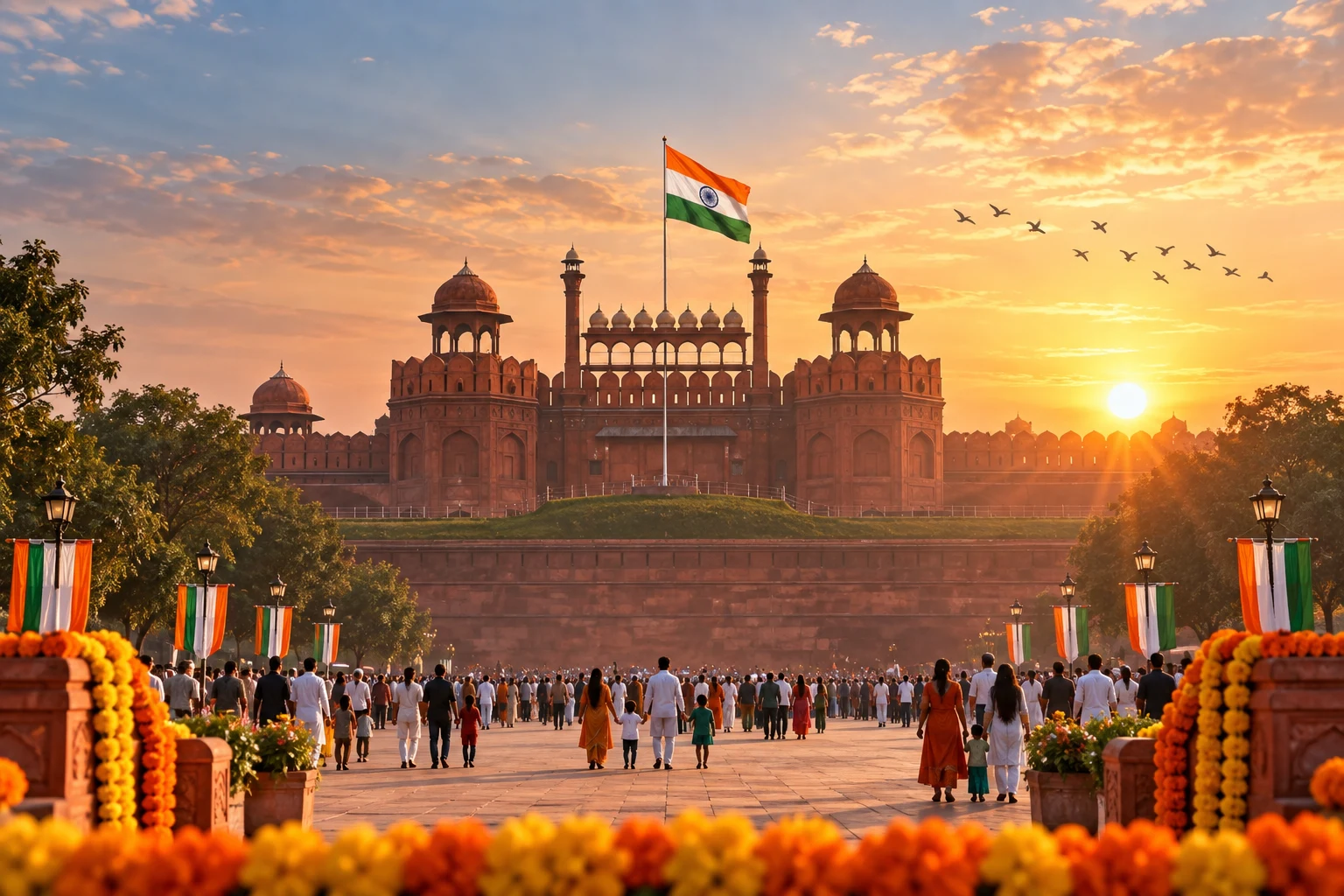
India celebrates Independence Day on 15 August each year. The day marks the end of British colonial rule in 1947 and remembers a freedom movement shaped by people from many regions, communities, and political traditions. It is a celebration, but also a day to consider what self-government requires of citizens.
Why 15 August is important
The Indian Independence Act 1947 provided for two independent dominions. At midnight, Jawaharlal Nehru delivered the speech remembered as “Tryst with Destiny,” and India entered a new political era. The first Independence Day therefore represents national self-determination after roughly two centuries of expanding British control in the subcontinent.
Independence also came with Partition. Millions crossed new borders amid fear, loss, and communal violence. Responsible remembrance holds liberation and human suffering together; celebration need not erase grief. The National Archives of India preserves records that help students move beyond simplified timelines and encounter the period through documents.
The freedom movement
India’s independence was shaped by decades of resistance, political organising, journalism, social reform, labour action, revolutionary activity, constitutional negotiation, and mass movements. The Revolt of 1857, founding of the Indian National Congress, Swadeshi movement, campaigns led by Mahatma Gandhi, revolutionary networks, the Indian National Army, and many regional struggles all belong to a much larger history.
Women, Adivasi communities, Dalit leaders, peasants, workers, students, lawyers, writers, soldiers, and overseas Indians contributed in distinct ways. There were disagreements about tactics, the future economy, minority safeguards, caste, and the shape of the state. Exploring those disagreements makes freedom history more complete, not less patriotic. VedicVani’s Gandhi Jayanti guide introduces one influential philosophy within this broad movement.
How the day is observed
The Prime Minister hoists the national flag at the Red Fort in Delhi and addresses the nation. The ceremony includes honours, cultural representation, and remembrance of those who served the freedom struggle. State governments, local bodies, schools, workplaces, and neighbourhood groups organise their own flag ceremonies and educational programmes.
Flag use should be respectful rather than disposable decoration. Follow the current Flag Code guidance from the Ministry of Home Affairs, keep the flag clean and undamaged, and do not leave paper or plastic tricolours on roads after an event. Requirements can change, so official guidance matters more than forwarded graphics.
Independence Day and Republic Day
Independence Day marks the transfer of power on 15 August 1947. Republic Day marks 26 January 1950, when the Constitution came into force and India became a republic. The Prime Minister leads the central Independence Day flag ceremony; the President is central to the Republic Day celebration. Understanding the distinction connects freedom with the constitutional framework built afterward.
The responsibility of freedom
Independence is not only a historical memory. It asks citizens to protect equality, constitutional rights, public institutions, and the dignity of people with whom they disagree. National pride is strongest when it includes honest history and practical responsibility.
Choose one focused observance: read a freedom fighter’s letters, record an elder’s memories with consent, visit a museum, learn the flag rules, join a useful community effort, or study one constitutional right and its corresponding civic duty. Schools can assign different local figures rather than repeating the same few biographies.
Build a more complete local history
A useful school or family project is to research how the freedom movement appeared locally. Search district gazetteers, archives, newspapers, memorial plaques, and oral histories. Record who organised meetings, printed material, joined labour action, supported refugees, or experienced Partition. Verify dates and distinguish family memory from documented fact without dismissing either.
When interviewing an elder, ask permission before recording or publishing. Do not pressure anyone to revisit traumatic memories. Label edited excerpts, preserve the speaker’s context, and deposit useful material with a library or archive if the family agrees. National history becomes more meaningful when people can connect a public timeline with the places around them.
Avoid turning the day into partisan hostility or treating criticism as disloyalty. The freedom movement contained argument, dissent, and competing visions of India. The continuing task is to make liberty real in daily life—through fair treatment, careful voting, public cleanliness, rejection of communal hatred, and attention to neighbours whose freedom remains constrained.
Frequently Asked Questions
Why does India celebrate Independence Day on 15 August?
India became independent from British colonial rule on 15 August 1947, following the enactment of the Indian Independence Act and the transfer of power.
Who hoists the flag on Independence Day?
The Prime Minister hoists the national flag at the Red Fort in Delhi. State and local ceremonies are led by the appropriate constitutional or institutional authorities.
How is Independence Day different from Republic Day?
Independence Day marks freedom from colonial rule in 1947; Republic Day marks the Constitution of India coming into force on 26 January 1950.
What are the rules for displaying India's national flag?
The Flag Code of India and relevant law govern respectful display. Use an undamaged flag, place it correctly, and follow current Ministry of Home Affairs guidance.