
📿 Festivals
Jaya Ekadashi 2027: Date, Parana Time and Vrat Katha
Last updated: November 22, 2026
Jaya Ekadashi in 2027 is on Wednesday, 17 February, with parana on Thursday morning. Here are the verified New Delhi times and the Padma Purana katha of the gandharva and the apsara.
Jaya Ekadashi 2027 falls on Wednesday, 17 February. It is the Shukla Ekadashi of Magha in the Purnimanta calendar used in North India (and of Magha in the Amanta calendar as well, because this is a bright-fortnight date). In 2027, Smarta and Vaishnava calendars keep the same civil day: the tithi begins in the evening of 16 February, so the sunrise of the 17th already has Ekadashi.
Times below are for New Delhi, taken from Drik Panchang’s Jaya Ekadashi page and cross-checked against this site’s Ekadashi 2027 list, which uses the same panchang. Local sunrise and parana differ by city; confirm a nearby panchang before you fast.
For what an Ekadashi is, see What is Ekadashi. The previous dated guide in this season is Shattila Ekadashi on 2 February. In the same bright fortnight, just before this vrat, are Vasant Panchami on 11 February and Ratha Saptami on 13 February. The next Ekadashi is Vijaya, on 4 March, listed in the Ekadashi 2027 list.
Date, tithi and parana
| Time (New Delhi) | |
|---|---|
| Ekadashi tithi begins | Tuesday, 16 February, about 8:19 pm |
| Jaya Ekadashi (fasting day) | Wednesday, 17 February |
| Ekadashi tithi ends | Wednesday, 17 February, about 5:31 pm |
| Parana (break the fast) | Thursday, 18 February, about 6:57 am to 9:12 am |
| Dwadashi ends | Thursday, 18 February, about 2:27 pm |
Break the fast in the Thursday morning window, ideally with a little tulsi water and simple food, and not after Dwadashi has ended.
The story: Malyavan and Pushpavati
The katha is told in the Padma Purana, Uttara Khanda, chapter 43, in the same broad conversation in which Krishna speaks to Yudhishthira about the Ekadashis.
A gandharva named Malyavan (Malyavana) and an apsara named Pushpavati (also called Pushpadanti in some tellings) came to sing and dance before Indra. Overcome by love for one another, they let the song falter and the rhythm fail. Indra took the broken performance as an insult and a slight to his assembly, and he cursed them to become pishachas and to fall from that heaven into the mortal world.
Wandering in that hard form, they came, in the season of this vrat, to keep Jaya Ekadashi: a day of fasting and a night vigil in Vishnu’s name. By that observance they were released from the curse and restored to their own forms. The story is told to praise the vrat, not to dress up a romance. The lesson the Purana draws is simple: a sincere Ekadashi, kept through the night, can undo even a heavy fall.
This retelling is original English, from the plot of Uttara Khanda 43, not a verse-by-verse rendering of the Purana.
How the vrat is kept
- Dashami (16 February): eat one simple sattvic meal before sunset and avoid grains in the evening, if that is your custom.
- Ekadashi (17 February): bathe, take a sankalpa, and worship Vishnu or Krishna with tulsi leaves. Avoid rice, wheat, pulses and other grains. Choose the level of fast you can sustain — waterless, fruit and milk, or one phalahar meal.
- The katha and the night: read or listen to the story of Malyavan and Pushpavati, and keep a jagaran if you and your health allow — a lamp left burning, a short recitation, or staying up for part of the night, as your home already does.
- Dwadashi (18 February): break the fast in the parana window, about 6:57 am to 9:12 am in New Delhi, ideally with tulsi water and simple food.
Pregnant women, the elderly, children and anyone with a medical condition should keep a lighter fast or simply observe the day with prayer. For a general method, see What is Ekadashi.
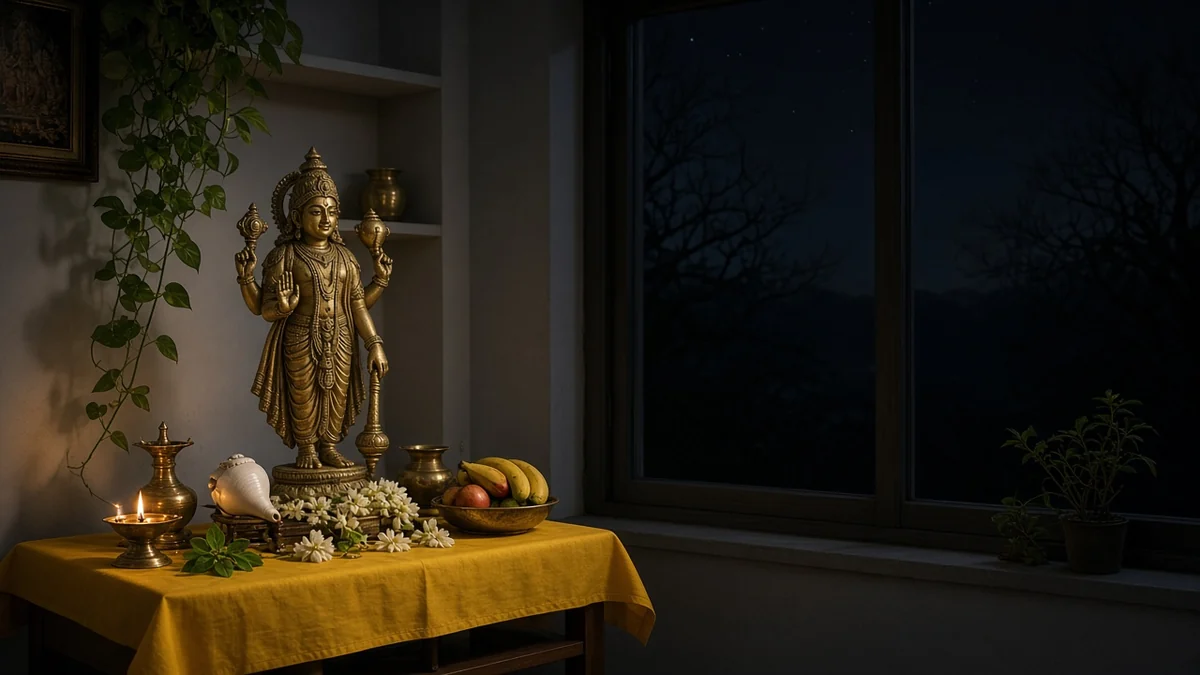
The hero image is a quiet Vishnu home shrine on a late-winter night: a lamp, a conch, white flowers and fruit, and a dark window — the setting of a vigil, not a crowded temple.
Sources
- Drik Panchang, Jaya Ekadashi 2027, New Delhi — tithi about 8:19 pm on 16 February to 5:31 pm on 17 February; parana 18 February, about 6:57 am to 9:12 am; Dwadashi ends about 2:27 pm.
- Cross-check: this site’s Ekadashi 2027 list, which uses the same New Delhi panchang and already carries these times.
- Story: Padma Purana, Uttara Khanda, chapter 43 (Malyavan and Pushpavati, Indra’s curse, and the Jaya Ekadashi vigil).
Related reading
The year list is in the Ekadashi 2027 list and the Hindu festival calendar 2027. In the same season, see Shattila Ekadashi 2027, Vasant Panchami 2027, Ratha Saptami 2027, Mauni Amavasya 2027 and Magha Purnima 2027. For the practice itself, see What is Ekadashi.
Frequently Asked Questions
When is Jaya Ekadashi in 2027?
Wednesday, 17 February 2027. In New Delhi the Ekadashi tithi runs from about 8:19 pm on 16 February to 5:31 pm on 17 February (Drik Panchang). Smarta and Vaishnava calendars keep the same civil day, because the tithi begins after sunset on the 16th and covers the sunrise of the 17th.
What is the parana time for Jaya Ekadashi 2027?
Thursday, 18 February, about 6:57 am to 9:12 am in New Delhi. Dwadashi ends about 2:27 pm on the 18th. Break the fast in the morning window, not after Dwadashi has ended.
What is the story of Jaya Ekadashi?
In the Padma Purana, Uttara Khanda, chapter 43, the gandharva Malyavan and the apsara Pushpavati came to sing and dance before Indra. Lost in one another, they let the song and the rhythm fail. Indra took this as an insult and cursed them to become pishachas. They later kept Jaya Ekadashi with a night vigil and were restored to their own forms.
How is Jaya Ekadashi kept?
Like other Ekadashis: a sankalpa after the morning bath, worship of Vishnu or Krishna with tulsi, a grain-free fast at the level you can sustain, the katha, a night vigil if you keep one, and parana on Dwadashi morning within the published window. See also What is Ekadashi.
Which Ekadashi comes before and after Jaya in 2027?
The previous dated guide is Shattila Ekadashi on 2 February. The next is Vijaya Ekadashi on Thursday, 4 March, listed in the Ekadashi 2027 list. Vasant Panchami (11 February) and Ratha Saptami (13 February) fall in the same fortnight, just before this fast.