
🌕 Festivals
Datta Jayanti 2026: Date, Puja Vidhi and Significance
Dattatreya Jayanti falls on Wednesday, 23 December 2026, the full moon of Margashirsha — the same tithi as Annapurna Jayanti. Here is the date, the tithi window, the birth story of Atri and Anasuya, and how the day is kept.
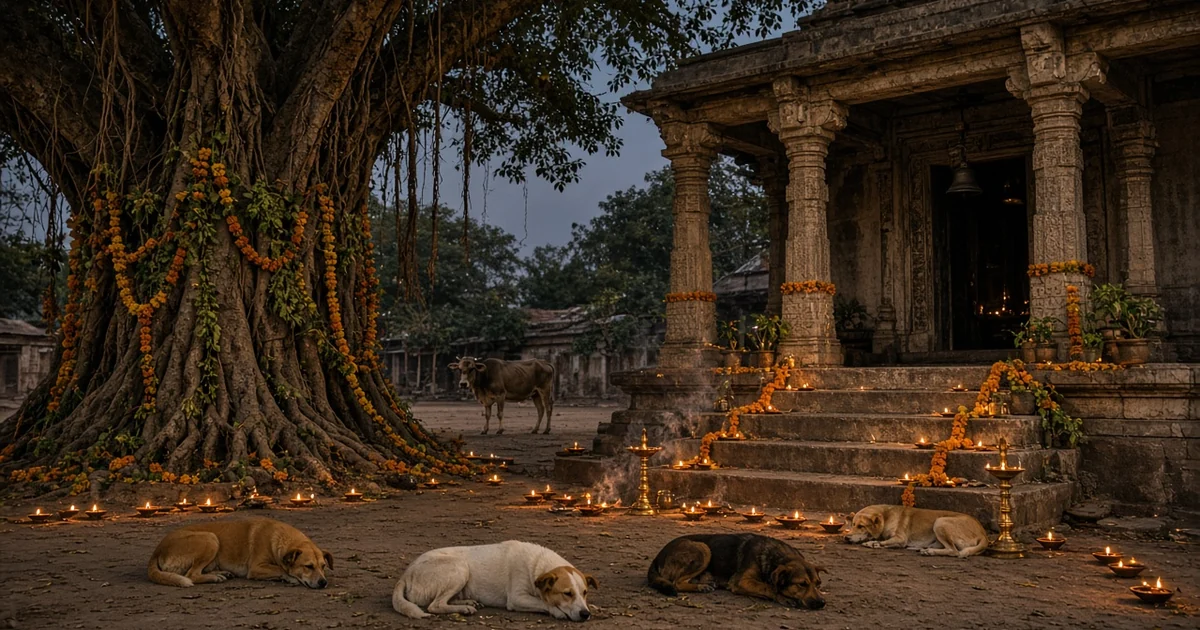
Datta Jayanti 2026 falls on Wednesday, 23 December, the full-moon day of Margashirsha. The same tithi is kept in many homes as Annapurna Jayanti. The festival remembers the birth of Dattatreya, the teacher who unites Brahma, Vishnu and Shiva in one form. A Hindi date-and-katha page is already on the site: दत्तात्रेय जयंती 2026.
Datta Jayanti 2026 date and tithi
| Detail | 2026 (New Delhi, unless noted) |
|---|---|
| Datta Jayanti / Dattatreya Jayanti | Wednesday, 23 December 2026 |
| Also observed as | Margashirsha Purnima; Annapurna Jayanti |
| Purnima tithi | About 10:47 am on 23 December to about 6:57 am on 24 December |
| Traditional janmotsav | Pradosh, after sunset. Published panchangs give sunset at about 5:30 pm in New Delhi, pradosh roughly 5:30–8:14 pm, and moonrise around 4:41 pm |
| Lunar month | Margashirsha Purnima (Purnimanta); the same full moon closes Margashirsha in the Amanta calendar as well |
| Three days earlier | Vaikuntha Ekadashi and Gita Jayanti, Sunday, 20 December 2026 |
Purnima is the tithi at sunrise only on 23 December, so Indian panchangs give one festival date this year. Clock times shift with the local sunrise, and outside India the civil date can move, so check a panchang for your city.
The date was checked against Drik Panchang for New Delhi, which gives the Purnima window above, and was cross-checked with other published panchangs (including MyPanchang-style listings) that also place the festival on Wednesday, 23 December 2026. Those sources agree on the date; the exact start and end of the tithi sometimes differ by a minute. Drik does not publish a separate official puja muhurat for Datta Jayanti. The evening pradosh timing given here is the traditional janmotsav window reported by published panchangs, not a Drik-issued muhurat, and should be confirmed locally.
Who Datta Jayanti remembers
Dattatreya is called the Adi Guru: the teacher of yoga and self-knowledge who, in the Bhagavata Purana, is also counted among the incarnations of Vishnu. Tradition depicts him with three heads and six arms, a cow at his side, and four dogs, commonly read as the four Vedas. The audumbara, or cluster-fig tree, is treated as his dwelling. A fuller account of his symbols, the lesson of his twenty-four gurus, and the Datta sampradaya is on our Dattatreya page.
The name itself is a short theology. Datta means “given”; Atreya means “of Atri.” The Trimurti are said to have given themselves as a son to Atri and Anasuya. In some tellings, the same boon also yields Chandra from Brahma’s portion and Durvasa from Shiva’s, with Dattatreya as Vishnu’s share; the Jayanti still honours the one teacher in whom the three are united.
The birth story, in brief
The story is told, with small differences of detail, in Purana tradition and in later Datta literature. The version below follows the same outline as our Dattatreya page, in our own words.
Anasuya, wife of the sage Atri, was so renowned for her purity and devotion that the goddesses Saraswati, Lakshmi and Parvati wished to test her. At their urging, Brahma, Vishnu and Shiva came to the hermitage disguised as wandering mendicants and asked her to serve them food without wearing clothes.
Anasuya neither refused hospitality nor compromised her virtue. By the power of her devotion she turned the three gods into infants, then fed and cared for them as a mother. (Some tellings add that she sprinkled water from Atri’s kamandalu over the guests before they became children.) When the goddesses came to beg for their husbands’ return, and after Atri himself had come home, Anasuya restored the gods. Pleased, the Trimurti granted her a boon: they would be born as her son. On Margashirsha Purnima that child was born and named Dattatreya — the one given to Atri.
The point of the story, as the tradition tells it, is not a contest of gods against a woman, but the strength of a sincere household dharma: even the three gods sit as children in a home where hospitality and integrity hold together. Recitation of a katha is a spiritual practice, not a claim about any particular family, and it is not a substitute for the ordinary duties of care.
Datta Jayanti puja vidhi
- The week before: many Datta households read the Guru Charitra of Saraswati Gangadhar over seven days, finishing on Jayanti. If a full week is not possible, even a sincere reading of a chapter, or listening to a recitation, is a traditional way to prepare.
- Morning of 23 December: bathe, clean the prayer space, and take a sankalpa for the kind of fast or light diet you will keep. Yellow cloth on the altar is customary.
- The shrine: place an image of Dattatreya. If an audumbara tree grows nearby, it is honoured as his seat. Offer sandalwood paste, turmeric and kumkum, rice grains, yellow and white flowers, tulsi, incense and a ghee lamp.
- Chant and read: repeat Shri Gurudev Datta, or Digambara Digambara Shripada Vallabha Digambara, or Om Dram Dattatreyaya Namah (see the beeja mantra note on our Dattatreya page). Read from the Guru Charitra, the Datta Bavani, or a passage of the Avadhuta Gita.
- The janmotsav: in the evening pradosh, families mark the birth itself — some rock a small cradle, sing bhajans and perform aarti. This is the heart of the day, more than any single clock minute.
- Prasad and charity: sunthawada (a prasad of dry ginger, jaggery, coconut and nuts), kheer or panchamrit are commonly shared. Feeding a cow or a dog, and feeding someone in need, are especially fitting, because the cow and the dogs are Dattatreya’s companions.
A simple Thursday practice of lamp, flowers and 108 names is described on the Dattatreya page and can be kept on Jayanti as well.
Fasting and conduct
- Many devotees keep a fruit-and-milk fast until the evening puja, then take prasad. Others eat a sattvic meal and simply avoid meat, alcohol, onion and garlic.
- The day is also a full-moon day, so some households combine it with a Satyanarayan vrat.
- Honour teachers, parents and elders. The festival is as much a guru-day as a temple-day.
- Children, older people, pregnant women and anyone with a medical condition should keep a gentle observance or simply join the prayers. Do not fast against medical advice.
Other observances around this day
Datta Jayanti comes three days after Vaikuntha Ekadashi and Gita Jayanti on 20 December, and in the same season as Dhanu Sankranti (16 December). The same full moon is Annapurna Jayanti; the hymn most often recited for that observance is the Annapurna Stotram. See every date in our list of Hindu festivals in December 2026.
The festival date and Purnima tithi were checked against Drik Panchang for New Delhi and cross-checked with other published panchangs. The birth story is summarised in our own words from the Purana tradition already followed on this site. Evening pradosh is the traditional janmotsav window, not a separate official muhurat issued by Drik; confirm local sunset times.
Frequently Asked Questions
When is Datta Jayanti in 2026?
Datta Jayanti, also called Dattatreya Jayanti, is on Wednesday, 23 December 2026, the full moon of Margashirsha. In New Delhi, Purnima tithi runs from about 10:47 am on 23 December to about 6:57 am on 24 December. Because the full moon prevails at sunrise only on 23 December, Indian panchangs list that Wednesday as the festival date.
Is Datta Jayanti the same as Dattatreya Jayanti and Margashirsha Purnima?
Yes. Datta Jayanti and Dattatreya Jayanti are two names for the same observance, the birthday of Dattatreya. It is always kept on Margashirsha Purnima. In 2026 that full moon is also observed in many homes as Annapurna Jayanti, so two festivals share the same tithi.
What is the Datta Jayanti puja time in 2026?
Drik Panchang lists the date and the Purnima tithi window for New Delhi, but it does not publish a separate official puja muhurat for this festival. The traditional janmotsav is kept in pradosh, the period after sunset. Several published panchangs give sunset at about 5:30 pm in New Delhi on 23 December 2026, and describe pradosh as roughly 5:30–8:14 pm, with moonrise around 4:41 pm. Confirm the local sunset and pradosh with a panchang for your city.
Who is Dattatreya?
Dattatreya is the son of the sage Atri and Anasuya, revered as the Adi Guru, the first teacher of yoga and self-knowledge. He is regarded as a combined incarnation of Brahma, Vishnu and Shiva, often shown with three heads and six arms, a cow, and four dogs that tradition reads as the four Vedas.
What should I chant on Datta Jayanti?
The simplest and most widely used remembrance is Shri Gurudev Datta. Many devotees also sing Digambara Digambara Shripada Vallabha Digambara, and some repeat the beeja mantra Om Dram Dattatreyaya Namah. If you have received a mantra from a teacher, use that one.
Where is Datta Jayanti celebrated most widely?
The day is especially important in Maharashtra, Karnataka, Gujarat and Andhra Pradesh. Major Datta centres include Ganagapur, Narsobawadi, Audumbar, Mahur (traditionally his birthplace), Girnar in Gujarat, and Pithapuram in Andhra Pradesh, the seat of Sripada Sri Vallabha.