
🪔 Festivals
Shattila Ekadashi 2027: Date, Parana Time and the Six Uses of Sesame
Shattila Ekadashi, named for six uses of sesame, falls on 2 February 2027. Date, New Delhi parana, the Padma Purana katha, and how to keep the vrat.
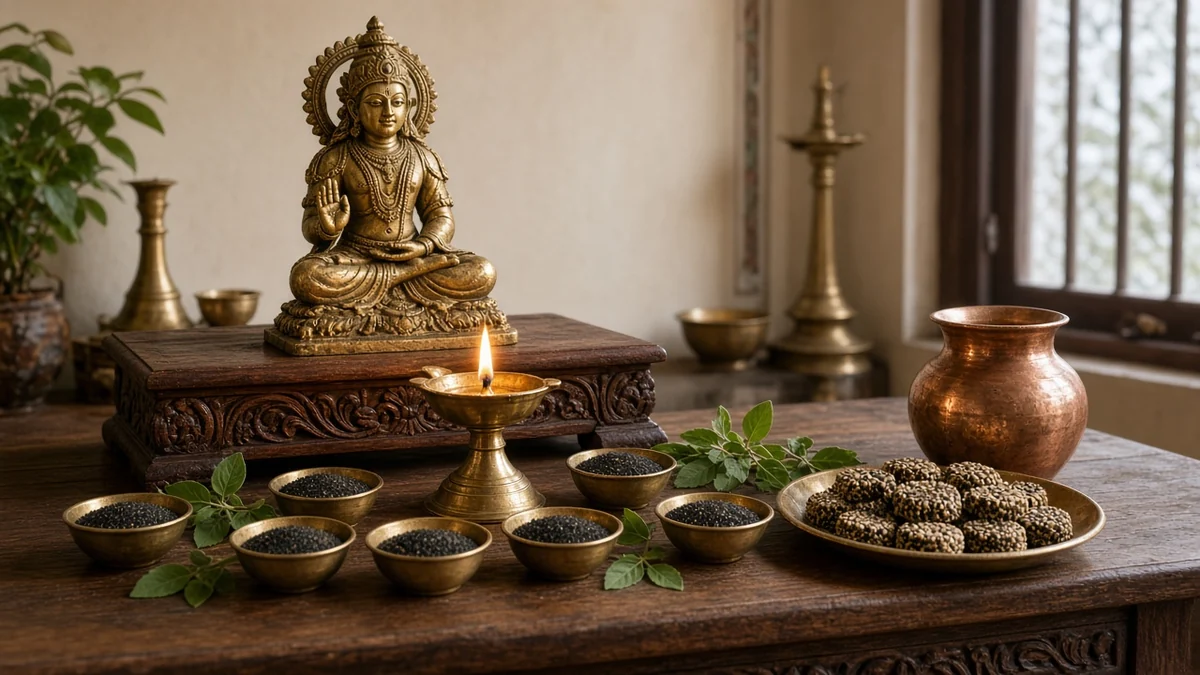
Shattila Ekadashi 2027 falls on Tuesday, 2 February, and the fast is broken on Wednesday, 3 February, between about 7:08 am and 9:19 am (New Delhi). It is the Krishna-paksha Ekadashi of Magha, and its name means six sesames: six traditional uses of til that the Padma Purana lists as the heart of this vrat. In 2027 Smarta and Vaishnava calendars keep the same date.
For what an Ekadashi is, see What is Ekadashi. The previous dated guide in this season is Pausha Putrada Ekadashi on 18 January; the next is Jaya Ekadashi on 17 February, also listed in the Ekadashi 2027 list.
Date and parana time
| Detail | 2027 (New Delhi, approximate) |
|---|---|
| Shattila Ekadashi | Tuesday, 2 February 2027 |
| Ekadashi tithi | About 8:41 am on 1 February to 11:10 am on 2 February |
| Parana (breaking the fast) | Wednesday, 3 February, about 7:08 am to 9:19 am |
| Dwadashi ends | About 1:50 pm on 3 February |
| Lunar month | Magha Krishna Ekadashi (Purnimanta); Pausha Krishna Ekadashi (Amanta) |
The tithi begins only at 8:41 am on Monday, 1 February, so at sunrise that day Dashami is still running. Ekadashi is present at sunrise on Tuesday, 2 February, and published panchangs list a single fasting date for both Smarta and Vaishnava calendars. You do not need the second-day (Gauna) split that appears for some other 2027 Ekadashis.
These New Delhi times follow Drik Panchang’s Shattila Ekadashi 2027 page. A second published panchang (Shubhdin Panchang) lists the same fasting date, the same tithi span, and the same 7:08–9:19 am parana window. Confirm local sunrise in your city.
The six uses of sesame
The name Ṣaṭtilā is explained in the Padma Purana, Uttara Khanda, chapter 42. The six acts are:
- Bathing with water in which sesame has been mixed (tila-snāna).
- Anointing or rubbing the body with sesame (tila-udvartana).
- Offering sesame into the fire (tila-homa).
- Offering water mixed with sesame (tila-udaka), including tarpan where that is the family custom.
- Giving sesame (tila-dāna), according to one’s means.
- Eating sesame (tila-bhojana).
The text commends black sesame for bathing and for food, and says the gift should match what a person can honestly afford. A household that cannot light a formal homa can still bathe, give a small packet of til, and include sesame in a grain-free meal. The vrat is not a shopping list.
The story, in brief
In the Padma Purana, Uttara Khanda, chapter 42, Yudhishthira asks Krishna for the name and the rite of the Ekadashi of Magha’s dark fortnight. Krishna names it Shattila, then tells a story he says he witnessed.
A brahmin woman lived by severe vows and worshipped the gods constantly, yet she never gave alms and never satisfied a guest with food. Krishna, seeing that her austerity had purified her body but that the gift of food was still missing, came to her door as a mendicant and asked for alms. In anger she threw a lump of clay into his copper bowl, and he returned to heaven.
In time, by the power of her observance, she arrived in a beautiful house — the fruit, the text says, of that clay. The house was empty of grain. She came out and asked why, after so much worship, nothing was to be seen inside. She was told that the wives of the gods would come. They could enter only when the merit of the Shattila vow had been declared; once they had taught her that vrat and she had kept it, the house was filled with grain, garments and the other comforts the chapter describes.
The katha is a traditional story about generosity, not a promise of wealth. The vrat is a prayer offered to Vishnu, and a reminder that austerity without a gift of food is, in this telling, still incomplete. Give according to your means. Do not treat the story as a transaction.
How to keep the vrat
- Sankalpa at sunrise on 2 February, after a bath if health allows, remembering Vishnu and the day’s name.
- A simple puja, with a lamp, tulsi, and a small offering of sesame.
- The fast, as on other Ekadashis: water only, or fruit and milk, or a single grain-free meal. A little sesame in the food, or a packet of til given to someone, is in keeping with the name.
- Parana on 3 February in the morning window, after a brief prayer, and within Dwadashi.
People who are ill, pregnant, nursing, elderly, or on medication should not force a strict fast. A lamp, a name of Vishnu, and a small gift of sesame or food are a complete observance.
Mauni Amavasya follows four days later, on 6 February. Saphala Ekadashi was the first Ekadashi of 2027, on 3 January.
Sources
- Date, tithi and New Delhi parana: Drik Panchang, 2027 Shattila Ekadashi.
- Cross-check: Shubhdin Panchang’s Shattila page, which lists the same 2 February fast, the same tithi (8:41 am on 1 February to 11:10 am on 2 February), and the same 7:08–9:19 am parana on 3 February.
- Story and the six uses of sesame: Padma Purana, Uttara Khanda, chapter 42, retold here in outline. The English wording is original to this page.
Confirm local sunrise and parana with a panchang for your city. Times on this page are for New Delhi and are given in IST (Asia/Calcutta).
Frequently Asked Questions
When is Shattila Ekadashi in 2027?
Shattila Ekadashi is on Tuesday, 2 February 2027, for both Smarta and Vaishnava calendars. In New Delhi the Ekadashi tithi runs from about 8:41 am on 1 February to 11:10 am on 2 February. The tithi begins after sunrise on the 1st, so the fasting day is the 2nd, when Ekadashi is present at sunrise.
What is the Shattila Ekadashi parana time in 2027?
Parana is on Wednesday, 3 February 2027, from about 7:08 am to 9:19 am in New Delhi. Dwadashi ends about 1:50 pm that afternoon. Confirm the window with a local panchang.
What does Shattila mean?
Shattila means 'six sesames.' In the Padma Purana the six acts are: bathing with sesame, anointing the body with sesame, offering sesame in the fire, offering water mixed with sesame, giving sesame, and eating sesame. The vrat is a Vishnu Ekadashi built around those uses of til, according to one's means.
What is the story of Shattila Ekadashi?
In the Padma Purana, Uttara Khanda, chapter 42, Krishna tells of a brahmin woman who kept severe vows and worshipped the gods but never gave food. When he came as a mendicant, she threw a lump of clay into his bowl. By the power of her austerity she later reached a beautiful house that was empty of grain. The wives of the gods taught her the Shattila vow; after she kept it, the house was filled with grain and the other comforts the text describes.
Is Shattila in Magha or Pausha?
It is Magha Krishna Ekadashi in the Purnimanta calendar used in most of North India. In the Amanta calendar used in Gujarat, Maharashtra and South India, the same day is Pausha Krishna Ekadashi. The fasting date is the same; only the month name differs.
What can I eat on Shattila Ekadashi?
Those who fast avoid grains and beans, especially rice. Fruit, milk, curd, nuts, sabudana and potatoes are common, and a little sesame in food or as a gift is in keeping with the day's name. Anyone who is ill, pregnant, nursing, elderly or on medication should choose a lighter fast or a simple puja without fasting.