
🏹 Hindu Festivals
Ram Navami Puja and Story Guide: Meaningful Home Observance
Last updated: September 26, 2026
Ram Navami celebrates the birth of Rama and invites reflection on dharma, truth, courage, compassion, and responsible leadership.
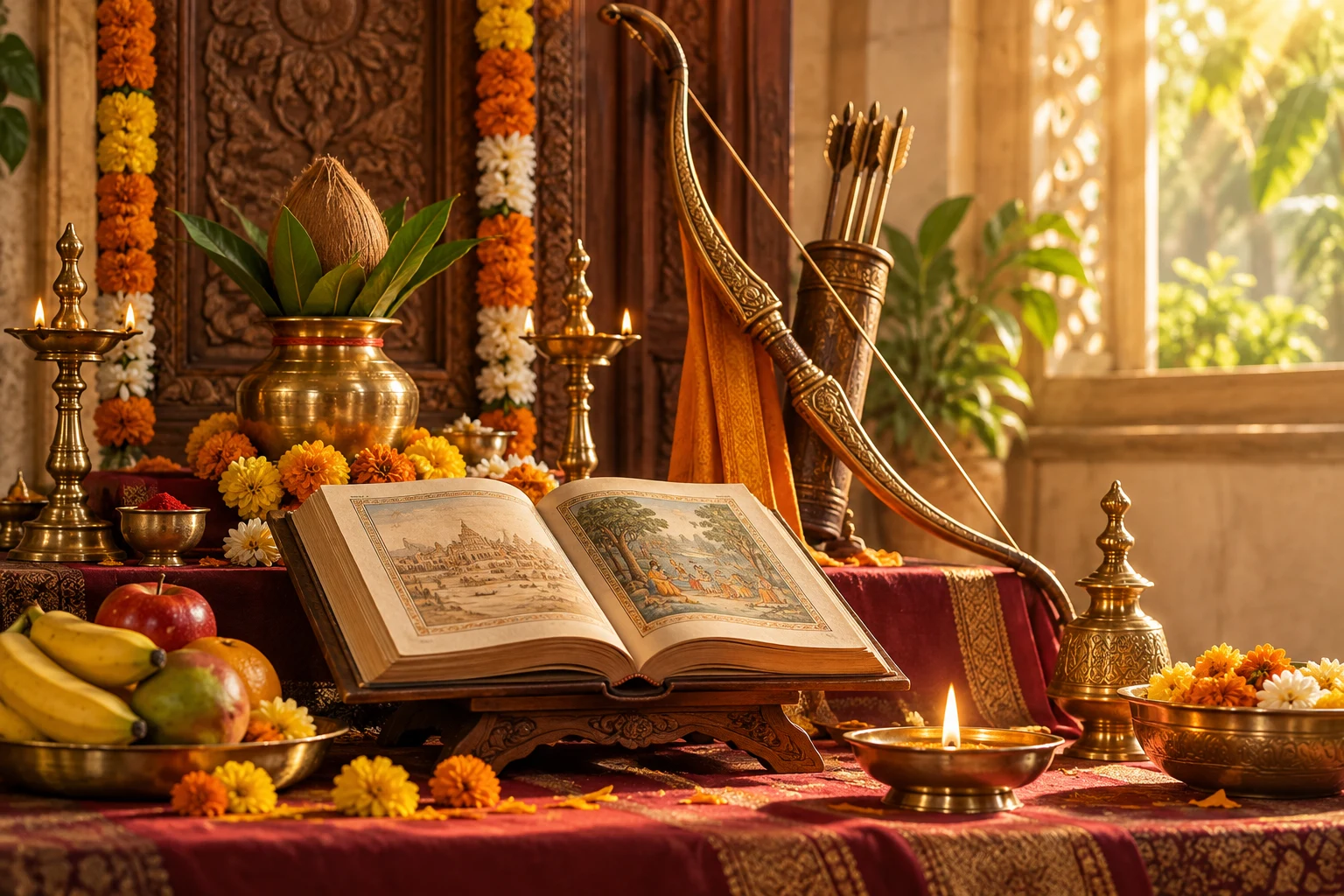
Ram Navami celebrates the birth of Rama, revered as an avatara of Vishnu and the central figure of the Ramayana. Prayer, Ramayana recitation, aarti, fasting and public processions are common, but observances differ by region and lineage. At home, the festival can join worship with thoughtful reflection on dharma: responsibility, integrity and conduct suited to a particular relationship and situation.
Rama is remembered as a son, student, husband, brother, friend, leader and king. The epic does not present an easy life free of conflict. It asks how people should act when promises, affection, public duty and painful consequences meet. A respectful observance makes room for that seriousness as well as celebration.
What to prepare
Place an image of Rama or Rama with Sita, Lakshmana and Hanuman on a clean altar. Keep water, flowers, fruit or a simple sweet, a diya or electric lamp, and a trusted Ramayana edition or prayer text. Elaborate decoration is optional. Use a stable lamp and keep it away from loose cloth, children and pets.
Simple Ram Navami puja steps
- Clean the space and settle. Wash your hands, sit quietly and put away distractions.
- Make an intention. Ask for the strength to keep a promise, use authority responsibly or speak truth with compassion.
- Begin the worship. Light the lamp safely and offer water, flowers and fruit. Follow your household’s invocation practice.
- Repeat Rama’s name. Chant a simple Rama name or use the Rama mantra guide for meaning and practice notes.
- Read the Ramayana. Select a manageable passage and identify the version—Valmiki Ramayana, Ramcharitmanas, Kamba Ramayanam or another respected regional retelling. Their language and emphases are not identical.
- Sing aarti. Use the Rama aarti if it belongs to your practice, then sit silently for a minute.
- Offer and share prasad. End with gratitude and distribute food respectfully.
Some families time worship around midday, traditionally associated with Rama’s birth; others follow a temple programme or a suitable household schedule. Use a reliable local calendar for the festival date and ritual timing because lunar-calendar observances depend on place and tradition.
The Ram Navami story in brief
In the Ramayana tradition, King Dasharatha of Ayodhya longs for heirs and performs a sacred rite. Rama is born to Queen Kausalya, while Bharata, Lakshmana and Shatrughna are born to the other queens. Rama later learns under sages, marries Sita, accepts exile when a palace promise changes the succession, forms alliances during the search for Sita, defeats Ravana, and returns to Ayodhya.
This summary should not flatten a many-layered epic. Episodes concerning exile, war, kingship, Sita and family duty have inspired centuries of commentary, devotion, performance and debate. The characters of the Ramayana guide helps readers distinguish the principal relationships, while the Hanuman and Rama story focuses on devotion expressed through service.
Questions for family reflection
After reading, ask questions rather than supplying slogans:
- When is keeping a promise difficult, and who bears its cost?
- How should a leader balance personal wishes and public responsibility?
- What makes friendship or service trustworthy?
- How can courage remain guided by compassion?
Children can draw a scene, arrange character cards, sing a repeated line, or choose one helpful act. Keep descriptions of battle age-appropriate and acknowledge that thoughtful readers may interpret difficult episodes differently.
Fasting and service
Ram Navami fasts vary from simple vegetarian food to fruit or a longer abstinence. Do not pressure anyone whose age, pregnancy, health or medication makes fasting unsuitable. Discipline can instead take the form of restrained speech, reduced consumption and close attention to duty.
Make the festival active: contribute to a meal, read to a child, help an older neighbour, apologise sincerely, or complete a neglected responsibility. Such actions prevent dharma from remaining only a word used during worship.
Ram Navami does not require an elaborate altar to be meaningful. A short puja, a carefully chosen story, honest family discussion and one act of responsible service can form a complete and memorable observance.
Frequently Asked Questions
How can I perform Ram Navami puja at home?
Prepare a clean altar with an image of Rama or the Rama family, light a lamp safely, offer water, flowers and fruit, repeat a Rama mantra, read a Ramayana passage, and close with aarti and prasad. Adapt the details to family tradition.
Which story should be read on Ram Navami?
Many families read the account of Rama's birth from a Ramayana known in their community. You may also choose a short passage about dharma, friendship, exile, service or return, while naming the version being used.
Is fasting required on Ram Navami?
Fasting practices differ by region and household and are not compulsory in one universal form. Health, medication, pregnancy, age and physical work should guide any decision to fast.
How can children participate in Ram Navami?
Children can place flowers, sing a refrain, draw scenes, listen to an age-appropriate story or take part in a small service activity. Avoid presenting complex ethical episodes as simplistic lessons.