
🪷 Mythology
The 10 Avatars of Vishnu: Dashavatara Stories and Meaning
Last updated: August 31, 2026
The Dashavatara describes Vishnu's recurring intervention to restore dharma. Each avatar responds to a different form of disorder and crisis.
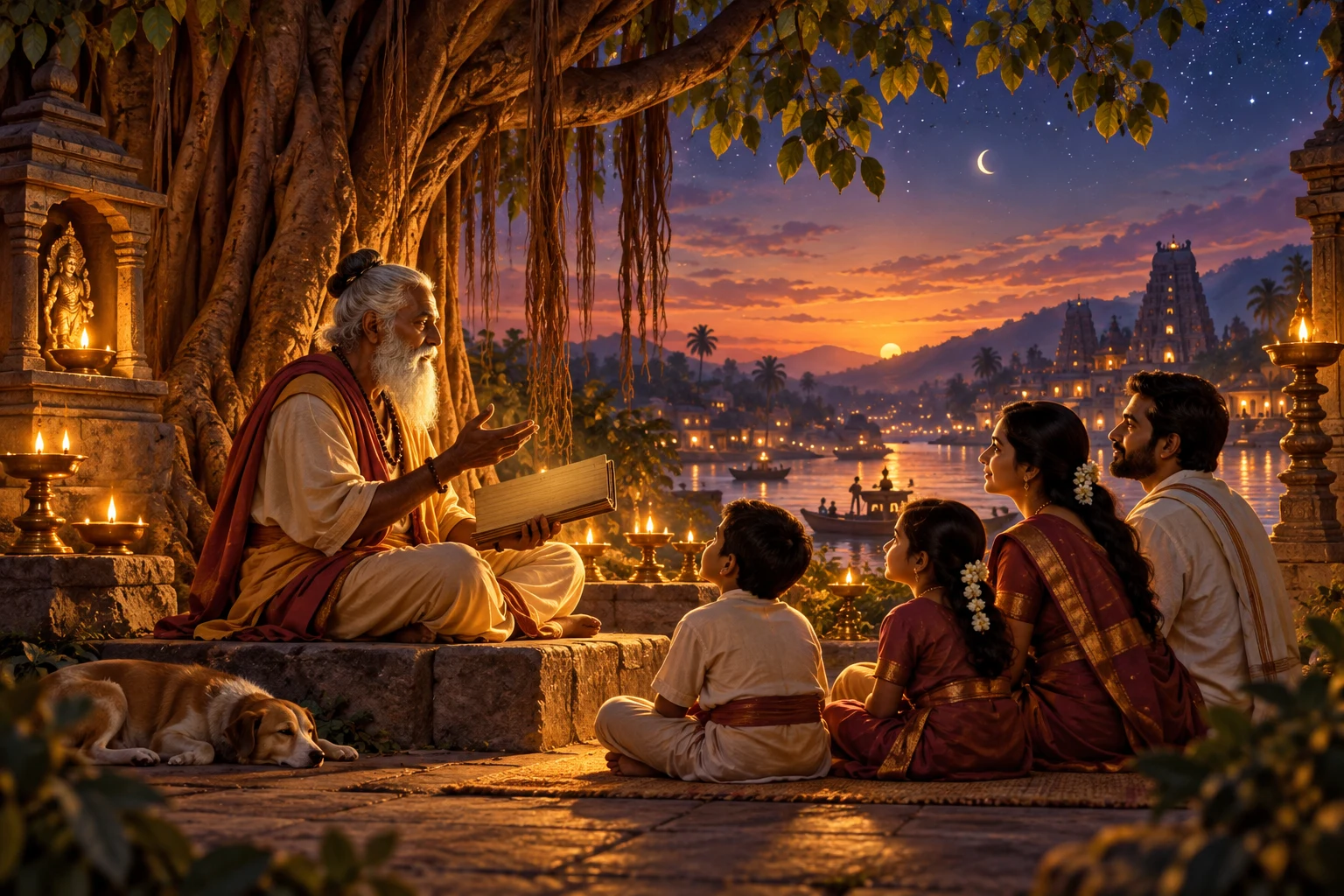
The ten avatars of Vishnu, called the Dashavatara, are Matsya, Kurma, Varaha, Narasimha, Vamana, Parashurama, Rama, Krishna, Buddha or Balarama in different traditions, and Kalki. The exact list and order can vary between texts and traditions, but the central idea is consistent: when dharma declines and disorder grows, Vishnu appears in a form suited to the crisis.
Dashavatara at a glance
The first five avatars are commonly grouped with cosmic protection and the restoration of balance: Matsya saves life and knowledge through a flood, Kurma supports the churning of the ocean, Varaha raises the Earth, Narasimha protects Prahlada, and Vamana checks King Bali’s expanding power. The later avatars bring the teaching closer to human ethical life through Parashurama, Rama, Krishna, and the future-oriented Kalki tradition. This is a study map, not a replacement for the distinct stories and regional recensions behind each avatar.
The ten avatars
- Matsya — the fish who protects life and sacred knowledge through a great flood.
- Kurma — the tortoise who supports Mount Mandara during the churning of the cosmic ocean.
- Varaha — the boar who raises the Earth from the cosmic waters.
- Narasimha — the half-man, half-lion who protects Prahlada and defeats Hiranyakashipu.
- Vamana — the dwarf Brahmin who humbles the powerful king Bali through three steps.
- Parashurama — the warrior sage who confronts destructive abuse of power.
- Rama — the ideal king and hero of the Ramayana.
- Krishna — the teacher of the Bhagavad Gita and guide of the Pandavas.
- Buddha in some lists, or Balarama in others, reflecting different traditions of Vishnu’s manifestations.
- Kalki — the future avatar who appears at the end of the Kali Yuga to restore dharma.
What the sequence means
Many modern readers interpret the sequence as a symbolic movement through different forms of life and social responsibility. That can be a useful reflection, but it should not be presented as the only traditional meaning. In devotional terms, the avatars show that divine help can appear in unexpected forms and that dharma requires different kinds of courage.
Read the Narasimha story, the Rama story, and the Krishna story for deeper entries in the Dashavatara tradition. The Vishnu Mantra offers a simple devotional practice.
Frequently asked questions
What are the ten avatars of Vishnu in order?
The commonly taught order is Matsya, Kurma, Varaha, Narasimha, Vamana, Parashurama, Rama, Krishna, Buddha or Balarama, and Kalki. The ninth avatar differs between traditions, so a respectful guide should name the variation rather than present one list as universal.
Why did Vishnu take ten avatars?
In the Dashavatara tradition, Vishnu appears whenever dharma needs restoration. Each form responds to a different kind of danger or disorder, showing divine protection through forms suited to a particular situation.