
📿 Mythology
Vishwamitra: The King Who Became a Brahmarishi, His Story and Legacy
Vishwamitra began life as King Kaushika and fought his way, through centuries of penance, to become a Brahmarishi. Here is his story, from his rivalry with Vasishtha to his role as Rama's teacher.
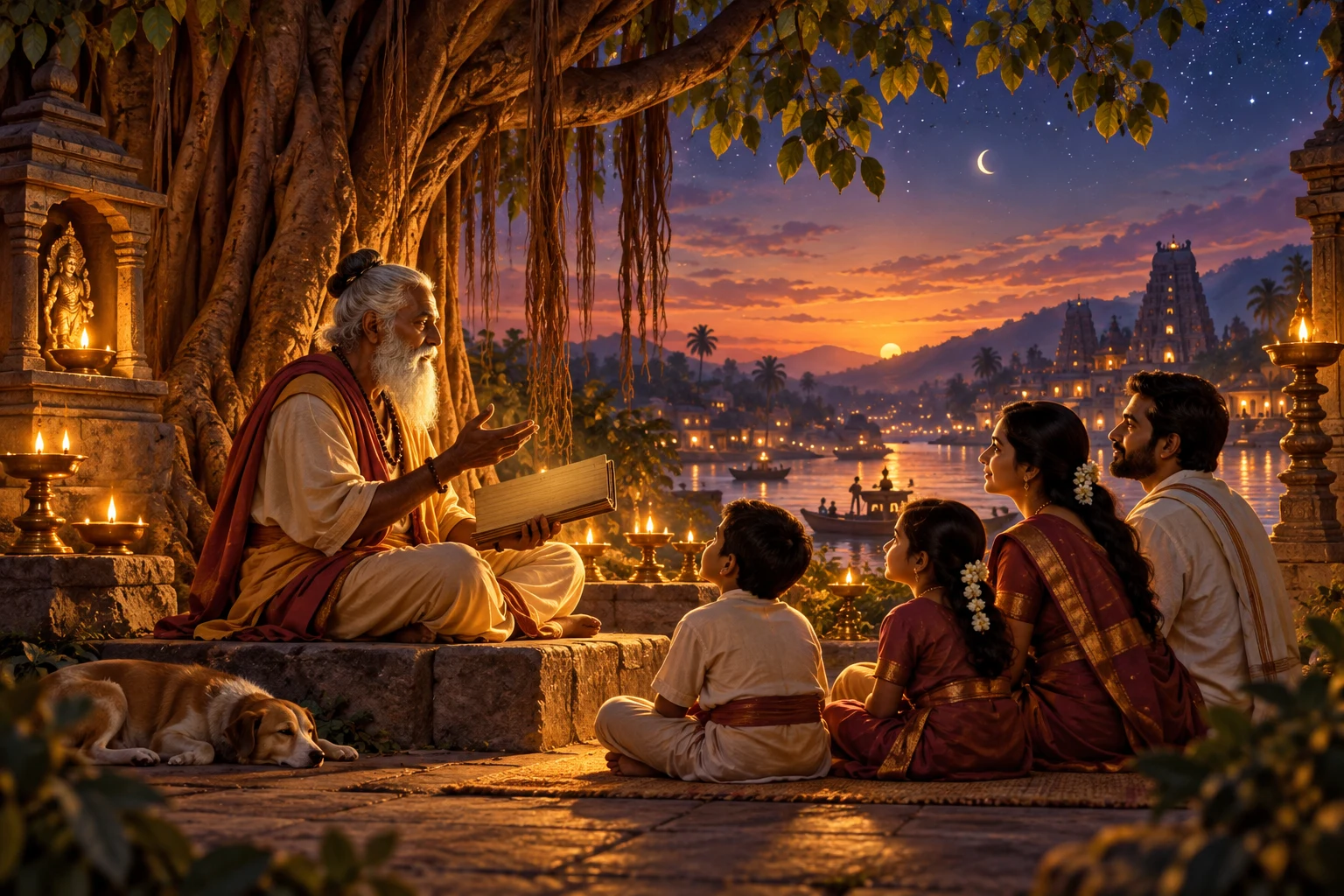
Vishwamitra (Vishvamitra, “friend of the universe”) was a king, born Kaushika, who renounced his throne after his armies were defeated by the sage Vasishtha’s spiritual power. Through centuries of austerity he became a Brahmarishi, the highest rank of sage. He is honoured as the seer of the Gayatri mantra and was Rama’s teacher in the Ramayana.
His life is the great story of self-transformation in Hindu tradition: a proud, angry warrior who, after many failures, conquered himself.
Vishwamitra at a glance
| Sanskrit | Viśvāmitra (विश्वामित्र) |
| Birth name | Kaushika; also Vishvaratha in some texts |
| Father | King Gadhi of Kanyakubja (Kannauj) |
| Rank | Brahmarishi; one of the Saptarishis of the present age |
| Rival | The sage Vasishtha |
| Vedic legacy | Seer of the Rigveda’s third mandala, including the Gayatri mantra |
| Children | Shakuntala (with Menaka); many sons, including Madhuchhandas |
| Ramayana role | Rama and Lakshmana’s teacher; leads them to Sita’s swayamvara |
King Kaushika and the wish-fulfilling cow
Kaushika was a powerful king of the Kanyakubja line, son of King Gadhi. Once, travelling with his army, he came to the hermitage of the sage Vasishtha, who fed the whole army lavishly with the help of his wish-fulfilling cow — Nandini in the Mahabharata, Shabala in the Ramayana.
The king wanted the cow and offered thousands of cattle and jewels in exchange. Vasishtha refused. When Kaushika tried to take her by force, the cow produced warriors from her body who routed his army. Kaushika then attacked Vasishtha with divine weapons, but the sage absorbed them all with his staff (brahmadanda).
Humiliated, the king said: “Shame on the strength of a warrior; the strength of a Brahmin’s spiritual power is the real strength.” He gave up his kingdom and turned to austerity.
The long road to Brahmarishi
Vishwamitra’s progress, as Valmiki tells it in the Bala Kanda, came in stages — and he failed more than once:
| Title | How he earned it — and lost ground |
|---|---|
| Rajarishi (royal sage) | After a thousand years of penance; still dissatisfied |
| Rishi | After further penance; then he used his power in anger for Trishanku |
| Maharishi | After more penance; then distracted for years by the apsara Menaka |
| Brahmarishi | After mastering both desire and anger, granted by Brahma and accepted by Vasishtha |
Trishanku’s heaven
King Trishanku wanted to go to heaven in his own body. Vasishtha and his sons refused to help, so Trishanku turned to Vishwamitra, who performed the sacrifice. When Indra pushed Trishanku back down, Vishwamitra in fury began to create a new heaven and new stars for him. The gods compromised: Trishanku would hang, upside down, in his own heaven between the worlds — and “Trishanku” still means someone caught in between.
Menaka and Shakuntala
Alarmed at the power of his austerities, Indra sent the apsara Menaka to distract him. Vishwamitra lived with her for ten years and had a daughter, Shakuntala, before realising he had been deceived. He left, not in anger at Menaka but in determination to master desire. Shakuntala, raised by the sage Kanva, became the mother of Bharata, from whom India takes the name Bharat.
Rambha and the final test
When Indra sent another apsara, Rambha, Vishwamitra cursed her to become a stone — and then saw that he had lost his merit to anger. He took a vow of silence and went on penance so severe that the worlds trembled. Only then did Brahma name him Brahmarishi, and Vishwamitra asked that Vasishtha himself confirm it. Vasishtha did, and the two rivals were reconciled.
The seer of the Gayatri mantra
The third mandala of the Rigveda is attributed to Vishwamitra and his family. It contains the Gayatri mantra (Rigveda 3.62.10), which is why he is honoured as its rishi, or seer. In formal Vedic recitation, the preliminary dedication (viniyoga) names Vishwamitra as its seer. For its meaning, see Gayatri mantra meaning and benefits, and for the text itself, the Gayatri mantra page.
Vishwamitra is also counted among the Saptarishis, the seven great sages of the present cosmic age, alongside Vasishtha, Kashyapa, Atri, Gautama, Jamadagni and Bharadvaja (lists vary between texts).
Vishwamitra in the Ramayana
In Valmiki’s Bala Kanda, Vishwamitra arrives at Ayodhya and asks King Dasharatha for his young son Rama to protect his sacrifice from the demons Maricha and Subahu. Dasharatha is reluctant, but Vasishtha persuades him.
On the journey Vishwamitra:
- teaches Rama and Lakshmana the Bala and Atibala mantras, which free them from hunger and fatigue;
- has Rama kill the demoness Tataka;
- gives them a host of divine weapons (astras);
- protects the sacrifice as Rama drives off Maricha and kills Subahu;
- leads them to Gautama’s hermitage, where Rama frees Ahalya from her curse;
- and brings them to Mithila, where Rama lifts and breaks Shiva’s bow and wins Sita.
For this part of the epic, see Ramayana stories and characters of the Ramayana.
Harishchandra
In the Markandeya Purana and later retellings, Vishwamitra tests the truthful King Harishchandra, demanding his kingdom as a gift and then a large fee, until the king sells his wife, his son and himself to keep his word. In the end, Harishchandra’s truthfulness is vindicated and everything is restored. The story is told differently in different texts.
What Vishwamitra’s story teaches
Vishwamitra’s greatness lies in his persistence. He fell to anger, to pride and to desire, and each time he started again. His story teaches that the highest spiritual state is not a birthright but can be earned through effort — and that the hardest enemy to conquer is oneself.
Frequently Asked Questions
Who was Vishwamitra?
Vishwamitra was a king named Kaushika, son of King Gadhi, who gave up his throne after a conflict with the sage Vasishtha and became one of the greatest rishis of Hinduism through austerity. He is the seer of the Gayatri mantra and Rama's teacher in the Ramayana.
Why did Vishwamitra fight with Vasishtha?
As King Kaushika, he visited Vasishtha's hermitage and wanted the sage's wish-fulfilling cow, Nandini (called Shabala in the Ramayana). Vasishtha refused, and the cow produced armies that defeated the king. Realising that spiritual power was greater than royal might, Kaushika began his long austerities.
How did Vishwamitra become a Brahmarishi?
Through thousands of years of penance he rose from Rajarishi (royal sage) to Rishi, Maharishi and finally Brahmarishi. He was tested repeatedly by anger and desire, including by the apsara Menaka. Only when he had conquered both did Brahma grant him the title, and Vasishtha himself acknowledged it.
Is Vishwamitra the author of the Gayatri mantra?
Vedic hymns are said to be 'seen', not written. The Gayatri mantra (Rigveda 3.62.10) is in the third mandala of the Rigveda, which is attributed to Vishwamitra and his family, so he is honoured as its seer (rishi).
What is Vishwamitra's role in the Ramayana?
Vishwamitra takes the young Rama and Lakshmana from Ayodhya to protect his sacrifice from demons, teaches them the Bala and Atibala mantras and gives them divine weapons. He then leads them to Mithila, where Rama breaks Shiva's bow and wins Sita.
Who is Vishwamitra's daughter?
Vishwamitra and the apsara Menaka had a daughter, Shakuntala, who was raised by the sage Kanva. Shakuntala married King Dushyanta and became the mother of Bharata, after whom India is traditionally called Bharatavarsha.