
🪔 Hindu Concepts
What Is Navratri? The Nine Nights, Explained
Navratri means 'nine nights' — but nine nights of what, exactly, and why does it happen more than once a year? Here's the full picture.
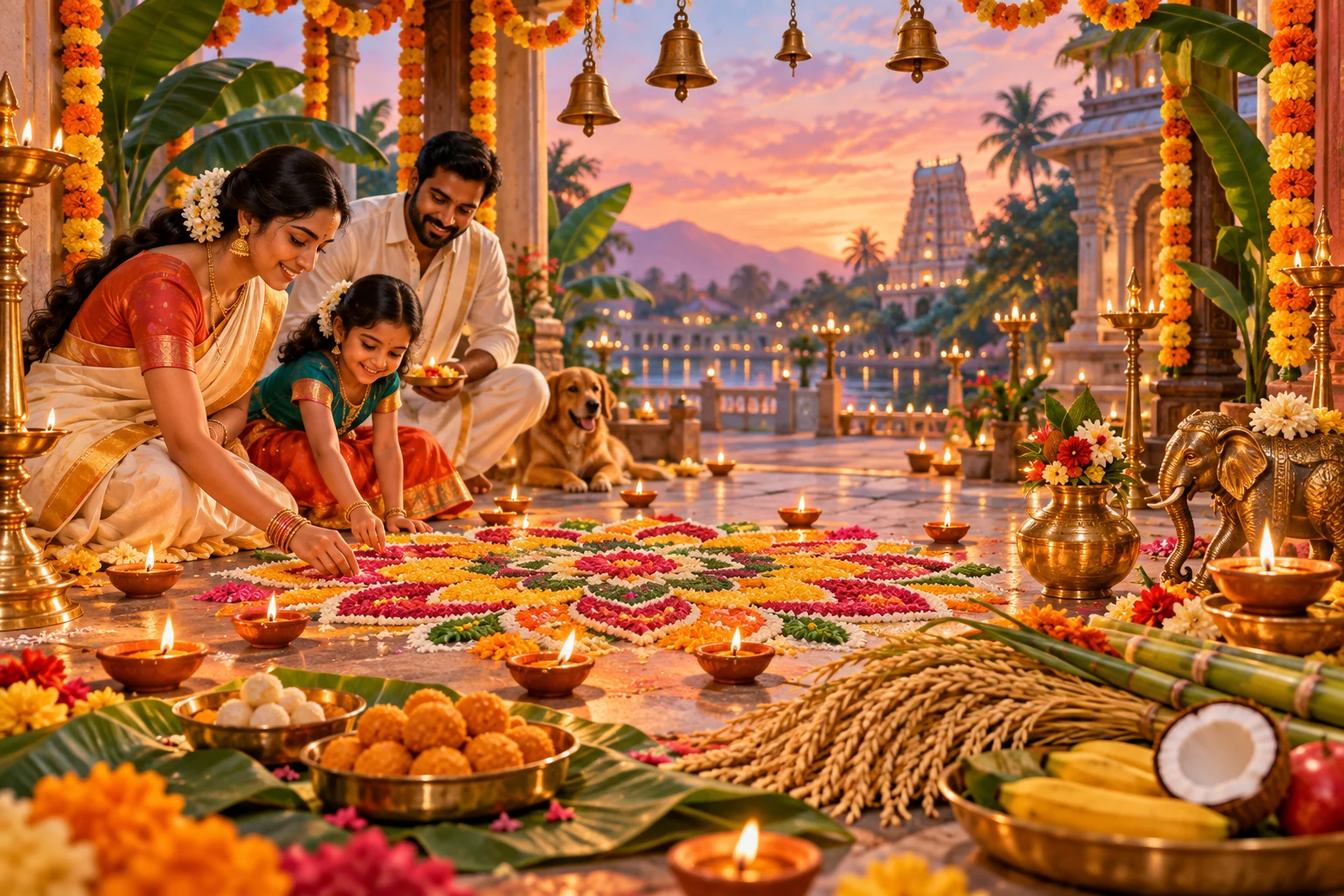
Navratri is one of the most widely celebrated Hindu festivals, but the basic question — what is it actually celebrating, and why nine nights specifically — often gets lost in the celebration itself.
The core story
Navratri centers on the story of Durga’s battle against the buffalo demon Mahishasura, a being who had earned a boon making him unable to be defeated by any man or god. In response, the combined energies (shakti) of the gods converged into a single, powerful form — Durga — specifically because victory required a force outside the terms of Mahishasura’s protection entirely. The battle is described as lasting nine days, which is the origin of Navratri’s nine-night structure, culminating in Durga’s victory on the tenth day, celebrated separately as Dussehra (Vijayadashami).
Why nine forms, not just one battle
Rather than treating Durga as a single, undifferentiated warrior figure, tradition assigns a different form of Durga to each of the nine nights — see our full guide to the 9 Forms of Durga for what each one represents. This turns Navratri into something more layered than a single military narrative: each night highlights a different quality — grounding, discipline, courage, creation, nurturing, righteous strength, destruction of darkness, peace, and finally spiritual attainment — building toward the full victory celebrated at the end.
Why it happens four times a year
Technically, there are four Navratris in the Hindu calendar, tied to different points in the lunar year. Most are observed only by specific traditions or regions, but Sharad Navratri (occurring in the autumn, around September–October) is the one celebrated most widely across India and is what most people mean when they refer to “Navratri” without qualification. Chaitra Navratri, occurring in spring, is the second most widely observed, and also marks Ram Navami on its ninth day in many traditions.
How it’s observed
Observance varies significantly by region — from elaborate nine-night Garba and Dandiya dance celebrations in Gujarat, to Durga Puja pandals and processions in Bengal culminating in Vijayadashami, to quieter home-based fasting and daily puja in many other parts of India. What’s shared across nearly all regional variations is a period of heightened devotional practice directed at Durga, typically involving some form of fasting, daily worship, and recitation.
A simple way to observe it
If you want to mark Navratri without a large ritual setup, the simplest approach is a daily practice across all nine nights: chanting the Durga Beej Mantra or reciting the Durga Chalisa once each evening, ideally paired with a lit diya. Consistency across the full nine nights matters more than the scale of the practice on any single night.