
🪔 Festivals
Navratri 2026: Dates, 9 Goddesses, Colours and Puja Vidhi
Last updated: October 10, 2026
Sharad Navratri 2026 begins on 11 October and ends with Dussehra on 20 October. Here are the nine goddesses, the nine colours, the Ghatasthapana muhurat and a simple home puja and fasting guide.
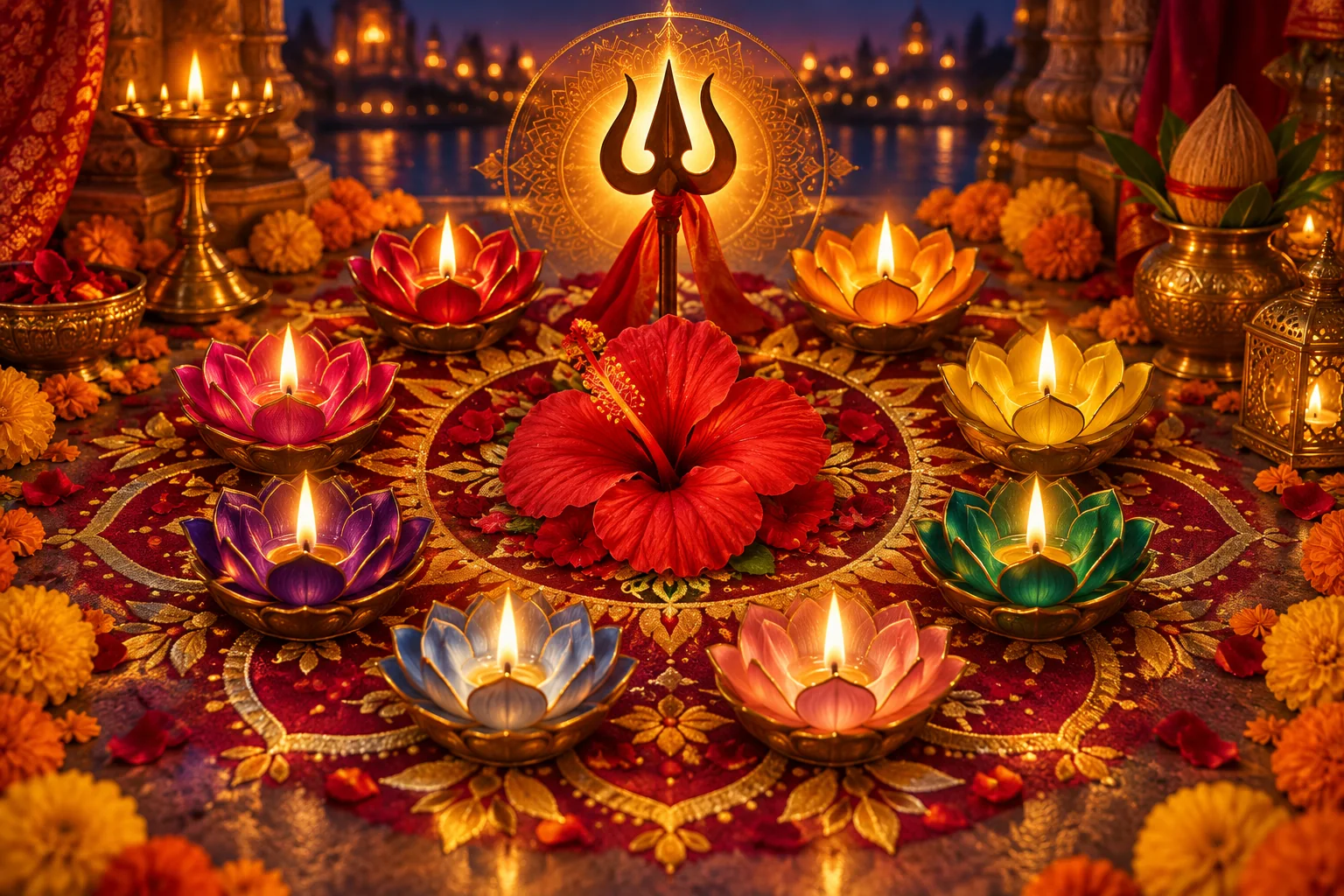
Sharad Navratri 2026 begins on Sunday, 11 October and ends on Monday, 19 October, with Dussehra (Vijayadashami) on Tuesday, 20 October. Saptami falls on two days, so the festival spans ten calendar days. Durga Ashtami and Maha Navami are both on 19 October. Ghatasthapana is on 11 October, roughly 6:19 am to 10:12 am in New Delhi.
All timings below are calculated for New Delhi and are approximate. Sunrise and tithi changes shift by city, so confirm the muhurat with a local panchang, temple or family priest before the puja.
Navratri 2026 at a glance
| Observance | 2026 date | Note (New Delhi, approximate) |
|---|---|---|
| Pratipada tithi begins | Saturday, 10 October | About 9:19 pm |
| Ghatasthapana / Kalash Sthapana | Sunday, 11 October | About 6:19 am to 10:12 am; Abhijit muhurat about 11:44 am to 12:31 pm |
| Durga Ashtami | Monday, 19 October | Ashtami tithi from about 8:27 am on 18 October to 10:51 am on 19 October |
| Sandhi Puja | Monday, 19 October | About 10:27 am to 11:15 am |
| Maha Navami | Monday, 19 October | Navami tithi from about 10:51 am on 19 October to 12:50 pm on 20 October |
| Navratri parana and Vijayadashami (Dussehra) | Tuesday, 20 October | Break the fast according to family custom |
Navratri is followed by Sharad Purnima on 25 October and Karwa Chauth on 29 October, on the way to Diwali 2026.
Navratri 2026 day by day: goddess and colour
Each day of Navratri is traditionally dedicated to one of the nine forms of Durga, known together as the Navadurga. The colour list followed by many devotees, especially in Maharashtra and Gujarat, is assigned by weekday, so it changes every year.
| Day | Date | Tithi | Goddess | Colour |
|---|---|---|---|---|
| 1 | Sunday, 11 October | Pratipada | Shailaputri | Orange |
| 2 | Monday, 12 October | Dwitiya | Brahmacharini | White |
| 3 | Tuesday, 13 October | Tritiya | Chandraghanta | Red |
| 4 | Wednesday, 14 October | Chaturthi | Kushmanda | Royal blue |
| 5 | Thursday, 15 October | Panchami | Skandamata | Yellow |
| 6 | Friday, 16 October | Shashthi | Katyayani | Green |
| 7 | Saturday, 17 October | Saptami | Kalaratri | Grey |
| 8 | Sunday, 18 October | Saptami continues; Ashtami begins mid-morning | Kalaratri or Mahagauri, by family custom | Purple |
| 9 | Monday, 19 October | Ashtami, then Navami | Mahagauri and Siddhidatri | Peacock green |
| 10 | Tuesday, 20 October | Navami, then Dashami | Visarjan and Vijayadashami | — |
Why two days of Saptami? In 2026 the Saptami tithi is present at sunrise on both 17 and 18 October. Many calendars keep Kalaratri puja on 17 October, then move to Mahagauri as Ashtami begins on 18 October, while panchangs that follow the sunrise tithi place Durga Ashtami on 19 October. Some popular listings simply show Mahagauri on 18 October and Siddhidatri on 19 October. Follow the calendar your family or temple uses; the sequence of goddesses is what matters.
For who each goddess is and what she represents, read the 9 forms of Durga.
The nine goddesses in brief
- Shailaputri, daughter of the mountain king Himavan, rides a bull and holds a trident and lotus.
- Brahmacharini represents austerity and steady devotion, holding a rosary and water pot.
- Chandraghanta, with a half-moon shaped like a bell on her forehead, represents courage and protection.
- Kushmanda is praised as the one whose smile brought forth the cosmic egg.
- Skandamata, mother of Skanda (Kartikeya), is shown with the child on her lap.
- Katyayani, born in the ashram of the sage Katyayana, is the warrior form who faces Mahishasura.
- Kalaratri is the fierce, dark form that destroys fear and ignorance.
- Mahagauri is radiant and serene, associated with purity and peace.
- Siddhidatri grants spiritual accomplishment and completes the nine forms.
A simple name-mantra for each day uses the goddess’s name, for example Om Devi Shailaputryai Namah on Day 1 and Om Devi Brahmacharinyai Namah on Day 2.
Navratri puja vidhi at home
This is a household-friendly outline. Regional and family customs differ, so follow your own tradition where it is different.
Day 1: Ghatasthapana (Kalash Sthapana)
- Bathe, clean the prayer area and place a raised wooden board covered with a red or yellow cloth.
- Spread clean soil in a shallow earthen pot and sow barley (jau) seeds; these sprout into jaware over the nine days.
- Fill a copper or clay kalash with water, and add a little rice, a coin, a betel nut, flowers and a pinch of turmeric. Place five mango or ashoka leaves at its mouth.
- Wrap a coconut in red cloth with a sacred thread (mauli) and set it on the leaves. Place the kalash on or beside the soil pot.
- Worship Ganesha first, then take a sankalpa (a statement of your intention and the days you will observe).
- Invoke the Goddess into the kalash, offer flowers, kumkum, akshat, incense and a lamp, and offer fruit or a sweet as naivedya.
- Some families light an akhand jyoti, a lamp kept burning through the nine days. Only do this if someone can safely watch it; a lamp lit morning and evening is equally sincere.
Daily worship (Days 1 to 9)
- Offer water to the jaware, fresh flowers and a lamp morning and evening.
- Worship the goddess of the day and chant her name-mantra, or a familiar Durga mantra such as Sarva Mangala Mangalye from the Devi Mahatmya. See the powerful Durga mantras and the Durga beej mantra.
- Recite the Durga Chalisa (its meaning is explained in the Durga Chalisa guide) or read a chapter of the Durga Saptashati, which many devotees complete over the nine days.
- Close with an aarti and share the prasad.
Ashtami, Navami and Dashami
- Sandhi Puja is performed at the junction of Ashtami and Navami, about 10:27 am to 11:15 am on 19 October in New Delhi.
- Kanya Puja (Kanjak): young girls, often nine of them with one boy as langur or Bhairav, are welcomed, their feet washed, and they are served puri, black chana and halwa with a small gift.
- Havan is offered on Navami in many homes.
- On Dashami (20 October) the kalash is honoured, the jaware are offered or shared, the fast is broken and the festival closes with Dussehra. In Bengal and eastern India this is also the day of Durga visarjan at the end of Durga Puja.
For a gentler, step-by-step version, see the Navratri puja guide for beginners.
Navratri fasting rules
Navratri fasts range from a full nine-day fast to a single meal a day, or fasting only on the first and last days. Common practices include:
- Usually eaten: fruit, milk, curd and paneer, sabudana, kuttu (buckwheat) flour, singhara (water chestnut) flour, rajgira (amaranth), samak rice (barnyard millet), potatoes, sweet potatoes, makhana, nuts and rock salt (sendha namak).
- Usually avoided: wheat, rice and other grains, ordinary table salt, onion, garlic, meat, eggs and alcohol.
- Daily rhythm: a sattvic meal after the evening puja, plenty of water, and a calm, simple routine.
Fasting is a personal discipline, not a test. Children, older people, pregnant women and anyone with diabetes, low blood pressure or other conditions should choose a lighter observance and take medical advice where needed. Prayer, reading and service are complete forms of Navratri devotion on their own.
The meaning of Sharad Navratri
Navratri, “nine nights”, honours the Divine Mother. The Devi Mahatmya (the Durga Saptashati) describes how the gods’ combined power took form as Durga to defeat Mahishasura, and the festival’s nights are often read as a progression: removing negativity with Durga, cultivating abundance with Lakshmi, and gaining wisdom with Saraswati. Read what Navratri is and the stories of Goddess Durga for the background, and see the full Hindu festival calendar 2026 for the rest of the season.
Frequently Asked Questions
When does Navratri start in 2026?
Sharad Navratri 2026 begins on Sunday, 11 October 2026 with Ghatasthapana. In New Delhi the Ghatasthapana muhurat is approximately 6:19 am to 10:12 am, with the Abhijit muhurat of about 11:44 am to 12:31 pm as an alternative. Confirm the time for your city locally.
When are Durga Ashtami and Maha Navami in 2026?
In India-based panchangs both fall on Monday, 19 October 2026. Ashtami tithi ends at about 10:51 am that morning and Navami begins, so Sandhi Puja is held at roughly 10:27 am to 11:15 am (New Delhi). Dussehra (Vijayadashami) and the Navratri parana follow on Tuesday, 20 October.
Why is Navratri 2026 ten days long?
Saptami tithi prevails at sunrise on two days, 17 and 18 October, so the festival spans ten calendar days from 11 to 20 October. Such additions and omissions of a tithi are a normal feature of the lunar calendar.
What are the Navratri 2026 colours?
Following the common weekday-based list: orange (11 Oct), white (12 Oct), red (13 Oct), royal blue (14 Oct), yellow (15 Oct), green (16 Oct), grey (17 Oct), purple (18 Oct) and peacock green (19 Oct). The colour custom is popular, especially in Maharashtra and Gujarat, but it is not prescribed in scripture.
What can I eat during the Navratri fast?
Common vrat foods include fruit, milk and curd, sabudana, kuttu (buckwheat) and singhara (water chestnut) flour, samak rice, potatoes and sweet potatoes, cooked with rock salt (sendha namak). Many families avoid grains, onion, garlic, meat and alcohol. Customs vary, and anyone with a health condition should choose a safe, modified observance.
When is Kanya Puja in Navratri 2026?
Kanya Puja is done on Ashtami or Navami according to family custom. In 2026 both tithis fall on 19 October in most Indian calendars, so many households will perform it that day; families who keep it on Navami can also do it on the morning of 20 October while Navami tithi lasts (until about 12:50 pm in New Delhi).