
🙏 Hindu Concepts
The 9 Forms of Durga: A Guide to Navratri
Navratri isn't one festival to one goddess — it's nine nights, each dedicated to a different form of Durga. Here's who each one is.
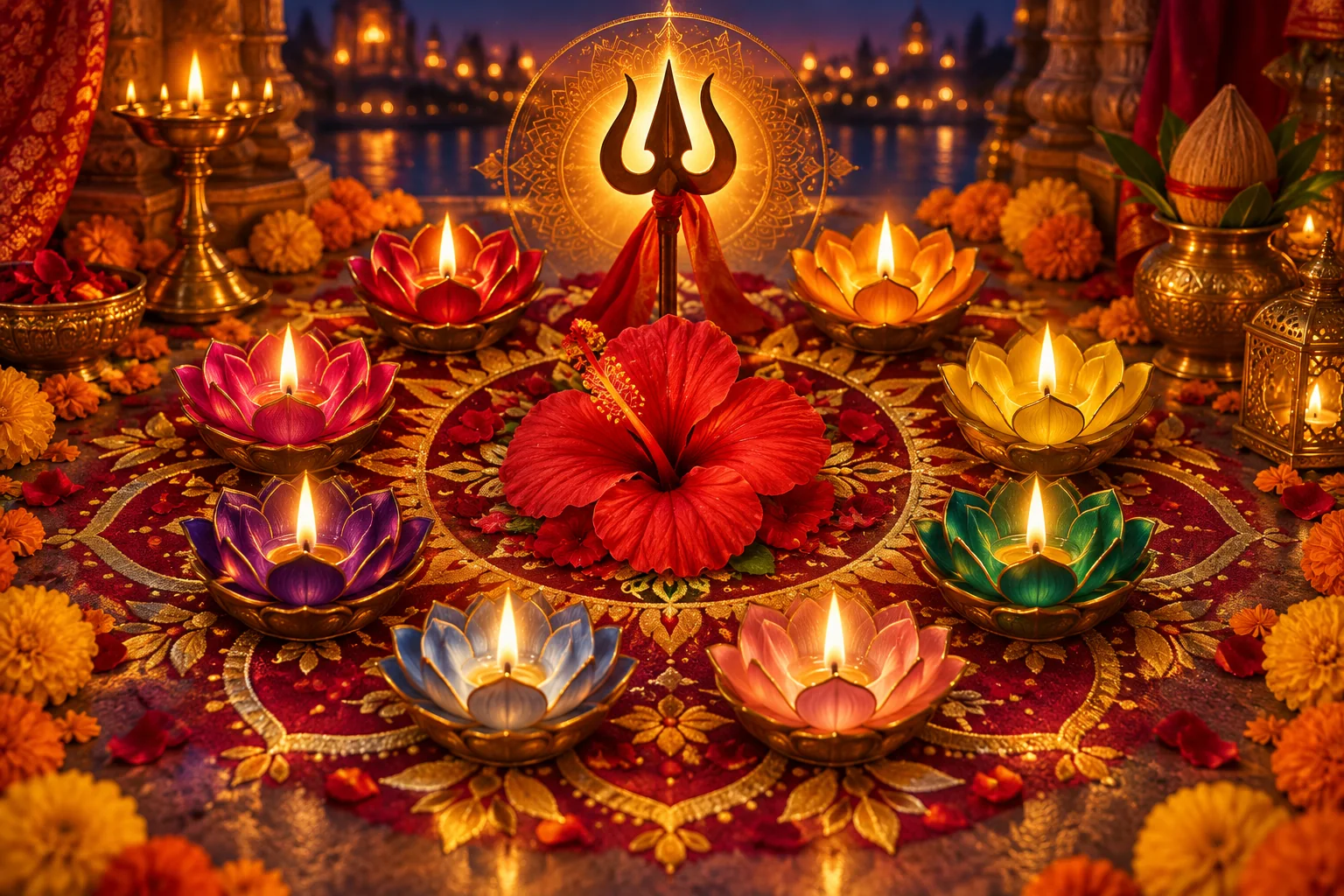
Navratri — “nine nights” — is one of the most widely celebrated festivals in the Hindu calendar, observed multiple times a year but most prominently in Ashwin month (usually falling in September or October). Each of the nine nights is dedicated to a different form of Durga, together known as the Navadurga. Understanding who each one is makes the festival feel a lot less like a single long celebration and more like nine distinct chapters.
1. Shailaputri
“Daughter of the mountain” — this form represents Durga as the daughter of Himavan, the Himalayas personified. She is depicted riding Nandi the bull, holding a trishul (trident) and a lotus, symbolizing the raw, grounded power of nature itself.
2. Brahmacharini
The ascetic form, representing penance and unwavering devotion. Depicted holding a rosary and a water pot (kamandalu), Brahmacharini symbolizes the discipline and perseverance required on any spiritual path.
3. Chandraghanta
“Bearer of the bell-shaped moon” — named for the half-moon shaped like a bell on her forehead. Depicted with ten arms and often riding a tiger, this form represents courage and grace in equal measure, ready for battle but composed.
4. Kushmanda
Believed to have created the universe with nothing more than her smile, radiating cosmic energy outward — her name relates to “kushmanda,” a cosmic egg. She represents the creative force behind existence itself.
5. Skandamata
Literally “mother of Skanda,” depicted holding the infant war-god Kartikeya (Skanda) in her lap. This form represents maternal love and protective strength — power expressed through nurturing rather than force.
6. Katyayani
A warrior form, born from the collective energy of the gods to defeat the demon Mahishasura. Often depicted riding a lion, Katyayani represents righteous courage — strength summoned specifically to confront injustice.
7. Kalaratri
The fiercest of the nine forms — dark-complexioned, often shown with a wild, unbound appearance. Despite her intense form, she is also called Shubhankari, “the auspicious one,” because she destroys ignorance and darkness to make way for what comes after.
8. Mahagauri
Representing purity, calm, and compassion, Mahagauri is depicted as fair and serene, often riding a bull. After the intensity of Kalaratri, this form marks a return to peace — power that no longer needs to fight.
9. Siddhidatri
The final form, the “bestower of siddhis” (spiritual perfections and supernatural abilities), often shown seated on a lotus. Worshipped on the last night of Navratri, Siddhidatri represents the culmination of the spiritual journey traced across the previous eight nights.
Why the sequence matters
Read in order, the nine forms trace an arc: grounding (Shailaputri), discipline (Brahmacharini), readiness (Chandraghanta), creation (Kushmanda), nurturing (Skandamata), righteous strength (Katyayani), destruction of darkness (Kalaratri), peace (Mahagauri), and finally, spiritual attainment (Siddhidatri). Navratri isn’t simply “nine days of the same goddess” — it’s a progression, and each day’s worship is directed at the specific qualities that form represents.
If you’re building a Navratri practice, the Durga Beej Mantra is a simple way to begin, chanted daily throughout the nine nights regardless of which specific form is being honored that day.