
🪷 Practice Guides
Kanakadhara Stotram: Sanskrit, Transliteration and Meaning
Last updated: November 22, 2026
The Kanakadhara Stotram is Shankara's hymn to Lakshmi, traditionally sung after a poor woman offered a single amla fruit. Here is the 18-verse core, with additional stanzas clearly labelled, in Sanskrit, IAST and original English.
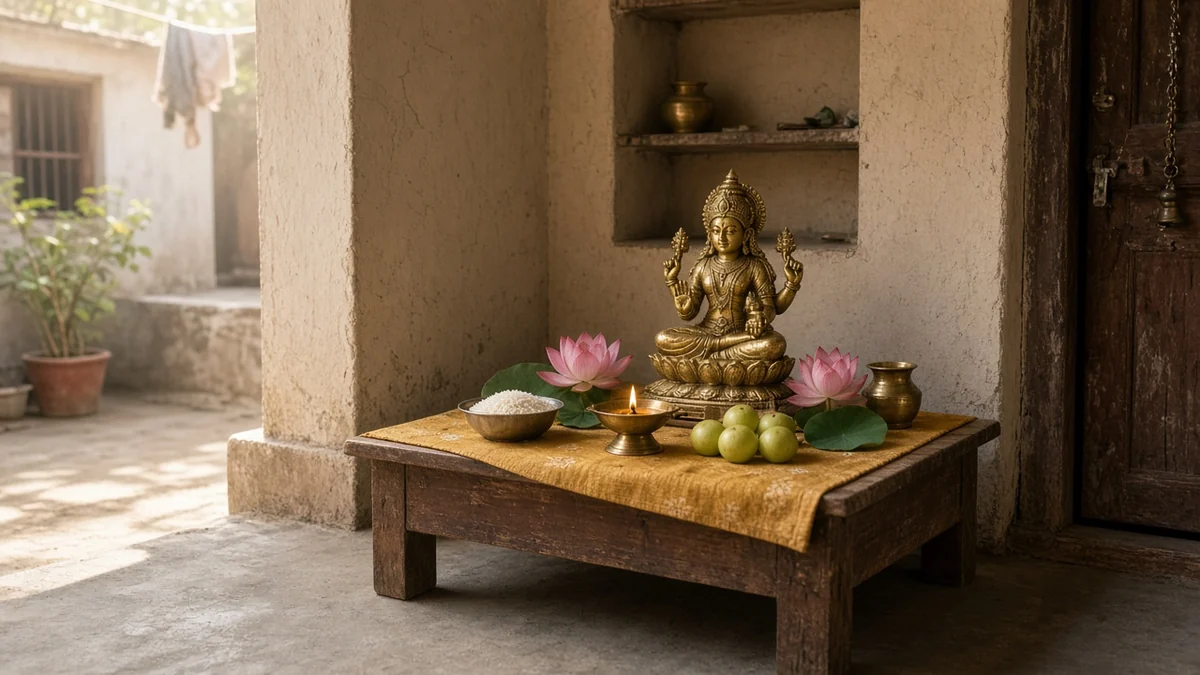
The Kanakadhara Stotram is a Sanskrit hymn to Lakshmi, traditionally attributed to Adi Shankara. Its name means a stream of gold. This page gives the eighteen-verse core used in the Complete Works of Shankaracharya, with an opening mangala to Ganesha, in Devanagari, IAST and original English meanings. Verses 19–25, found in other printed texts, follow in a separate, labelled section. A shorter guide to the story, without the full text, is already on the site as Kanakadhara Stotram meaning.
The English meanings are original to VedicVani. The Sanskrit was checked against the Sanskrit Documents edition of the hymn (encoded and proofread by P. P. Narayanaswami and Kirk Wortman; latest update 28 May 2026), which follows the Complete Works recension, Volume 18, page 70, and notes that verses 19–25 are extra.
The origin story
Later Shankara-vijaya accounts place the hymn at Kaladi, Shankara’s village in Kerala. Still a young student living on alms, he came to the door of a brahmin household that had almost nothing left. The woman of the house had only a single amla fruit (Indian gooseberry) to offer. Moved by that gift, he sang this praise of Lakshmi. Tradition says the goddess answered with a shower of golden amla — or, in some tellings, of gold itself — on the house. The story is told as a memory of compassion meeting genuine need, not as a charm for easy wealth. The image on this page is a modest courtyard shrine with a lamp, rice, lotuses and amla fruit, in keeping with that household setting.
How the hymn is recited
Many devotees recite the Kanakadhara on Fridays, on Diwali and Varalakshmi Vrat, and at times of financial strain. A common practice is to bathe, sit before a Lakshmi or Vishnu-Lakshmi shrine, light a lamp, offer a lotus or a few grains of rice, and read the eighteen verses slowly, once or three times. Some traditions add the opening Ganesha mangala and, if they have learned them, the later additional stanzas. Stay with one recension so the small differences of wording do not unsettle the recitation.
Opening verse
\nMany recitations begin with this unnumbered mangala to Ganesha, printed before verse 1 in the Sanskrit Documents edition. \n### Mangala
वन्दे वन्दारुमन्दारमिन्दिरानन्दकन्दलम् । अमन्दानन्दसन्दोहबन्धुरं सिन्धुराननम् ।
vande vandārumandāramindirānandakandalam | amandānandasandohabandhuraṃ sindhurānanam ||
Meaning. I bow to the elephant-faced one, a wish-tree for those who bow, a tender shoot of Indira’s joy, and a dense mass of unbounded bliss. \n## The eighteen-verse hymn \nThe following eighteen verses are the core recension, ending with the colophon iti śrīmacchaṅkarācāryakṛta śrī kanakadhārāstotraṃ sampūrṇam. \n### Verse 1
अङ्गं हरेः पुलकभूषणमाश्रयन्ती भृङ्गाङ्गनेव मुकुलाभरणं तमालम् । अङ्गीकृताखिलविभूतिरपाङ्गलीला माङ्गल्यदाऽस्तु मम मङ्गलदेवतायाः
aṅgaṃ hareḥ pulakabhūṣaṇamāśrayantī bhṛṅgāṅganeva mukulābharaṇaṃ tamālam | aṅgīkṛtākhilavibhūtirapāṅgalīlā māṅgalyadā’stu mama maṅgaladevatāyāḥ
Meaning. May the glance-play of the auspicious goddess be for my welfare. She who has taken all glory as her own rests on Hari’s body as a bee rests on a budding tamala tree. \n### Verse 2
मुग्धा मुहुर्विदधती वदने मुरारेः प्रेमत्रपाप्रणिहितानि गतागतानि । माला दृशोर्मधुकरीव महोत्पले या सा मे श्रियं दिशतु सागरसम्भवायाः
mugdhā muhurvidadhatī vadane murāreḥ prematrapāpraṇihitāni gatāgatāni | mālā dṛśormadhukarīva mahotpale yā sā me śriyaṃ diśatu sāgarasambhavāyāḥ
Meaning. May she who was born of the ocean grant me prosperity: the garland of her glances, like a bee on a great blue lotus, comes and goes again and again on Murari’s face, held back by love and by shyness. \n### Verse 3
विश्वामरेन्द्रपदविभ्रमदानदक्षं आनन्दहेतुरधिकं मुरविद्विषोऽपि । ईषन्निषीदतु मयि क्षणमीक्षणार्धम् इन्दीवरोदरसहोदरमिन्दिरायाः
viśvāmarendrapadavibhramadānadakṣaṃ ānandaheturadhikaṃ muravidviṣo’pi | īṣanniṣīdatu mayi kṣaṇamīkṣaṇārdham indīvarodarasahodaramindirāyāḥ
Meaning. May Indira’s half-glance, dark as the inside of a blue lotus, rest on me even for a moment. It is skilled at granting even the dizzying office of Indra among the gods, and is a still greater cause of joy for the enemy of Mura himself. \n### Verse 4
आमीलिताक्षमधिगम्य मुदा मुकुन्दं आनन्दकन्दमनिमेषमनङ्गतन्त्रम् । आकेकरस्थितकनीनिकपक्ष्मनेत्रं भूत्यै भवेन्मम भुजङ्गशयाङ्गनायाः
āmīlitākṣamadhigamya mudā mukundaṃ ānandakandamanimeṣamanaṅgatantram | ākekarasthitakanīnikapakṣmanetraṃ bhūtyai bhavenmama bhujaṅgaśayāṅganāyāḥ
Meaning. May the slightly sidelong, almost unblinking eyes of the wife of him who lies on the serpent bring me prosperity. Having found Mukunda, the root of bliss, they stay wide in the art of love, the pupil and lashes turned a little to the side. \n### Verse 5
बाह्वन्तरे मधुजितः श्रितकौस्तुभे या हारावलीव हरिनीलमयी विभाति । कामप्रदा भगवतोऽपि कटाक्षमाला कल्याणमावहतु मे कमलालयायाः
bāhvantare madhujitaḥ śritakaustubhe yā hārāvalīva harinīlamayī vibhāti | kāmapradā bhagavato’pi kaṭākṣamālā kalyāṇamāvahatu me kamalālayāyāḥ
Meaning. May the necklace of glances of the goddess who dwells in the lotus bring me welfare. Between the arms of the conqueror of Madhu, near the kaustubha jewel, that necklace shines like a string of dark sapphires, and grants even the Lord his heart’s desire. \n### Verse 6
कालाम्बुदालिललितोरसि कैटभारेः धाराधरे स्फुरति या तडिदङ्गनेव । मातुस्समस्तजगतां महनीयमूर्तिः भद्राणि मे दिशतु भार्गवनन्दनायाः
kālāmbudālilalitorasi kaiṭabhāreḥ dhārādhare sphurati yā taḍidaṅganeva | mātussamastajagatāṃ mahanīyamūrtiḥ bhadrāṇi me diśatu bhārgavanandanāyāḥ
Meaning. May the venerable form of the daughter of Bhrigu, mother of all the worlds, grant me what is good. On the breast of the foe of Kaitabha, lovely as a dark rain-cloud, she flashes like lightning. \n### Verse 7
प्राप्तं पदं प्रथमतः खलु यत्प्रभावात् माङ्गल्यभाजि मधुमाथिनि मन्मथेन । मय्यापतेत्तदिह मन्थरमीक्षणार्धं मन्दालसं च मकरालयकन्यकायाः
prāptaṃ padaṃ prathamataḥ khalu yatprabhāvāt māṅgalyabhāji madhumāthini manmathena | mayyāpatettadiha mantharamīkṣaṇārdhaṃ mandālasaṃ ca makarālayakanyakāyāḥ
Meaning. May that slow, languid half-glance of the daughter of the ocean fall on me here. It was by its power that the mind-born god first found a place on Madhumathana, who is himself the seat of auspiciousness. \n### Verse 8
दद्याद्दयानुपवनो द्रविणाम्बुधारां अस्मिन्नकिञ्चनविहङ्गशिशौ विषण्णे । दुष्कर्मघर्ममपनीय चिराय दूरं नारायणप्रणयिनीनयनाम्बुवाहः
dadyāddayānupavano draviṇāmbudhārāṃ asminnakiñcanavihaṅgaśiśau viṣaṇṇe | duṣkarmagharmamapanīya cirāya dūraṃ nārāyaṇapraṇayinīnayanāmbuvāhaḥ
Meaning. May the cloud that is the eyes of Narayana’s beloved take far away, and for a long time, the heat of my ill deeds, and pour a stream of wealth upon this dejected nestling of a bird who has nothing. \n### Verse 9
इष्टाविशिष्टमतयोऽपि यया दयार्द्रदृष्ट्या त्रिविष्टपपदं सुलभं लभन्ते । दृष्टिः प्रहृष्टकमलोदरदीप्तिरिष्टां पुष्टिं कृषीष्ट मम पुष्करविष्टरायाः
iṣṭāviśiṣṭamatayo’pi yayā dayārdradṛṣṭyā triviṣṭapapadaṃ sulabhaṃ labhante | dṛṣṭiḥ prahṛṣṭakamalodaradīptiriṣṭāṃ puṣṭiṃ kṛṣīṣṭa mama puṣkaraviṣṭarāyāḥ
Meaning. May the glance of her whose seat is the lotus, bright as the inside of a delighted lotus, make grow for me the plenty I long for. By that glance, melted with compassion, even those of quite different views easily obtain the place of the threefold heaven. \n### Verse 10
गीर्देवतेति गरुडध्वजसुन्दरीति शाकम्भरीति शशिशेखरवल्लभेति । सृष्टिस्थितिप्रलयकेलिषु संस्थितायै तस्यै नमस्त्रिभुवनैकगुरोस्तरुण्यै
gīrdevateti garuḍadhvajasundarīti śākambharīti śaśiśekharavallabheti | sṛṣṭisthitipralayakeliṣu saṃsthitāyai tasyai namastribhuvanaikagurostaruṇyai
Meaning. Obeisance to her who stands in the play of creation, maintenance and dissolution: named Goddess of Speech, the beautiful one of him whose banner is Garuda, Shakambhari, and the beloved of him who wears the moon — the young consort of the one teacher of the three worlds. \n### Verse 11
श्रुत्यै नमोऽस्तु शुभकर्मफलप्रसूत्यै रत्यै नमोऽस्तु रमणीयगुणार्णवायै । शक्त्यै नमोऽस्तु शतपत्रनिकेतनायै पुष्ट्यै नमोऽस्तु पुरुषोत्तमवल्लभायै
śrutyai namo’stu śubhakarmaphalaprasūtyai ratyai namo’stu ramaṇīyaguṇārṇavāyai | śaktyai namo’stu śatapatraniketanāyai puṣṭyai namo’stu puruṣottamavallabhāyai
Meaning. Obeisance to Shruti, who gives birth to the fruit of good deeds; to Rati, an ocean of lovely qualities; to Shakti, whose dwelling is the hundred-petalled lotus; to Pushti, the beloved of Purushottama. \n### Verse 12
नमोऽस्तु नालीकनिभाननायै नमोऽस्तु दुग्धोदधिजन्मभूम्यै । नमोऽस्तु सोमामृतसोदरायै नमोऽस्तु नारायणवल्लभायै
namo’stu nālīkanibhānanāyai namo’stu dugdhodadhijanmabhūmyai | namo’stu somāmṛtasodarāyai namo’stu nārāyaṇavallabhāyai
Meaning. Obeisance to her whose face is like a lotus; to her whose birthplace is the ocean of milk; to her who is a sister to the moon and to amrita; to the beloved of Narayana. \n### Verse 13
सम्पत्कराणि सकलेन्द्रियनन्दनानि साम्राज्यदानविभवानि सरोरुहाक्षि । त्वद्वन्दनानि दुरिताहरणोद्यतानि मामेव मातरनिशं कलयन्तु मान्ये
sampatkarāṇi sakalendriyanandanāni sāmrājyadānavibhavāni saroruhākṣi | tvadvandanāni duritāharaṇodyatāni māmeva mātaraniśaṃ kalayantu mānye
Meaning. O lotus-eyed mother, worthy of honour: may your praises, which create prosperity, delight every sense, have the glory of granting sovereignty, and stand ready to take away misfortune, be mine without pause. \n### Verse 14
यत्कटाक्षसमुपासनाविधिः सेवकस्य सकलार्थसम्पदः । सन्तनोति वचनाङ्गमानसैः त्वां मुरारिहृदयेश्वरीं भजे
yatkaṭākṣasamupāsanāvidhiḥ sevakasya sakalārthasampadaḥ | santanoti vacanāṅgamānasaiḥ tvāṃ murārihṛdayeśvarīṃ bhaje
Meaning. The rite of attending on her sidelong glance brings a servant the wealth of every aim. With speech, body and mind I worship you, mistress of Murari’s heart. \n### Verse 15
सरसिजनिलये सरोजहस्ते धवलतमांशुकगन्धमाल्यशोभे । भगवति हरिवल्लभे मनोज्ञे त्रिभुवनभूतिकरि प्रसीद मह्यम्
sarasijanilaye sarojahaste dhavalatamāṃśukagandhamālyaśobhe | bhagavati harivallabhe manojñe tribhuvanabhūtikari prasīda mahyam
Meaning. O you who dwell in the lotus, who hold a lotus in the hand, shining with a very white garment, scent and a garland: O blessed one, beloved of Hari, beautiful, who make the three worlds prosper — be gracious to me. \n### Verse 16
दिग् हस्तिभिः कनककुम्भमुखावसृष्टस्वर्वाहिनीविमलचारुजलप्लुताङ्गीम् । प्रातर्नमामि जगतां जननीमशेषलोकाधिनाथगृहिणीममृताब्धिपुत्रीम्
dig hastibhiḥ kanakakumbhamukhāvasṛṣṭasvarvāhinīvimalacārujalaplutāṅgīm | prātarnamāmi jagatāṃ jananīmaśeṣalokādhināthagṛhiṇīmamṛtābdhiputrīm
Meaning. In the morning I bow to the mother of the worlds, the wife of the lord of all people, the daughter of the nectar-ocean. The elephants of the quarters have bathed her limbs in the pure, lovely water of the heavenly river, poured from the mouths of golden jars. \n### Verse 17
कमले कमलाक्षवल्लभे त्वं करुणापूरतरङ्गितैरपाङ्गैः । अवलोकय मामकिञ्चनानां प्रथमं पात्रमकृत्रिमं दयायाः
kamale kamalākṣavallabhe tvaṃ karuṇāpūrataraṅgitairapāṅgaiḥ | avalokaya māmakiñcanānāṃ prathamaṃ pātramakṛtrimaṃ dayāyāḥ
Meaning. O Lakshmi, beloved of the lotus-eyed one: look on me with sidelong glances that rise in waves of compassion. Among those who have nothing, I am the first genuine vessel of your mercy. \n### Verse 18
स्तुवन्ति ये स्तुतिभिरमीभिरन्वहं त्रयीमयीं त्रिभुवनमातरं रमाम् । गुणाधिका गुरुतरभाग्यभागिनो भवन्ति ते भुवि बुधभाविताशयाः
stuvanti ye stutibhiramībhiranvahaṃ trayīmayīṃ tribhuvanamātaraṃ ramām | guṇādhikā gurutarabhāgyabhāgino bhavanti te bhuvi budhabhāvitāśayāḥ
Meaning. Those who praise, day after day, with these verses, Rama — who is made of the three Vedas, the mother of the three worlds — become rich in good qualities on earth, partakers of a heavier good fortune, their minds honoured by the wise. \n## Additional verses found in other printed texts \nVerses 19–25, and the short phalashruti that follows them, appear in other printed editions. They are not part of the eighteen-verse core in the Complete Works of Shankaracharya recension. They are included here, clearly labelled, because many devotees know the hymn in a longer form. \n### Verse 19 (additional)
नमोऽस्तु हेमाम्बुजपीठिकायै नमोऽस्तु भूमण्डलनायिकायै । नमोऽस्तु देवादिदयापरायै नमोऽस्तु शार्ङ्गायुधवल्लभायै
namo’stu hemāmbujapīṭhikāyai namo’stu bhūmaṇḍalanāyikāyai | namo’stu devādidayāparāyai namo’stu śārṅgāyudhavallabhāyai
Meaning. Obeisance to her whose seat is a golden lotus; to the lady of the circle of the earth; to her whose compassion is turned even toward the gods; to the beloved of him who bears the Sharnga bow. \n### Verse 20 (additional)
नमोऽस्तु देव्यै भृगुनन्दनायै नमोऽस्तु विष्णोरुरसि स्थितायै । नमोऽस्तु लक्ष्म्यै कमलालयायै नमोऽस्तु दामोदरवल्लभायै
namo’stu devyai bhṛgunandanāyai namo’stu viṣṇorurasi sthitāyai | namo’stu lakṣmyai kamalālayāyai namo’stu dāmodaravallabhāyai
Meaning. Obeisance to the goddess, the daughter of Bhrigu; to her who rests on Vishnu’s chest; to Lakshmi, who dwells in the lotus; to the beloved of Damodara. \n### Verse 21 (additional)
नमोऽस्तु कान्त्यै कमलेक्षणायै नमोऽस्तु भूत्यै भुवनप्रसूत्यै । नमोऽस्तु देवादिभिरर्चितायै नमोऽस्तु नन्दात्मजवल्लभायै
namo’stu kāntyai kamalekṣaṇāyai namo’stu bhūtyai bhuvanaprasūtyai | namo’stu devādibhirarcitāyai namo’stu nandātmajavallabhāyai
Meaning. Obeisance to her who is radiance, the lotus-eyed one; to her who is prosperity, the mother of the worlds; to her who is worshipped by the gods and the rest; to the beloved of the son of Nanda. \n### Verse 22 (additional)
देवि प्रसीद जगदीश्वरि लोकमातः कल्याणगात्रि कमलेक्षणजीवनाथे । दारिद्र्यभीतिहृदयं शरणागतं माम् आलोकय प्रतिदिनं सदयैरपाङ्गैः
devi prasīda jagadīśvari lokamātaḥ kalyāṇagātri kamalekṣaṇajīvanāthe | dāridryabhītihṛdayaṃ śaraṇāgataṃ mām ālokaya pratidinaṃ sadayairapāṅgaiḥ
Meaning. O Devi, be gracious, mistress of the world, mother of the people, whose form is welfare, life of the lotus-eyed one. Look on me every day with compassionate sidelong glances — I who have come for refuge, my heart afraid of poverty. \n### Verse 23 (additional)
बिल्वाटवीमध्यलसत्सरोजे सहस्रपत्रे सुखसन्निविष्टाम् । अष्टापदाम्भोरुहपाणिपद्मां सुवर्णवर्णां प्रणमामि लक्ष्मीम्
bilvāṭavīmadhyalasatsaroje sahasrapatre sukhasanniviṣṭām | aṣṭāpadāmbhoruhapāṇipadmāṃ suvarṇavarṇāṃ praṇamāmi lakṣmīm
Meaning. I bow to Lakshmi of golden colour, comfortably seated in a shining thousand-petalled lotus in the midst of a bilva forest, a golden lotus in her lotus hand. \n### Verse 24 (additional)
कमलासनपाणिना ललाटे लिखितमक्षरपङ्क्तिमस्य जन्तोः । परिमार्जय मातरङ्घ्रिणा ते धनिकद्वारनिवास दुःखदोग्ध्रीम्
kamalāsanapāṇinā lalāṭe likhitamakṣarapaṅktimasya jantoḥ | parimārjaya mātaraṅghriṇā te dhanikadvāranivāsa duḥkhadogdhrīm
Meaning. O mother, with your foot wipe away the line of letters written on this creature’s forehead by the lotus-seated one’s hand — that writing which yields the misery of living at a rich man’s door. \n### Verse 25 (additional)
अम्भोरुहं जन्मगृहं भवत्या वक्षःस्थलं भर्तृगृहं मुरारेः । कारुण्यतः कल्पय पद्मवासे लीलागृहं मे हृदयारविन्दम्
ambhoruhaṃ janmagṛhaṃ bhavatyā vakṣaḥsthalaṃ bhartṛgṛhaṃ murāreḥ | kāruṇyataḥ kalpaya padmavāse līlāgṛhaṃ me hṛdayāravindam
Meaning. Your birth-house is the lotus; your husband’s house is the chest of Murari. Out of compassion, O you who dwell in the lotus, make my own heart-lotus a house of play for you. \n### Phalashruti (additional)
सुवर्णधारास्तोत्रं यच्छङ्कराचार्यनिर्मितम् । त्रिसन्ध्यं यः पठेन्नित्यं स कुबेरसमो भवेत् ।
suvarṇadhārāstotraṃ yacchaṅkarācāryanirmitam | trisandhyaṃ yaḥ paṭhennityaṃ sa kuberasamo bhavet ||
Meaning. The Suvarnadhara Stotra composed by Shankaracharya: whoever recites it daily at the three junctions of the day becomes the equal of Kubera. This closing verse is transmitted with the additional stanzas in some printed texts; it is not part of the eighteen-verse core of the Complete Works recension used above.
Text notes
- This page follows the Sanskrit Documents text of the hymn, which follows the Complete Works of Shankaracharya, Volume 18, page 70. The core ends after verse 18 with the colophon of completion.
- The opening mangala to Ganesha is unnumbered in that edition and is printed before verse 1.
- Verse 10: some prints read garuḍadhvajabhāminīti in place of garuḍadhvajasundarīti. The sense — Lakshmi as Vishnu’s consort — is the same.
- Verse 13: some prints read saroruhāṇi in place of saroruhākṣi, and duritottaraṇodyatāni or duritoddharaṇodyatāni in place of duritāharaṇodyatāni. This page keeps the Complete Works wording and notes the variants.
- Verses 19–25 and the short phalashruti are clearly labelled as additional because they are not in that eighteen-verse core.
- The English meanings are original. They do not reproduce any published English translation.
Related reading
A shorter introduction is at Kanakadhara Stotram meaning. Other Shankara hymns on this site include the Soundarya Lahari, the Annapurna Stotram, Bhaja Govindam, the Dakshinamurthy Stotram and the Nirvana Shatakam. For Lakshmi in the festival year, see Diwali. A wider starting point is the beginner’s guide to Hindu mantras.
Frequently Asked Questions
Who composed the Kanakadhara Stotram?
Tradition ascribes the hymn to Adi Shankara. The story is told in later Shankara-vijaya accounts: as a young student at Kaladi he received a single amla fruit from a poor brahmin housewife and sang this hymn; Lakshmi is said to have answered with a shower of gold.
How many verses are in the Kanakadhara Stotram?
The recension printed in the Complete Works of Shankaracharya has 18 verses, often preceded by a short mangala to Ganesha. Many popular books add verses 19–25 and a phalashruti; this page gives the 18-verse core first and labels the extras clearly.
What does Kanakadhara mean?
Kanaka-dhara means a stream or shower of gold. In the traditional story, Lakshmi's grace falls as golden amla fruit — or, in some tellings, gold itself — on the house of the woman who had almost nothing to give.
When is the Kanakadhara Stotram recited?
Many families recite it on Fridays, on Diwali or Varalakshmi Vrat, and whenever they pray for relief from want. It is a prayer for Lakshmi's compassion, not only for money.
Where can I read a shorter guide to the story?
A shorter introduction, without the full text, is on our [Kanakadhara Stotram meaning](/blog/kanakadhara-stotram-meaning/) page. The two pages are meant to be read together.