
🌳 Practice Guides
Dakshinamurthy Stotram: Sanskrit Lyrics, Transliteration and Meaning
The Dakshinamurthy Stotram is a ten-verse Sanskrit hymn traditionally attributed to Adi Shankaracharya, in praise of Shiva as the silent teacher under the banyan tree. Here is the widely recited Sanskrit, a clear transliteration and an original English meaning of each verse.
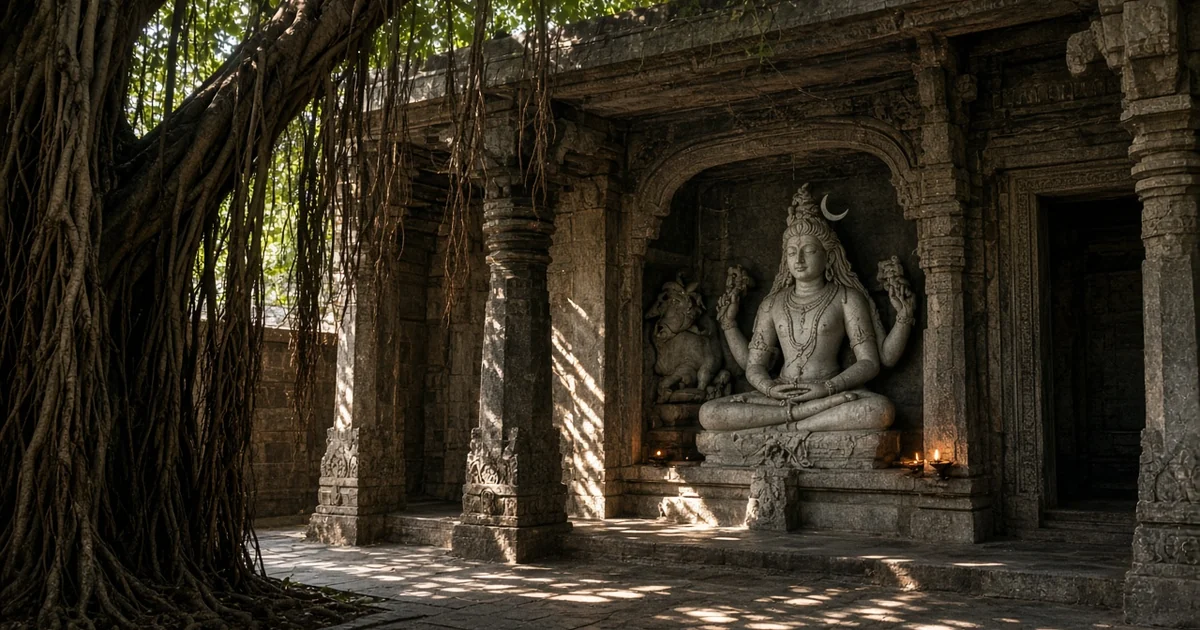
The Dakshinamurthy Stotram, sometimes called the Dakshinamurthy Ashtakam, is a ten-verse Sanskrit hymn traditionally attributed to Adi Shankaracharya. It praises Shiva as Dakshinamurti, the teacher who faces south and, seated under a banyan tree, makes the Self known — by silence, by the auspicious gesture of knowledge, and by the short Vedic sentence “That thou art.”
The hymn is a close companion to other Shankara poems on this site, especially Bhaja Govindam. For Shiva practice more broadly, see Om Namah Shivaya and powerful Shiva mantras.
How the hymn is shaped
A peace verse from late Vedic tradition — “He who first brought forth Brahma and imparted the Vedas” — is commonly chanted before the ten verses. Verses 1–9 end with the same bow:
तस्मै श्रीगुरुमूर्तये नम इदं श्रीदक्षिणामूर्तये
tasmai śrīgurumūrtaye nama idaṃ śrīdakṣiṇāmūrtaye
“This bow to that embodiment of the Guru, to Sri Dakshinamurti.”
Verse 10 is a phalashruti: it names the fruit of hearing, reflecting on, meditating on and reciting the hymn — the clear knowledge that the Self is all, and the eightfold lordly power that follows from it. A separate closing verse, beginning Vaṭaviṭapi samīpe, is often added after verse 10 and is included below, clearly labelled.
Sureshvara’s Manasollasa is the classical commentary on this stotra. The English meanings on this page are original to VedicVani. They aim to say plainly what the Sanskrit names, not to replace that commentary.
A few lines are blunt. Verse 5 uses a traditional polemical comparison when it criticises views that mistake body, breath, mind or a void for the Self. The Sanskrit is given as it stands; the meaning notes the figure and does not adopt it as a statement about any person.
How to recite
- Sit cleanly, ideally in the morning, facing a Shiva shrine or facing south. A lamp and a few flowers are enough.
- Begin with the peace verse if that is your custom, then recite the ten verses, and close with the Vaṭaviṭapi bow if you use it.
- Stay with one printed edition while you learn the hymn. Small variants (noted below) are common and need not unsettle a recitation already begun.
- The stotra is a support for study and meditation, not a shortcut around them, and not a substitute for a living teacher or for ordinary care.
Opening peace verse
ॐ यो ब्रह्माणं विदधाति पूर्वम् यो वै वेदांश्च प्रहिणोति तस्मै । तं ह देवमात्मबुद्धिप्रकाशं मुमुक्षुर्वै शरणमहं प्रपद्ये ॥ ॐ शान्तिः शान्तिः शान्तिः
Transliteration: oṃ yo brahmāṇaṃ vidadhāti pūrvam yo vai vedāṃśca prahiṇoti tasmai | taṃ ha devamātmabuddhiprakāśaṃ mumukṣurvai śaraṇamahaṃ prapadye || oṃ śāntiḥ śāntiḥ śāntiḥ
Meaning: I take refuge in that God who first brought forth Brahma and imparted the Vedas to him, and who lights the intellect with knowledge of the Self. Om, peace, peace, peace.
This verse is commonly chanted before the stotra. It is a close form of a line also known from the Shvetashvatara Upanishad (6.18).
The 10 verses
Verse 1
विश्वं दर्पणदृश्यमाननगरीतुल्यं निजान्तर्गतं पश्यन्नात्मनि मायया बहिरिवोद्भूतं यथा निद्रया । यः साक्षात्कुरुते प्रबोधसमये स्वात्मानमेवाद्वयं तस्मै श्रीगुरुमूर्तये नम इदं श्रीदक्षिणामूर्तये ॥1॥
Transliteration: viśvaṃ darpaṇadṛśyamānanagarītulyaṃ nijāntargataṃ paśyannātmani māyayā bahirivodbhūtaṃ yathā nidrayā | yaḥ sākṣātkurute prabodhasamaye svātmānamevādvayaṃ tasmai śrīgurumūrtaye nama idaṃ śrīdakṣiṇāmūrtaye ||1||
Meaning: This universe is like a city seen in a mirror: it is actually within oneself, yet by maya it appears as if it had arisen outside, just as in a dream. To that embodiment of the Guru, to Sri Dakshinamurti, this bow — to him who, at the moment of waking, realises his own Self as the one, secondless reality.
Verse 2
बीजस्यान्तरिवाङ्कुरो जगदिदं प्राङ्निर्विकल्पं पुनः मायाकल्पितदेशकालकलनावैचित्र्यचित्रीकृतम् । मायावीव विजृम्भयत्यपि महायोगीव यः स्वेच्छया तस्मै श्रीगुरुमूर्तये नम इदं श्रीदक्षिणामूर्तये ॥2॥
Transliteration: bījasyāntarivāṅkuro jagadidaṃ prāṅnirvikalpaṃ punaḥ māyākalpitadeśakālakalanāvaicitryacitrīkṛtam | māyāvīva vijṛmbhayatyapi mahāyogīva yaḥ svecchayā tasmai śrīgurumūrtaye nama idaṃ śrīdakṣiṇāmūrtaye ||2||
Meaning: This world previously existed unmanifested, like the sprout within a seed, and is then painted with the variety of space, time and activity imagined by maya. To that embodiment of the Guru, to Sri Dakshinamurti, this bow — to him who, like a magician or like a great yogi, manifests it at his own will.
Verse 3
यस्यैव स्फुरणं सदात्मकमसत्कल्पार्थकं भासते साक्षात्तत्त्वमसीति वेदवचसा यो बोधयत्याश्रितान् । यत्साक्षात्करणाद्भवेन्न पुनरावृत्तिर्भवाम्भोनिधौ तस्मै श्रीगुरुमूर्तये नम इदं श्रीदक्षिणामूर्तये ॥3॥
Transliteration: yasyaiva sphuraṇaṃ sadātmakamasatkalpārthakaṃ bhāsate sākṣāttattvamasīti vedavacasā yo bodhayatyāśritān | yatsākṣātkaraṇādbhavenna punarāvṛttirbhavāmbhonidhau tasmai śrīgurumūrtaye nama idaṃ śrīdakṣiṇāmūrtaye ||3||
Meaning: It is his very shining, which is the true Self, that makes the seeming objects of the unreal appear. With the Vedic words “That thou art,” he awakens those who take refuge in him; and by the direct realisation of that truth there is no return again to the ocean of becoming. To that embodiment of the Guru, to Sri Dakshinamurti, this bow.
Verse 4
नानाच्छिद्रघटोदरस्थितमहादीपप्रभाभास्वरं ज्ञानं यस्य तु चक्षुरादिकरणद्वारा बहिः स्पन्दते । जानामीति तमेव भान्तमनुभात्येतत्समस्तं जगत् तस्मै श्रीगुरुमूर्तये नम इदं श्रीदक्षिणामूर्तये ॥4॥
Transliteration: nānācchidraghaṭodarasthitamahādīpaprabhābhāsvaraṃ jñānaṃ yasya tu cakṣurādikaraṇadvārā bahiḥ spandate | jānāmīti tameva bhāntamanubhātyetatsamastaṃ jagat tasmai śrīgurumūrtaye nama idaṃ śrīdakṣiṇāmūrtaye ||4||
Meaning: His knowledge, like the light of a great lamp placed inside a pot pierced with many holes, shines outward through the senses such as the eyes. This whole world shines after him who shines, as if to say, “I know.” To that embodiment of the Guru, to Sri Dakshinamurti, this bow.
Verse 5
देहं प्राणमपीन्द्रियाण्यपि चलां बुद्धिं च शून्यं विदुः स्त्रीबालान्धजडोपमास्त्वहमिति भ्रान्ता भृशं वादिनः । मायाशक्तिविलासकल्पितमहाव्यामोहसंहारिणे तस्मै श्रीगुरुमूर्तये नम इदं श्रीदक्षिणामूर्तये ॥5॥
Transliteration: dehaṃ prāṇamapīndriyāṇyapi calāṃ buddhiṃ ca śūnyaṃ viduḥ strībālāndhajaḍopamāstvahamiti bhrāntā bhṛśaṃ vādinaḥ | māyāśaktivilāsakalpitamahāvyāmohasaṃhāriṇe tasmai śrīgurumūrtaye nama idaṃ śrīdakṣiṇāmūrtaye ||5||
Meaning: Some, deeply deluded, take the body, the vital breath, the senses, the restless intellect, or even a mere void to be the “I.” The verse compares such views, in the sharp language of its time, to the condition of a woman, a child, a blind person, and one of unawakened intellect — a polemical figure, not a statement we adopt about any person. To that embodiment of the Guru, to Sri Dakshinamurti, this bow — to him who destroys the great delusion produced by the play of maya’s power.
Verse 6
राहुग्रस्तदिवाकरेन्दुसदृशो मायासमाच्छादनात् सन्मात्रः करणोपसंहरणतो योऽभूत्सुषुप्तः पुमान् । प्रागस्वाप्समिति प्रबोधसमये यः प्रत्यभिज्ञायते तस्मै श्रीगुरुमूर्तये नम इदं श्रीदक्षिणामूर्तये ॥6॥
Transliteration: rāhugrastadivākarendusadṛśo māyāsamācchādanāt sanmātraḥ karaṇopasaṃharaṇato yo’bhūtsuṣuptaḥ pumān | prāgasvāpsamiti prabodhasamaye yaḥ pratyabhijñāyate tasmai śrīgurumūrtaye nama idaṃ śrīdakṣiṇāmūrtaye ||6||
Meaning: Like the sun and the moon swallowed by Rahu, the Self, which is pure existence, is veiled by maya; when the senses are withdrawn, the person has become one in deep sleep. On waking he is recognised as “I slept before.” To that embodiment of the Guru, to Sri Dakshinamurti, this bow.
Verse 7
बाल्यादिष्वपि जाग्रदादिषु तथा सर्वास्ववस्थास्वपि व्यावृत्तास्वनुवर्तमानमहमित्यन्तः स्फुरन्तं सदा । स्वात्मानं प्रकटीकरोति भजतां यो मुद्रया भद्रया तस्मै श्रीगुरुमूर्तये नम इदं श्रीदक्षिणामूर्तये ॥7॥
Transliteration: bālyādiṣvapi jāgradādiṣu tathā sarvāsvavasthāsvapi vyāvṛttāsvanuvartamānamahamityantaḥ sphurantaṃ sadā | svātmānaṃ prakaṭīkaroti bhajatāṃ yo mudrayā bhadrayā tasmai śrīgurumūrtaye nama idaṃ śrīdakṣiṇāmūrtaye ||7||
Meaning: In childhood and the other stages of life, in waking and the other states, and in all conditions — even as those conditions pass away — he continually reveals, to those who worship him, the inner Self that shines as “I,” and he does so by the auspicious gesture, the jnana or chin mudra. To that embodiment of the Guru, to Sri Dakshinamurti, this bow.
Verse 8
विश्वं पश्यति कार्यकारणतया स्वस्वामिसंबन्धतः शिष्याचार्यतया तथैव पितृपुत्राद्यात्मना भेदतः । स्वप्ने जाग्रति वा य एष पुरुषो मायापरिभ्रामितः तस्मै श्रीगुरुमूर्तये नम इदं श्रीदक्षिणामूर्तये ॥8॥
Transliteration: viśvaṃ paśyati kāryakāraṇatayā svasvāmisaṃbandhataḥ śiṣyācāryatayā tathaiva pitṛputrādyātmanā bhedataḥ | svapne jāgrati vā ya eṣa puruṣo māyāparibhrāmitaḥ tasmai śrīgurumūrtaye nama idaṃ śrīdakṣiṇāmūrtaye ||8||
Meaning: Deluded by maya, the person sees the world in terms of cause and effect, of servant and master, of pupil and teacher, and of father and son and the rest, whether in dream or in waking. To that embodiment of the Guru, to Sri Dakshinamurti, this bow.
Verse 9
भूरम्भांस्यनलोऽनिलोऽम्बरमहर्नाथो हिमांशुः पुमान् इत्याभाति चराचरात्मकमिदं यस्यैव मूर्त्यष्टकम् । नान्यत्किञ्चन विद्यते विमृशतां यस्मात्परस्माद्विभोः तस्मै श्रीगुरुमूर्तये नम इदं श्रीदक्षिणामूर्तये ॥9॥
Transliteration: bhūrambhāṃsyanalo’nilo’mbaramaharnātho himāṃśuḥ pumān ityābhāti carācarātmakamidaṃ yasyaiva mūrtyaṣṭakam | nānyatkiñcana vidyate vimṛśatāṃ yasmātparasmādvibhoḥ tasmai śrīgurumūrtaye nama idaṃ śrīdakṣiṇāmūrtaye ||9||
Meaning: Earth, water, fire, air, space, the sun, the moon, and the person — thus appears this moving and unmoving world, which is his eightfold form. For those who inquire, nothing else exists apart from that supreme Lord. To that embodiment of the Guru, to Sri Dakshinamurti, this bow.
Verse 10
सर्वात्मत्वमिति स्फुटीकृतमिदं यस्मादमुष्मिन् स्तवे तेनास्य श्रवणात्तदर्थमननाद्ध्यानाच्च सङ्कीर्तनात् । सर्वात्मत्वमहाविभूतिसहितं स्यादीश्वरत्वं स्वतः ततः सिद्ध्येत्तत्पुनरष्टधा परिणतं चैश्वर्यमव्याहतम् ॥10॥
Transliteration: sarvātmatvamiti sphuṭīkṛtamidaṃ yasmādamuṣmin stave tenāsya śravaṇāttadarthamananāddhyānācca saṅkīrtanāt | sarvātmatvamahāvibhūtisahitaṃ syādīśvaratvaṃ svataḥ tataḥ siddhyettatpunaraṣṭadhā pariṇataṃ caiśvaryamavyāhatam ||10||
Meaning: Because the truth that the Self is all has been made clear in this hymn, by hearing it, reflecting on its meaning, meditating on it and reciting it, the great glory of being the Self of all, and lordship itself, arise of their own accord; and then that eightfold lordly power is accomplished without impediment.
Closing verse (commonly recited after verse 10)
वटविटपिसमीपे भूमिभागे निषण्णं सकलमुनिजनानां ज्ञानदातारमारात् । त्रिभुवनगुरुमीशं दक्षिणामूर्तिदेवं जननमरणदुःखच्छेददक्षं नमामि ॥
Transliteration: vaṭaviṭapisamīpe bhūmibhāge niṣaṇṇaṃ sakalamunijanānāṃ jñānadātāramārāt | tribhuvanagurumīśaṃ dakṣiṇāmūrtidevaṃ jananamaraṇaduḥkhacchedadakṣaṃ namāmi
Meaning: I bow to the Lord Dakshinamurti, the teacher of the three worlds, who sits on the ground near a banyan tree, who from close at hand grants knowledge to all the sages, and who is skilled in cutting the sorrow of birth and death.
Text notes
The Sanskrit above follows the widely recited ten-verse recension traditionally attributed to Adi Shankaracharya, checked against the proofread Sanskrit Documents edition (proofread in the Shankara and Giridhar Madras line; the file notes a latest update of 30 October 2020). The peace verse and the Vaṭaviṭapi closing are included because that edition, and common recitation practice, place them before and after the ten verses. Other points of variation:
- Verse 2: some prints read śanair māyākalpita in place of punaḥ māyākalpita (“again painted by the imaginings of maya”). The sense of a world later diversified by maya is the same.
- Verse 5: the comparison strībālandhajaḍopamāḥ is a conventional polemical figure in this genre. It is translated as printed and is not adopted as a view of women, children, or people with impaired sight or intellect.
- Verse 7: mudrayā bhadrayā is the “auspicious gesture,” traditionally the jnana or chin mudra. The hero image on this page is a temple scene, not a close study of the fingers; learn the gesture from a teacher if you use it.
- Verse 9 describes Shiva’s eightfold form (earth, water, fire, air, space, sun, moon, and the living person), a theme also familiar from the Bhagavad Gita (7.4–5) in a related but not identical list.
- Verse 10 has no guru-mūrtaye refrain; it is a phalashruti. The eightfold aiśvarya named at the end is the traditional set of yogic lordly powers, not a promise of worldly success.
If you are learning the hymn by heart, stay with one printed edition or a teacher so the small differences do not unsettle the recitation.
The English meanings on this page are original to VedicVani.
Related reading
For companion Shankara hymns, see Bhaja Govindam and the Nirvana Shatakam. For Shiva practice, see Om Namah Shivaya, powerful Shiva mantras, and stories of Lord Shiva. Another Shankara hymn on this site is the Annapurna Stotram. For a traditional hymn to the teacher, see the Guru Stotram. A wider starting point is the beginner’s guide to Hindu mantras.
Frequently Asked Questions
Who wrote the Dakshinamurthy Stotram?
The hymn is traditionally attributed to Adi Shankaracharya. Sureshvara's Manasollasa is the classic commentary on it. As with many stotras in Shankara's name, the attribution is traditional rather than a modern historical proof. The Sanskrit on this page follows the ten-verse recension proofread on Sanskrit Documents.
How many verses are in the Dakshinamurthy Stotram?
The standard recension has ten verses. A peace verse beginning Om yo brahmanam vidadhati purvam is commonly chanted before them, and a closing verse beginning Vatavitapi samipe is often recited at the end. Verses 1–9 end with the refrain tasmai shri-guru-murtaye nama idam shri-dakshinamurtaye. Verse 10 is a phalashruti, a statement of the fruit of hearing and reciting the hymn.
Who is Dakshinamurthy?
Dakshinamurti is Shiva as the guru who faces south (dakshina) and teaches by silence, seated under a banyan tree. He is shown as youthful, often four-armed, with a crescent in the matted hair, and with sages seated before him. The bull Nandi may stand nearby. He is the deity of knowledge, not of a particular festival date.
What is the mudra mentioned in verse 7?
The verse says the teacher reveals the inner Self 'by the auspicious gesture' (mudraya bhadraya). Tradition takes this as the jnana or chin mudra, in which thumb and index finger meet and the other fingers extend, a sign of the union of the individual and the supreme. This page describes the gesture in words; a recitation does not depend on copying a picture of the hands.
When should I recite the Dakshinamurthy Stotram?
It is recited in daily Shiva worship, on Thursdays (guru-day), on Pradosh, and whenever one sits for study or meditation. Morning, facing south or facing the shrine, is a common practice. Recitation is a spiritual practice, not a substitute for study, a teacher, or ordinary care.
What does the refrain tasmai shri guru murtaye mean?
It means, 'This bow to that embodiment of the Guru, to Sri Dakshinamurti.' The hymn treats the south-facing teacher and one's own guru as one form: the knowledge that destroys the delusion of a separate self.