
🤲 Practice Guides
Apana Mudra: Meaning, How to Do It, and Traditional Benefits
Last updated: October 9, 2026
Apana Mudra is traditionally linked to the body's downward, eliminative energy. Here's how it's formed and what it's associated with in yogic tradition.
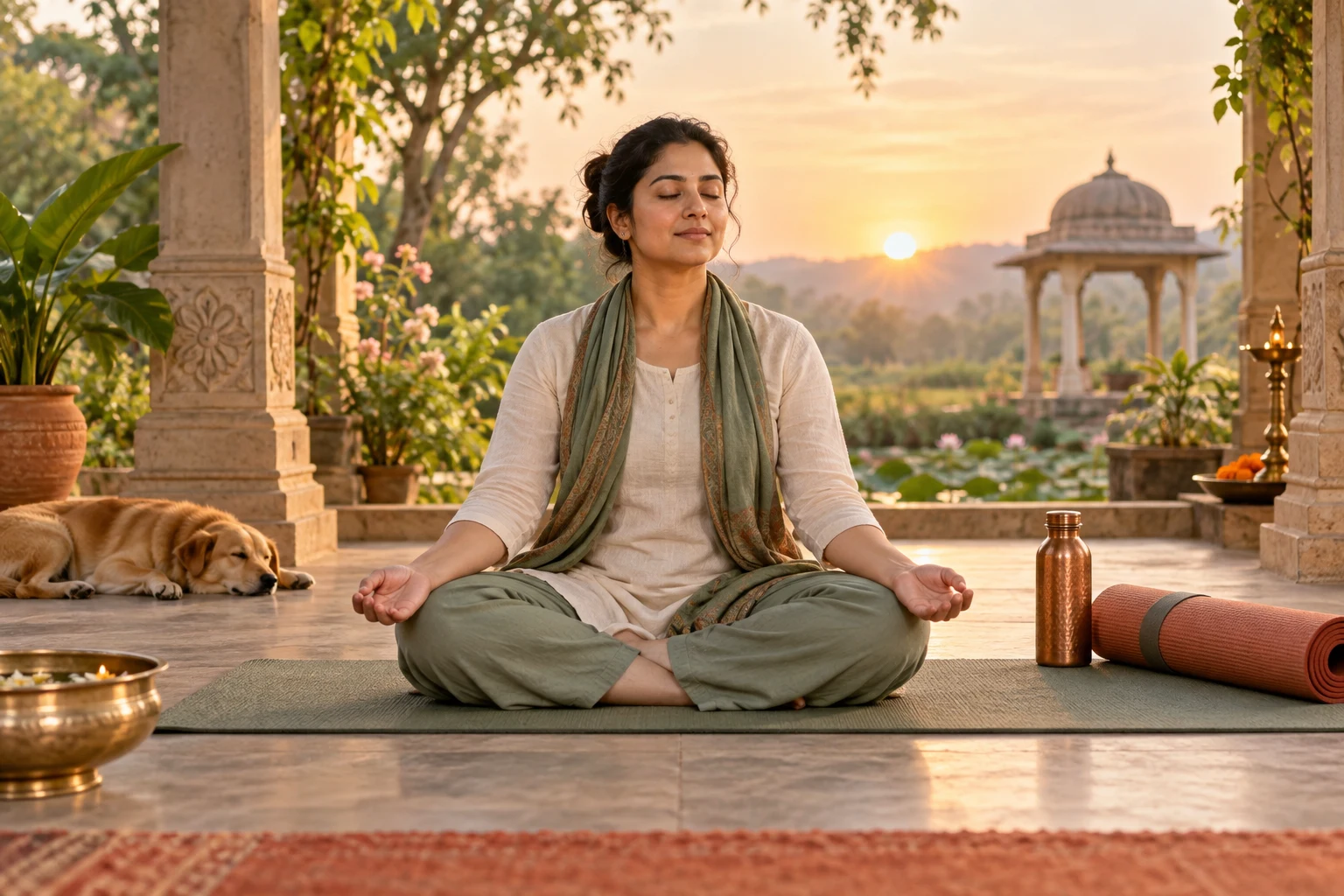
Apana Mudra is a hand gesture named after apana vayu, the downward-moving aspect of energy described in yogic physiology. Traditional teaching connects apana with elimination, grounding, and release. The mudra can be used as a gentle focus for meditation, but its symbolic meaning should not be mistaken for a medical treatment. See What Are Mudras? for the broader tradition.
Apana Mudra at a glance
| Name | Apana Mudra (अपान मुद्रा), the gesture of apana vayu |
| Fingers | Tips of the middle and ring fingers touch the tip of the thumb |
| Elements | Space (middle), earth (ring), and fire (thumb) |
| Traditional emphasis | Elimination, digestion, grounding, letting go |
| Beginner duration | 2–5 minutes, building towards 10–15 if comfortable |
| Best time | Morning, before meditation, or during a quiet break |
How to form Apana Mudra
Touch the tips of the middle finger and ring finger to the tip of the thumb. Keep the index finger and little finger comfortably extended. Use light contact rather than squeezing the fingertips together.
Rest the hands on the thighs or knees. You can sit in a chair, on a cushion, or in any stable position that allows easy breathing. Let the shoulders and face relax. Hold for two to five minutes at first, then release slowly and move the fingers.
Traditional meaning of Apana Vayu
Classical yoga describes several functional movements of prana. Apana vayu is associated with a downward and outward direction, particularly in the lower body. Modern yoga teachers often connect that idea with elimination, grounding, and the capacity to let go.
In a commonly taught elemental interpretation, the middle finger represents space, the ring finger earth, and the thumb fire. Their contact is said to balance apana. These correspondences are part of traditional symbolic systems, not a map of anatomy, and explanations can vary by lineage.
A simple grounding practice
Sit comfortably and form Apana Mudra in both hands. Let the breath stay natural; there is no need to push the abdomen or hold the breath. On each exhalation, notice the body’s support beneath you. If helpful, silently use a simple phrase such as “soften and release.”
After a few minutes, identify one practical thing you can release: an unnecessary task, a harsh self-judgement, or clutter that needs attention. Finish with one grounded action rather than expecting the gesture alone to change a situation.
Apana Mudra is often used during meditation and may be paired with gentle pranayama. Avoid forceful breathing or breath retention unless a qualified teacher has assessed that practice as appropriate for you.
Apana Mudra benefits: what tradition says
Traditional mudra teaching usually lists these Apana Mudra benefits:
- Digestion and elimination — the core association, drawn from the downward movement of apana vayu.
- Grounding — the earth symbolism of the ring finger supports a settled, lower-body awareness.
- Letting go — teachers often use the gesture as a cue for emotional release and ending a practice.
- A calmer meditation — the fingertip contact gives attention a simple place to rest.
The section below explains which of these claims are reasonable and which go beyond the evidence.
Apana Mudra vs Apana Vayu Mudra
These two names are often confused. Apana Mudra joins the middle and ring fingertips to the thumb. Apana Vayu Mudra — also called Mritsanjeevani or the “heart mudra” — adds a third step: the index finger folds down to touch the base of the thumb, while the middle and ring fingers meet the thumb tip and the little finger stays extended. Apana Vayu Mudra is traditionally associated with the chest and heart area rather than elimination. Check which gesture a guide is actually describing.
Traditional benefits and evidence limits
Traditional accounts associate Apana Mudra with digestion, elimination, and a settled feeling. A quiet hand gesture may also help some practitioners remember to slow down and pay attention. These are reasonable personal or traditional descriptions.
Claims that the mudra detoxifies the body, treats constipation, controls diabetes, induces labor, or cures disease are not supported by strong clinical evidence. “Detoxification” has a specific medical meaning involving organs such as the liver and kidneys; a hand position has not been shown to replace their function or medical care.
Digestive or urinary symptoms can have many causes. Severe pain, blood, persistent constipation, vomiting, fever, pregnancy concerns, or sudden changes require guidance from a qualified clinician. Do not delay care because of a mudra practice.
Timing and safety
There is no universally required schedule. Beginners can practise for two to five minutes and gradually extend the session if the hands remain comfortable. It can be used after waking, before meditation, or during a quiet break. It is not necessary to practise directly after a meal to receive its contemplative value.
Do not force painful finger joints. If you have arthritis, an injury, recent hand surgery, or nerve symptoms, keep the gesture loose or choose a comfortable alternative. Stop if pain, numbness, dizziness, or distress occurs.
For another grounding gesture, compare Prithvi Mudra; for meditation focus, try Gyan Mudra or Prana Mudra. The finger arrangement and traditional emphasis differ, so use the names carefully when following instructions.
Frequently Asked Questions
What does Apana Mudra mean?
The name means the gesture of apana. In yogic physiology, apana vayu describes a downward-moving functional energy traditionally associated with elimination and grounding.
Which fingers touch in Apana Mudra?
The tips of the middle finger and ring finger lightly touch the tip of the thumb. The index and little fingers stay comfortably extended.
What are the benefits of Apana Mudra?
Traditional teaching associates Apana Mudra with digestion, elimination, grounding, and a feeling of letting go. These are traditional associations and personal experience, not proven medical effects.
What is the difference between Apana Mudra and Apana Vayu Mudra?
Apana Mudra joins the middle and ring fingers to the thumb. Apana Vayu Mudra, often called Mritsanjeevani or the heart mudra, also folds the index finger to the base of the thumb. They are different gestures with different traditional associations.
How long should you hold Apana Mudra?
Beginners can start with two to five minutes and build gradually to 10 to 15 minutes if the hands stay comfortable. There is no fixed required duration.