
🤲 Practice Guides
Prithvi Mudra: Meaning, How to Do It, and Traditional Benefits
Last updated: October 9, 2026
Prithvi Mudra is named after the earth, traditionally used to cultivate a sense of grounding and stability. Here's how it's formed and what it's linked to.
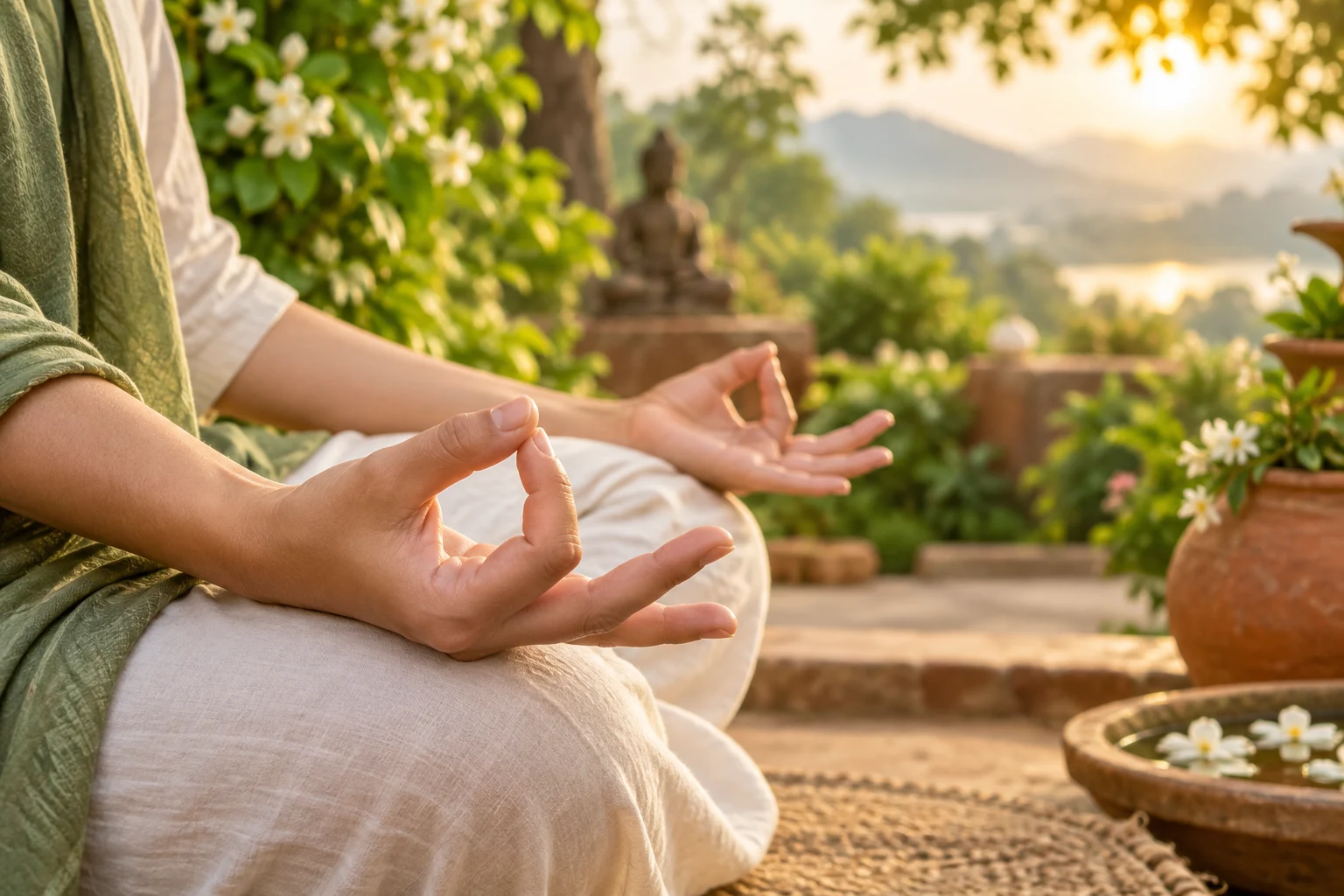
Prithvi Mudra is a hand gesture named after prithvi, “earth.” In modern yoga teaching it is traditionally associated with steadiness, nourishment, and a grounded quality of attention. It can be used during meditation or quiet breathing, but claims that it cures disease or changes the body’s elements in a measurable medical sense should be treated cautiously.
For the broader history and purpose of symbolic hand gestures, begin with What Are Mudras?.
Prithvi Mudra at a glance
| Name | Prithvi Mudra (पृथ्वी मुद्रा), the earth gesture |
| Fingers | Tip of the ring finger touches the tip of the thumb |
| Element | Earth (prithvi), in the five-element mapping of the fingers |
| Traditional emphasis | Grounding, stability, patience, nourishment |
| Beginner duration | 5 minutes, building towards 10–15 if comfortable |
| Best time | Morning meditation, a work break, or before sleep |
How it’s formed
- Sit in a chair, on a cushion, or lie down in a position that lets you breathe easily.
- Rest the backs of the hands on the thighs or place the arms comfortably by your sides.
- Lightly bring the tip of the ring finger and thumb together on each hand.
- Let the index, middle, and little fingers extend naturally. They do not need to be stiff or perfectly straight.
- Soften the shoulders, jaw, and palms. Breathe normally for about five minutes.
- Release the gesture slowly and notice whether the hands or attention feel different.
One hand may be used if the other is injured or occupied. The contact should be gentle; pressing harder does not make a mudra more effective.
What it’s traditionally associated with
In a commonly taught elemental mapping, the ring finger represents earth and the thumb represents fire. Their meeting is interpreted as supporting balance or increasing the earth quality. Traditional teachers may connect that symbolism with stability, patience, embodiment, or nourishment.
This is a contemplative framework, not the periodic table or a clinical model of physiology. It can still be useful as an attention cue: feeling the fingers touch may help bring awareness back to posture and breath when the mind is scattered. Any calm may also come from sitting quietly, breathing comfortably, and pausing activity rather than from the hand position alone.
Prithvi Mudra benefits: what tradition says
Prithvi Mudra benefits are usually described in traditional yoga and mudra books under five headings. Treat them as traditional intentions and lived experience, not medical claims:
- Grounding and stability — the earth symbolism is used to steady a restless or anxious mind during meditation.
- Patience and endurance — teachers connect the earth quality with steadiness and the ability to stay with a task.
- Nourishment — traditional lists link the gesture with a sense of physical and mental nourishment, and some popular guides mention vitality or recovery after illness.
- Body awareness — the light fingertip contact gives attention a physical anchor, which can make a short practice easier to sustain.
- Calm, steady breathing — pairing the mudra with slow, natural exhalations is often what people describe as most settling.
Popular lists sometimes add claims about weight gain, hair, skin, or bone strength. There is not good evidence for those specific effects — see the section on common mistakes below.
A simple seven-minute practice
Set a quiet timer. Spend one minute settling into a supported posture, then form Prithvi Mudra. For five minutes, let each exhalation release unnecessary tension. When thoughts arise, return attention to the light contact between finger and thumb. In the last minute, release the hands and identify one practical “grounding” action—drink water, eat a balanced meal, take a short walk, or complete one manageable task.
The mudra can also accompany a short body scan or the Gayatri Mantra if mantra recitation is already part of your tradition. Keep the practice simple enough to repeat consistently.
When it’s used
Prithvi Mudra is usually presented as a gentle daily practice. Morning meditation, a work break, or a quiet period before sleep can all be suitable. There is no universally required duration. Five to fifteen comfortable minutes is a practical starting range, and a shorter attentive practice is preferable to a long strained one.
Do not use the gesture while driving, operating equipment, or when both hands are needed for balance. Stop if it causes finger, wrist, elbow, or shoulder pain. People with arthritis, nerve symptoms, recent surgery, or limited mobility can keep the fingers near one another, use one hand, or skip the gesture. A qualified clinician or physiotherapist should assess persistent pain, weakness, tingling, or swelling.
The Government of India’s Morarji Desai National Institute of Yoga offers official yoga-break resources that place brief practices within a wider routine. Its materials do not make Prithvi Mudra a replacement for medical care.
Common mistakes and better adjustments
The most common errors are squeezing the fingertips, locking the unused fingers, holding the breath, and chasing dramatic sensations. Use minimal pressure, allow natural curvature, and breathe without counting if counting creates tension. A photograph-perfect shape is not the goal.
Another mistake is attaching a guaranteed outcome to the gesture. Online lists sometimes claim weight change, bone healing, skin improvement, or treatment of fatigue. Evidence for such condition-specific effects is insufficient. If someone feels calmer during the practice, that experience can be valued without converting it into an unsupported medical promise.
Prithvi Mudra versus Apana Mudra
Prithvi Mudra joins only the ring finger and thumb. Apana Mudra commonly joins the middle and ring fingertips to the thumb and carries a different traditional association. Learn one shape at a time, and choose the gesture that supports the intention of the session rather than constantly switching.
Prithvi Mudra works best as a modest ritual of attention: touch, breathe, notice, and then take grounded action. Its value does not depend on extravagant promises.
Related mudras
Explore other hand gestures in the same series: Gyan Mudra for focused meditation, Prana Mudra, Surya Mudra, Vayu Mudra, and Anjali Mudra, the gesture of greeting and prayer.
Frequently Asked Questions
How do you form Prithvi Mudra?
Lightly touch the tip of the ring finger to the tip of the thumb on either or both hands, while keeping the other fingers comfortably extended and the hands relaxed.
How long should a beginner hold Prithvi Mudra?
Begin with about five comfortable minutes and increase gradually if the hands remain relaxed. There is no need to force a long session or a rigid repetition count.
What is Prithvi Mudra traditionally believed to do?
Yoga traditions associate it with the earth element, steadiness, nourishment, and grounding. These are traditional interpretations, not proven treatments for disease.
What are the benefits of Prithvi Mudra?
Traditional yoga teaching links Prithvi Mudra with grounding, steadiness, patience, nourishment, and a calmer, more embodied attention. Some practitioners find it a useful focus during meditation. These are traditional and experiential benefits, not proven medical effects.
What is Prithvi Mudra called in Hindi?
In Hindi it is called पृथ्वी मुद्रा (Prithvi Mudra), meaning the earth gesture. It is sometimes also called Agni-shamak mudra in popular guides because the ring finger (earth) presses against the thumb (fire).
Can Prithvi Mudra replace medical treatment?
No. It may be used as a gentle contemplative practice, but it should not replace diagnosis, medication, physiotherapy, nutrition advice, or urgent medical care.