
🏹 Mythology
Bhishma Pitamah: His Terrible Vow, Bed of Arrows and Final Teachings
Bhishma Pitamah, grandsire of the Kurus, gave up a throne and marriage for his father's happiness. Here is his story from his birth as a Vasu to his teachings from the bed of arrows.
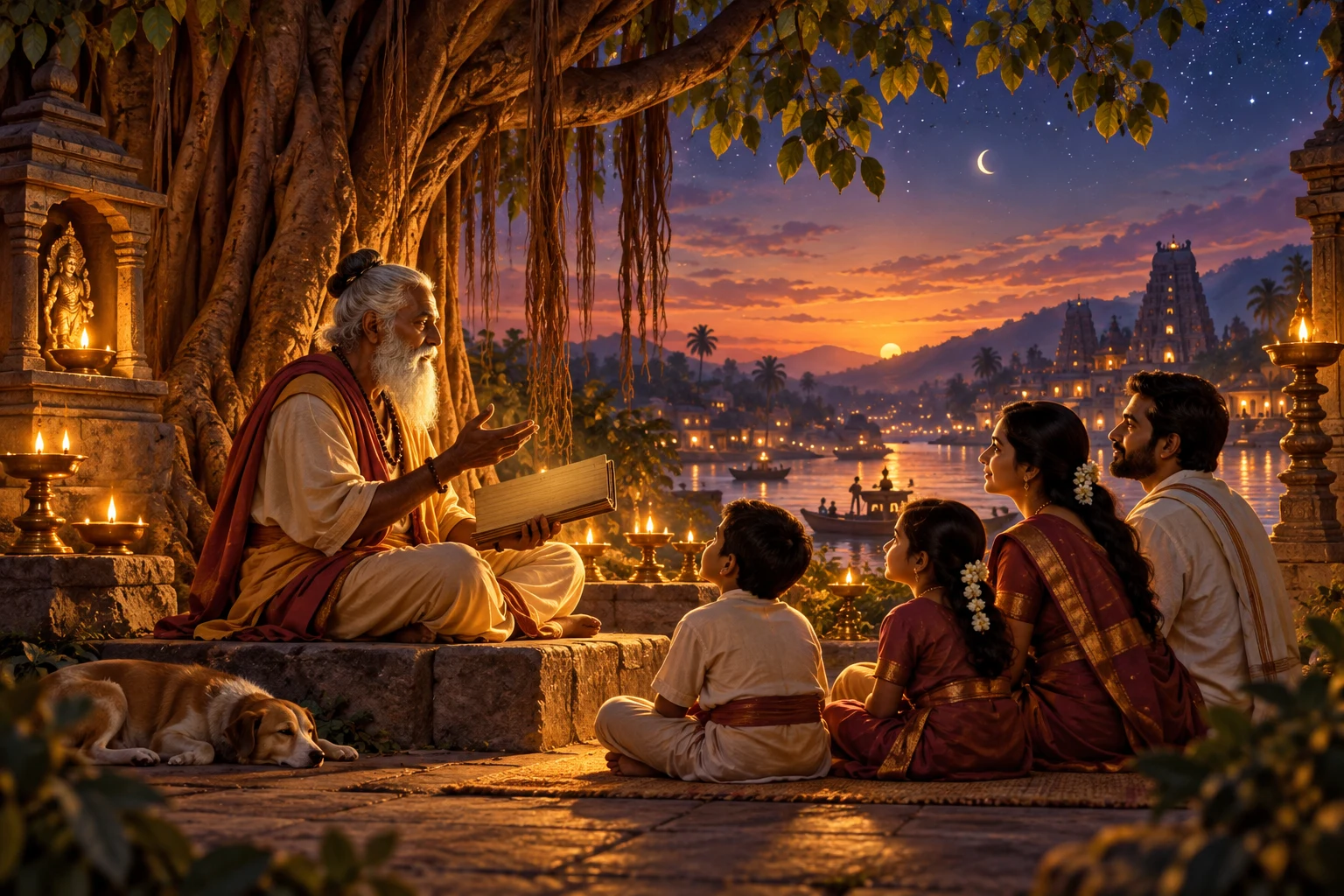
Bhishma, born Devavrata, was the son of King Shantanu and the river goddess Ganga, grand-uncle of the Pandavas and Kauravas. He renounced the throne and marriage so his father could wed Satyavati, earning the name Bhishma, “of the terrible vow”. Granted death at will, he lay on a bed of arrows from the tenth day of the war, dying at Uttarayana.
He is honoured as Bhishma Pitamah, the grandsire.
Bhishma at a glance
| Birth name | Devavrata |
| Parents | King Shantanu and Ganga |
| Previous identity | Prabhasa (Dyaus), one of the eight Vasus |
| Teachers | Vasishtha, Brihaspati, Shukracharya and Parashurama, by tradition |
| Vow | Lifelong celibacy and renunciation of the throne |
| Boon | Ichha mrityu — to die only when he chose |
| War role | Commander of the Kaurava army, days 1–10 |
| Teachings | Shanti Parva and Anushasana Parva, including the Vishnu Sahasranama |
| Observances | Bhishma Ashtami; Bhishma Panchaka |
Birth: the eighth Vasu
The Mahabharata tells that the eight Vasus, gods attending Indra, stole the sage Vasishtha’s wish-fulfilling cow Nandini at the urging of Prabhasa’s wife. Vasishtha cursed them to be born as humans. The seven who had merely helped would be freed at birth; Prabhasa, who stole the cow, would live a long life on earth.
Ganga agreed to be their mother. She married King Shantanu on the condition that he never question her. As each son was born, she drowned him in the river, releasing the Vasu. When she carried the eighth child to the water, Shantanu protested. Ganga revealed who she was, left with the child, and later returned him as a grown prince, master of the Vedas and of arms: Devavrata.
The terrible vow
Shantanu fell in love with Satyavati, the daughter of a fisher chief. Her father agreed to the marriage only if Satyavati’s son would inherit the throne. Shantanu, unwilling to disinherit his heir, returned home in sorrow.
Devavrata went to the fisher chief himself:
- He renounced his claim to the throne.
- When the chief worried that Devavrata’s future sons might claim it, he vowed never to marry or have children.
The gods showered flowers and called him Bhishma. Moved, Shantanu granted his son the boon of dying only when he chose.
Amba and Shikhandi
To find brides for his half-brother Vichitravirya, Bhishma carried off the three princesses of Kashi — Amba, Ambika and Ambalika — from their swayamvara. Amba said she loved King Shalva, so Bhishma let her go; but Shalva rejected her. Amba demanded that Bhishma marry her, and he refused because of his vow.
Amba appealed to Parashurama, Bhishma’s teacher, who fought him for many days without either winning. Amba then performed austerities, won a boon from Shiva to be the cause of Bhishma’s death, and was reborn as Shikhandi, child of King Drupada.
Guardian of the Kuru throne
For decades Bhishma held the kingdom together through the reigns of Vichitravirya, Pandu and Dhritarashtra, and he oversaw the education of the princes under Drona. Yet he also stayed bound to the throne as it fell under Duryodhana’s influence. His silence when Draupadi was dragged into the assembly is the great stain on his life. When she asked whether she had been lawfully staked, Bhishma replied only that the ways of dharma are subtle.
Bhishma in the Kurukshetra war
| Days | Events |
|---|---|
| 1–9 | Bhishma commands the Kauravas and is nearly unbeatable |
| 3 and 9 | Angered by Arjuna’s restraint, Krishna jumps from the chariot toward Bhishma, ready to break his own vow not to fight; Arjuna holds him back |
| 9 (night) | The Pandavas ask Bhishma how he can be defeated. He tells them he will not fight Shikhandi |
| 10 | Arjuna shoots from behind Shikhandi; Bhishma falls, his body pierced so thoroughly that the arrows hold him off the ground |
Bhishma asked for a pillow. Arjuna fired three arrows into the ground to support his head. When he asked for water, Arjuna shot an arrow into the earth, and a stream rose — Ganga, said to have come to her son. See the 18 days of the Mahabharata war.
The bed of arrows and final teachings
Bhishma chose not to die until Uttarayana, the sun’s northward course, considered auspicious for departure. The Mahabharata says he waited 58 nights. Today this is remembered at Makar Sankranti.
After the war, Krishna brought Yudhishthira to him. From the bed of arrows Bhishma gave the long teachings of the Shanti Parva and Anushasana Parva on kingship, duty in times of crisis, and liberation. Among them is the Vishnu Sahasranama, the thousand names of Vishnu, which Bhishma recites when Yudhishthira asks who is the one God and what is the highest dharma.
In the Bhagavata Purana (1.9), Bhishma’s final praise of Krishna, the Bhishma Stuti, is one of the most moving hymns in Vaishnava devotion.
Observances in Bhishma’s memory
| Observance | When | Practice |
|---|---|---|
| Bhishma Ashtami | Magha Shukla Ashtami (January–February) | Tarpan (water offerings) for Bhishma, who had no children |
| Bhishma Ekadashi | Magha Shukla Ekadashi | Recitation of the Vishnu Sahasranama |
| Bhishma Panchaka | Last five days of Kartika — 20 to 24 November in 2026 | Fasting and Vishnu worship from Dev Uthani Ekadashi to Kartik Purnima |
What Bhishma teaches
- The power of a vow. He sacrificed everything for his father and never broke his word.
- The limits of a vow. His oath bound him to serve a throne even when it acted unjustly. The epic asks whether loyalty to a promise can outweigh loyalty to dharma.
- Wisdom at the end. Defeated and dying, he became the epic’s greatest teacher.
For how the Gita is set within this story, read the Bhagavad Gita and the Mahabharata.
Frequently Asked Questions
Who was Bhishma in the Mahabharata?
Bhishma, born Devavrata, was the son of King Shantanu and the river goddess Ganga. He renounced the throne and vowed lifelong celibacy so that his father could marry Satyavati. As the grand-uncle of both the Pandavas and Kauravas, he guarded the Kuru throne for generations and led the Kaurava army for the first ten days of the war.
Why is he called Bhishma?
Bhishma means 'the terrible' or 'one of a fearsome vow'. When Devavrata swore to give up the throne and never marry, the gods showered flowers and called him Bhishma because of the severity of his oath, known as the Bhishma Pratigya.
Who killed Bhishma?
Arjuna brought Bhishma down on the tenth day of the war, shooting from behind Shikhandi, against whom Bhishma had resolved not to fight. Bhishma did not die immediately: blessed with death at will, he lay on a bed of arrows until Uttarayana, the sun's northward course, before giving up his life.
How long did Bhishma lie on the bed of arrows?
The Mahabharata says Bhishma lay on the bed of arrows for 58 nights, waiting for the auspicious period of Uttarayana. During that time he instructed Yudhishthira on dharma, kingship and liberation in the Shanti and Anushasana Parvas.
What is Bhishma Ashtami?
Bhishma Ashtami, on Magha Shukla Ashtami (January–February), is observed as the day Bhishma gave up his body. Many Hindus offer water (tarpan) in his memory, since he had no children to perform the rites.
What is Bhishma Panchaka?
Bhishma Panchaka is a five-day vow kept in the last five days of the month of Kartika, from Prabodhini Ekadashi to Kartika Purnima. In 2026 it runs from 20 to 24 November. Devotees fast or eat simply and worship Vishnu in remembrance of Bhishma.