🪷 Practice Guides
Mahalakshmi Puja and Vrat: Simple Vidhi, Meaning, and Offerings
A practical, respectful guide to Mahalakshmi Puja and Mahalakshmi Vrat, from preparing the altar and making offerings to mantra, aarti, fasting, and charity.
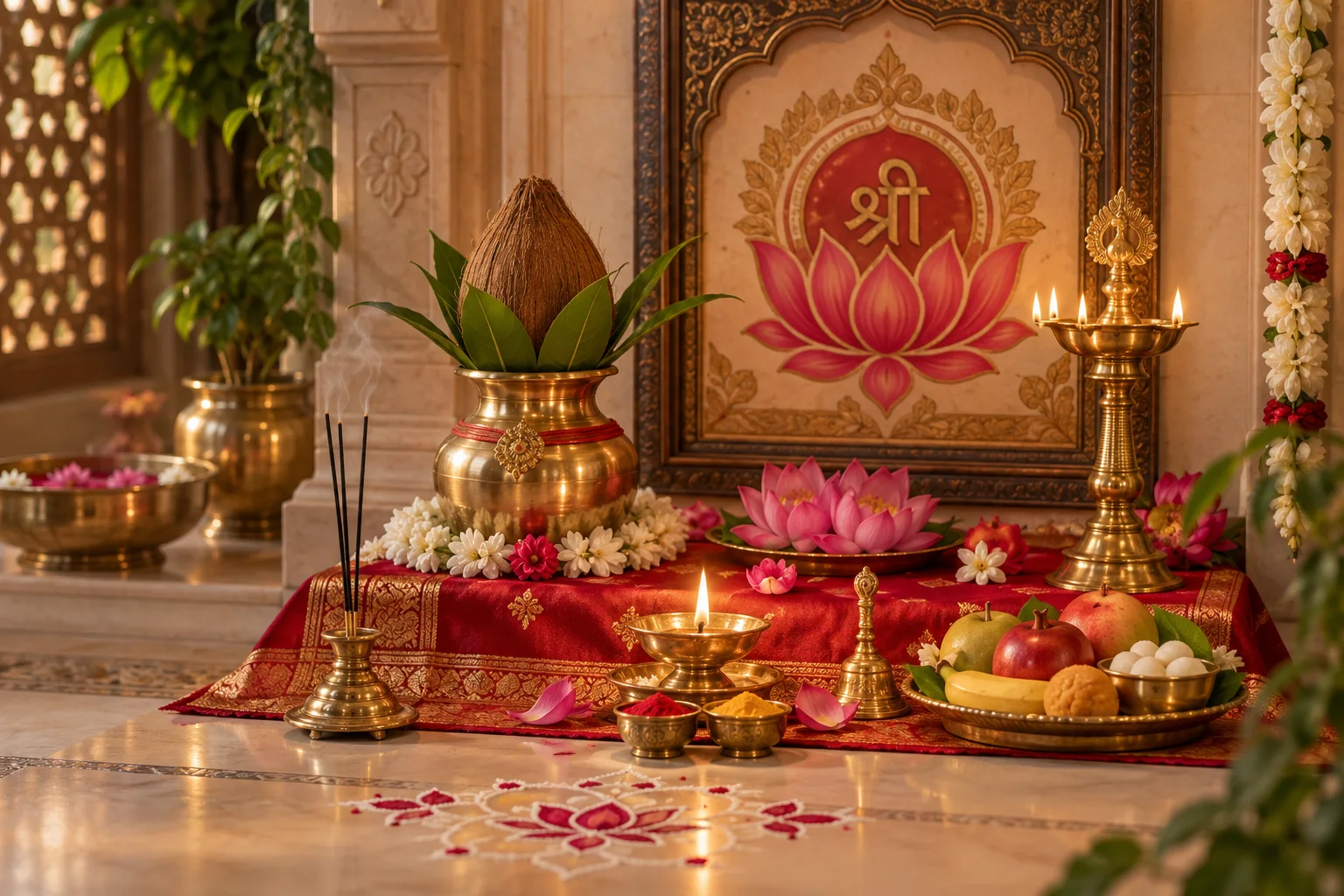
Mahalakshmi Puja is the worship of Goddess Lakshmi as the source of shri: auspiciousness, nourishment, dignity, beauty, well-being, and prosperity. Mahalakshmi Vrat adds a personal vow, which may include prayer, simple food or fasting, recitation, charity, and disciplined conduct. The exact date and method differ across regions, so there is no single Mahalakshmi Puja vidhi followed by every Hindu household.
This guide offers a simple home practice. If your family, temple, priest, or lineage has an established method, follow that tradition first.
Mahalakshmi Vrat, Varalakshmi Vratam, and Lakshmi Puja
These names are sometimes used loosely online, but they can refer to different observances:
- Mahalakshmi Vrat: In parts of North and Central India, this may mean a multi-day vow traditionally associated with the period beginning on Bhadrapada Shukla Ashtami. Some observe all sixteen days; others keep only the opening or concluding day, according to family custom.
- Varalakshmi Vratam: A Friday observance especially prominent in South Indian traditions, usually during the Shravana season. Its ritual details and sacred thread customs have their own regional forms.
- Diwali Lakshmi Puja: Evening worship performed during Diwali. It has a distinct festival context and a location-specific muhurat. Our Diwali Lakshmi Puja guide explains that observance separately.
- Regular Lakshmi Puja: A short prayer performed on Fridays, full-moon days, or whenever a devotee wishes to express gratitude.
Because lunar dates and rules vary, check the local panchang used by your community before beginning a date-specific vrat. An online date for another city may not match your location.
The meaning of Mahalakshmi worship
Lakshmi is often described only as the goddess of money, but the tradition carries a wider idea of abundance. Food, health, learning, skill, supportive relationships, a peaceful home, and the ability to help others are also forms of prosperity. Her worship therefore belongs with cleanliness, truthful work, hospitality, gratitude, generosity, and responsible use of resources.
A vrat is not a transaction that guarantees wealth. It is a chosen discipline intended to steady attention and shape conduct. A meaningful Mahalakshmi Vrat can include keeping one’s word, avoiding waste, settling an honest debt, sharing food, paying workers fairly, or supporting someone in need.
Mahalakshmi Puja items
Use what is available, clean, safe, and customary in your home. A simple puja may include:
- an image, murti, lotus symbol, or Shri symbol associated with Lakshmi;
- a clean cloth and a stable surface;
- a small vessel of clean water;
- fresh flowers or petals, with lotus if locally available;
- fruit, sweets, cooked food, or another vegetarian offering used by your family;
- kumkum, turmeric, sandalwood paste, or akshata, if customary;
- a diya and incense, only where they can be used safely;
- a kalash with water, leaves, and coconut, if part of your practice;
- a prayer text, Lakshmi mantra, or aarti.
Do not worry if you cannot find lotus flowers or prepare an elaborate naivedya. One flower, fruit, or even a heartfelt mental offering can support a sincere practice. Avoid buying ritual items through financial pressure.
Simple Mahalakshmi Puja vidhi at home
1. Prepare yourself and the space
Bathe or wash your hands and face, wear clean clothes, and tidy the worship area. Place the image or symbol securely. Keep lamps away from curtains, paper, children, pets, and loose clothing.
2. Set a clear intention
Sit quietly and state your sankalpa in plain language: your name, the observance you are undertaking, and a sincere intention such as gratitude, family well-being, ethical livelihood, or steadiness in duty. A formal Sanskrit sankalpa can be learned from a qualified guide, but it is not necessary to invent words you do not understand.
3. Begin with Ganesha and your teachers
Many households remember Ganesha, the guru, and the family deities before the main worship. Offer a brief salutation in the way familiar to you. This opening can be as short as a folded-hand prayer.
4. Invoke Mahalakshmi
Invite the presence of Mahalakshmi with respectful attention. If you have arranged a kalash, regard it according to your family custom. A beginner can simply offer a flower and say:
ॐ श्रीं महालक्ष्म्यै नमः
Om Shreem Mahalakshmyai Namah
“Om, salutations to Mahalakshmi.”
Chant slowly 11 times, or use the count taught in your tradition. The Lakshmi mantra guide includes this and other prayers with meaning.
5. Offer water, fragrance, flowers, and light
Present each item with care. In a simple mental form, you may imagine offering a seat, water, bathing, clean cloth, fragrance, flowers, incense, light, and food. A full shodashopachara puja has sixteen services and should be learned from a reliable ritual guide if you wish to perform it formally. A shorter home puja does not need to imitate complex steps without instruction.
6. Make the food offering
Offer fruit, sweets, milk-based food, or the simple meal prepared for the vrat, depending on household practice. Cover and handle food hygienically. After the prayer, share it as prasad rather than wasting it.
7. Read the Mahalakshmi Vrat katha
Families often read or hear a Mahalakshmi Vrat katha during the observance. Versions differ by language and region, including the names and circumstances of the people in the story. Use the version preserved by your family, temple, or a trusted publication instead of treating one internet retelling as universal.
The shared lesson is usually more important than narrative variation: prosperity is welcomed through devotion, order, perseverance, generosity, and respect—not greed or display.
8. Recite a prayer or Lakshmi aarti
You may continue with Shri Suktam if it belongs to your practice and you have learned its pronunciation, recite a short Lakshmi stotra, or sing Om Jai Lakshmi Mata. See the Lakshmi Aarti lyrics and meaning so the song remains connected with understanding.
9. Offer aarti safely
Move the lamp gently before the image according to your custom. If an open flame is unsafe or prohibited where you live, close with prayer instead. Devotion does not require taking a fire risk.
10. Close with gratitude and charity
Bow, ask forgiveness for mistakes, and sit quietly for a moment. Share prasad. If possible, connect the puja with an act of dana: food, useful supplies, time, or financial help given without humiliating the recipient.
For more detail on the common structure behind these steps, read the beginner’s guide to simple Hindu puja at home.
How to observe the Mahalakshmi Vrat
The word vrat means more than avoiding food. It is a vow that may combine worship, self-restraint, remembrance, and ethical action. Depending on the household, an observer may eat one simple meal, take fruit and milk, avoid particular foods, or keep a normal diet while maintaining the prayer discipline.
Choose a form you can observe without harming your health or neglecting essential responsibilities. Children, pregnant people, older adults, anyone with diabetes, and people taking medicines or managing a health condition should seek appropriate medical advice before changing food or fluid intake. A non-food vrat—such as avoiding waste or harsh speech, reading a prayer daily, and giving food—is a meaningful alternative when fasting is unsuitable.
During a multi-day observance, keep the practice sustainable. A simple daily pattern might be:
- clean the altar and light a diya safely;
- offer water and a flower;
- chant Om Shreem Mahalakshmyai Namah 11 times;
- read a short passage or sing the aarti;
- complete one act of generosity or responsible household care.
Follow your tradition for the concluding udyapan or final-day worship. If the custom calls for specific gifts, sacred threads, or invited worshippers, learn the details from someone who practises that regional form.
What to avoid during the puja
- Do not treat the ritual as a guaranteed method for quick money or business profit.
- Do not compare the expense or decoration of one family’s altar with another’s.
- Do not leave a diya, camphor, or incense unattended.
- Do not waste food, flowers, plastic decorations, or large quantities of water.
- Do not force children, guests, or someone who is unwell to fast.
- Do not present one regional vidhi as the only correct Mahalakshmi Puja.
The strongest offering is the conduct that follows the prayer: honest work, a clean and welcoming home, gratitude for what is present, and generosity within one’s means.
A short Mahalakshmi prayer routine
When time or materials are limited, use this five-minute practice:
- Clean a small space and sit calmly.
- Offer water or one flower.
- Chant Om Shreem Mahalakshmyai Namah 11 times.
- Name three forms of abundance for which you are grateful.
- Dedicate one practical act of care, fairness, or giving.
This is not a substitute for a formal family ceremony, but it is a complete and respectful personal prayer. You can also use the dedicated Lakshmi Beej Mantra page or conclude with Om Jai Lakshmi Mata Aarti.
Related reading
- What is a puja? — meaning, common elements, and respectful practice
- Powerful Lakshmi mantras with meaning — six prayers for regular worship
- Diwali Lakshmi Puja guide — preparation and aarti for the festival evening
- Lakshmi Aarti lyrics and meaning — words, interpretation, and singing guidance
Frequently Asked Questions
When is Mahalakshmi Vrat observed?
The answer depends on the tradition. A sixteen-day Mahalakshmi Vrat is observed by some families from Bhadrapada Shukla Ashtami, while Varalakshmi Vratam is a separate Friday observance common in South India. Diwali Lakshmi Puja is another distinct occasion. Confirm the date with the local panchang and the custom your family or temple follows.
What is needed for Mahalakshmi Puja at home?
A clean worship space, an image or symbol of Lakshmi, water, flowers, fruit or another simple food offering, and a safely placed diya are enough for a simple home puja. A kalash, lotus, red cloth, incense, sweets, coins, or account books are optional and vary by tradition.
Which mantra can be chanted during Mahalakshmi Puja?
Om Shreem Mahalakshmyai Namah is a widely used short mantra. Beginners can chant it slowly 11 times, or follow the count taught in their family or lineage. Understanding, attention, and clear pronunciation matter more than a large number.
Is fasting compulsory for Mahalakshmi Vrat?
Fasting practice differs by household, and devotion should not put health at risk. Children, pregnant people, older adults, people with diabetes, and anyone taking medicines or managing a health condition should seek appropriate medical guidance and may observe through prayer, simple food, charity, or another family-approved form.
Are Mahalakshmi Vrat and Varalakshmi Vratam the same?
They are related forms of Lakshmi worship but are not simply interchangeable. Mahalakshmi Vrat may refer to a multi-day observance in parts of North and Central India, whereas Varalakshmi Vratam is commonly observed on a Friday in the Shravana season in South Indian traditions.