
🌧️ Festivals
Monsoon Hindu Festivals 2026: Dates for Guru Purnima to Ganesh Chaturthi
Last updated: September 26, 2026
A practical June–September 2026 Hindu festival guide with verified national dates, local-calendar cautions, meanings, and planning links.
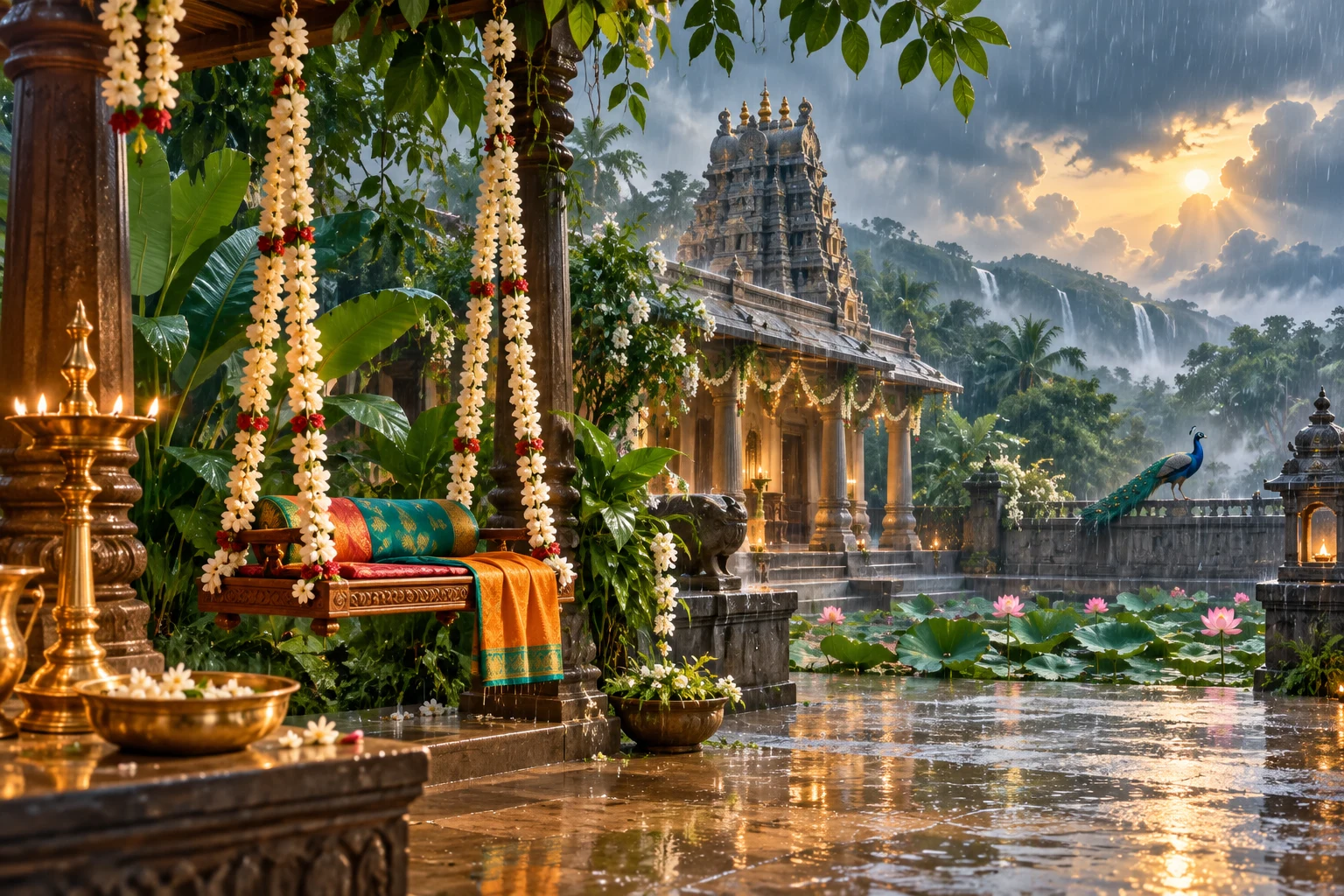
India’s 2026 monsoon festival season moves from Vishnu-centred fasts and Jagannath’s chariot festival to gratitude for teachers, family observances, Krishna’s birth, and Ganesha worship. Because many dates depend on lunar tithi and local sunrise or worship windows, a national date is a planning anchor—not a universal muhurta.
The dates below use India-wide calendar references where available. India’s National Portal holiday calendar lists Raksha Bandhan, Janmashtami, and Ganesh Chaturthi, while the Ministry of Tourism’s Incredible India listing places 2026 Ratha Yatra on 16 July. Confirm puja times through a reliable local panchang or temple.
Monsoon Hindu festival dates for 2026
| Date | Festival | Planning note |
|---|---|---|
| Thursday, 25 June | Nirjala Ekadashi | A waterless fast is traditional for some devotees but is not medically suitable for everyone. |
| Thursday, 16 July | Jagannath Ratha Yatra | Puri’s temple tradition is distinctive; local chariot festivals may have separate schedules. |
| Wednesday, 29 July | Guru Purnima | A day to honour teachers, lineages, and sources of learning. |
| Friday, 28 August | Raksha Bandhan | Local panchangs may give a preferred period based on Purnima and Bhadra. |
| Friday, 4 September | Krishna Janmashtami | Midnight nishita worship and Ashtami timing are city-specific. |
| Monday, 14 September | Ganesh Chaturthi | Installation length varies by household and community. |
| Thursday, 24 September | Anant Chaturdashi | Commonly the major Ganesh Visarjan conclusion; local schedules can differ. |
This corrects a common calendar mistake: Ratha Yatra is 16 July in 2026, not 27 June. Date lists copied between years can quietly shift a lunar festival by weeks.
June: Nirjala Ekadashi
Nirjala Ekadashi is associated with a particularly demanding fast in which some observers avoid both food and water. It should never be treated as a test that overrides health. Children, older adults, pregnant or breastfeeding people, anyone with diabetes or kidney concerns, people taking medication, and those working in heat should seek appropriate guidance and use a safer devotional alternative.
Prayer, a simpler diet, charity, restraint in speech, or reading about Ekadashi meaning and practice can preserve the spirit of discipline without unsafe deprivation.
July: Ratha Yatra and Guru Purnima
During Jagannath Ratha Yatra, Lord Jagannath, Balabhadra, and Subhadra travel in great chariots. Puri is the best-known centre, but local communities hold their own processions. Visitors should follow crowd instructions, respect temple-specific access rules, hydrate, and avoid obstructing ritual routes.
Guru Purnima honours the role of the guru or teacher. Observance may include visiting a teacher, studying a lineage text, offering thanks, or recommitting to disciplined learning. Gratitude does not require suspending discernment; ethical boundaries remain important in every teacher-student relationship.
August: Raksha Bandhan
Raksha Bandhan centres on a bond of care expressed by tying a rakhi. Families interpret that relationship in varied and inclusive ways. The ceremony can include a lamp, tilak, sweets, and a mutual promise of respect rather than a one-sided claim of protection.
Read the Raksha Bandhan story and significance before choosing a local ceremony time. The full-moon tithi and Bhadra convention can affect recommended hours.
September: Janmashtami and Ganesh Chaturthi
Janmashtami celebrates Krishna’s birth through fasting, song, story, cradle decoration, and often midnight worship. The Janmashtami puja guide offers a flexible home sequence. Confirm the local nishita window rather than copying another city’s clock time.
Ten days later, many communities welcome Ganesha. Use the Ganesh Chaturthi puja guide and the separate 2026 date guide for preparation. Choose natural clay and approved immersion arrangements to reduce harm to waterways.
A practical planning checklist
- Mark the civil date, then check your city’s tithi and puja window.
- Ask which family or sampradaya convention you actually follow.
- Plan one meaningful act—prayer, story, service, family time, or offering.
- Adjust fasting and late-night worship for health and necessary responsibilities.
- Prepare crowd, flame, food, weather, and water safety in advance.
For the full year, use the 2026 Hindu festival calendar. The Hindu calendar guide explains why tithi-based dates need local confirmation.
Frequently Asked Questions
When is Janmashtami in 2026?
India's central holiday calendar lists Janmashtami on Friday, 4 September 2026. The exact Ashtami and midnight worship windows vary by city and tradition, so confirm locally.
When is Ganesh Chaturthi in 2026?
Ganesh Chaturthi falls on Monday, 14 September 2026 in India's central holiday calendar. Installation and visarjan schedules depend on household, community, and regional custom.
Why do Hindu festival dates vary by location?
Many observances depend on lunar tithi, sunrise, moonrise, nakshatra, or a specific worship period. Those timings can begin or end at different local times, and traditions may apply different observance rules.
Is fasting required for monsoon festivals?
No single rule covers all festivals or devotees. Follow a trusted tradition and adapt for age, pregnancy, medication, diabetes, work, and other health needs; never undertake a waterless fast when it is unsafe.