
🕉️ Practice Guides
Venkateswara Suprabhatam: Sanskrit, Meaning and the 29 Verses
The 29-verse Sri Venkatesha Suprabhatam, the morning hymn of Tirumala, traditionally composed by the 15th-century Sri Vaishnava poet Prativadi Bhayankaram Annan. Sanskrit, meaning, and a note on the four-part liturgy.
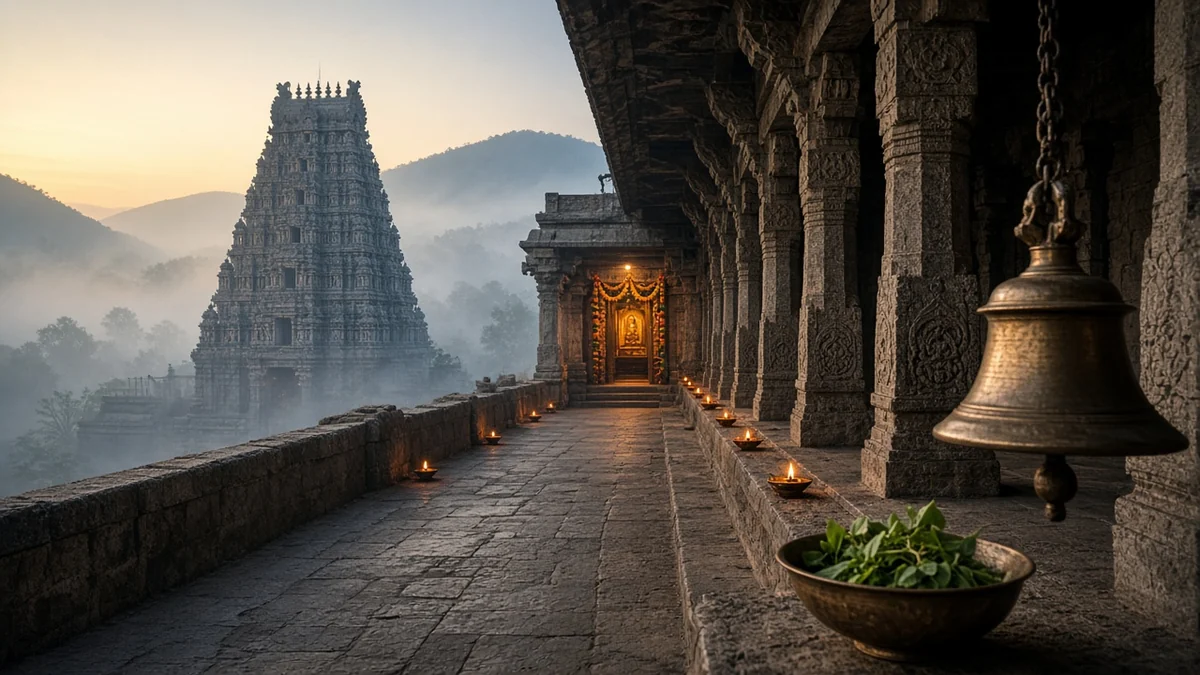
The Venkateswara Suprabhatam, or Sri Venkatesha Suprabhatam, is the 29-verse dawn hymn that wakes Lord Venkateswara on the hill. It opens with the familiar line to Rama — kausalyā suprajā rāma — and then turns, from the third verse, to a fair-morning greeting for Lakshmi and for the Lord of Venkata. It is traditionally attributed to the 15th-century Sri Vaishnava poet Prativadi Bhayankaram Annan (Annangaracharya), and it is still sung every morning at Tirumala.
The full morning liturgy at the temple has four parts: this Suprabhatam, then the Venkatesha Stotram, Prapatti and Mangalasasanam. This page is the 29-verse Suprabhatam only. The other three sections belong to the same waking service, but they are separate poems and are not reproduced here.
The hymn sits naturally beside the Tirupati Balaji page on this site, and beside powerful Vishnu mantras and the Vishnu Sahasranama. Verse 24 names the ten avatars in brief. It is especially familiar in Dhanurmasa, the month that in 2026–27 runs until Makar Sankranti on 15 January.
The public-domain Sanskrit below follows a standard printed recension. A few small variants are noted after the verses they affect.
Verse 1
कौसल्या सुप्रजा राम पूर्वा सन्ध्या प्रवर्तते । उत्तिष्ठ नरशार्दूल कर्तव्यं दैवमाह्निकम् ॥ १॥
kausalyā suprajā rāma pūrvā sandhyā pravartate | uttiṣṭha naraśārdūla kartavyaṃ daivamāhnikam || 1||
Meaning. O Rama, noble son of Kausalya, the eastern twilight has begun. Rise, tiger among men: the day’s sacred duties must be done.
Verse 2
उत्तिष्ठोत्तिष्ठ गोविन्द उत्तिष्ठ गरुडध्वज । उत्तिष्ठ कमलाकान्त त्रैलोक्यं मङ्गलं कुरु ॥ २॥
uttiṣṭhottiṣṭha govinda uttiṣṭha garuḍadhvaja | uttiṣṭha kamalākānta trailokyaṃ maṅgalaṃ kuru || 2||
Meaning. Rise, rise, Govinda; rise, you whose banner is Garuda. Rise, beloved of Lakshmi, and make the three worlds auspicious.
Verse 3
मातस्समस्तजगतां मधुकैटभारेः वक्षोविहारिणि मनोहरदिव्यमूर्ते । श्रीस्वामिनि श्रितजन प्रियदानशीले श्रीवेङ्कटेशदयिते तव सुप्रभातम् ॥ ३॥
mātassamastajagatāṃ madhukaiṭabhāreḥ vakṣovihāriṇi manoharadivyamūrte | śrīsvāmini śritajana priyadānaśīle śrīveṅkaṭeśadayite tava suprabhātam || 3||
Meaning. O Mother of all the worlds, you who rest on the chest of the foe of Madhu and Kaitabha, whose form is lovely and divine; O Sri, lady of this house, generous to those who take refuge in you, beloved of Venkatesha — a fair morning to you.
Verse 4
तव सुप्रभातमरविन्दलोचने भवतु प्रसन्नमुखचन्द्रमण्डले । विधिशङ्करेन्द्रवनिताभिरर्चिते वृषशैलनाथदयिते दयानिधे ॥ ४॥
tava suprabhātamaravindalocane bhavatu prasannamukhacandramaṇḍale | vidhiśaṅkarendravanitābhirarcite vṛṣaśailanāthadayite dayānidhe || 4||
Meaning. A fair morning to you, lotus-eyed one, whose face is a gracious moon-disk, worshipped by the consorts of Brahma, Shiva and Indra, beloved of the Lord of Vrisha Hill, treasure of compassion.
Verse 5
अत्र्यादि सप्तऋषयस्समुपास्य सन्ध्यां आकाशसिन्धुकमलानि मनोहराणि । आदाय पादयुगमर्चयितुं प्रपन्नाः शेषाद्रिशेखरविभो तव सुप्रभातम् ॥ ५॥
atryādi saptaṛṣayassamupāsya sandhyāṃ ākāśasindhukamalāni manoharāṇi | ādāya pādayugamarcayituṃ prapannāḥ śeṣādriśekharavibho tava suprabhātam || 5||
Meaning. The seven sages, Atri and the rest, have completed their twilight worship, taken the lovely lotuses of the heavenly Ganga, and have come to honour your two feet. O Lord, crest of Shesha’s mountain — a fair morning to you.
Verse 6
पञ्चाननाब्जभवषण्मुखवासवाद्याः त्रैविक्रमादिचरितं विबुधाः स्तुवन्ति । भाषापतिः पठति वासरशुद्धिमारात् शेषाद्रिशेखरविभो तव सुप्रभातम् ॥ ६॥
pañcānanābjabhavaṣaṇmukhavāsavādyāḥ traivikramādicaritaṃ vibudhāḥ stuvanti | bhāṣāpatiḥ paṭhati vāsaraśuddhimārāt śeṣādriśekharavibho tava suprabhātam || 6||
Meaning. Shiva, Brahma, Kartikeya, Indra and the other gods praise your deeds, beginning with the three strides. Brihaspati recites the day’s auspicious reckoning nearby. O Lord, crest of Shesha’s mountain — a fair morning to you.
Verse 7
ईषत्प्रफुल्लसरसीरुहनारिकेलपूगद्रुमादि सुमनोहरपालिकानाम् । आवाति मन्दमनिलस्सह दिव्यगन्धैः शेषाद्रिशेखरविभो तव सुप्रभातम् ॥ ७॥
īṣatpraphullasarasīruhanārikelapūgadrumādi sumanoharapālikānām | āvāti mandamanilassaha divyagandhaiḥ śeṣādriśekharavibho tava suprabhātam || 7||
Meaning. A gentle breeze, carrying heavenly scents, blows among the lovely rows of slightly opened lotuses, coconut and areca. O Lord, crest of Shesha’s mountain — a fair morning to you.
Verse 8
उन्मील्य नेत्रयुगमुत्तमपञ्जरस्थाः पात्रावशिष्टकदलीफलपायसानि । भुक्त्वा सलीलमथ केलिशुकाः पठन्ति शेषाद्रिशेखरविभो तव सुप्रभातम् ॥ ८॥
unmīlya netrayugamuttamapañjarasthāḥ pātrāvaśiṣṭakadalīphalapāyasāni | bhuktvā salīlamatha keliśukāḥ paṭhanti śeṣādriśekharavibho tava suprabhātam || 8||
Meaning. The pet parrots in their fine cages open their eyes, eat the banana and milk-sweet left in their bowls, and playfully recite (your names). O Lord, crest of Shesha’s mountain — a fair morning to you.
Verse 9
तन्त्रीप्रहर्षमधुरस्वनया विपञ्च्या गायत्यनन्तचरितं तव नारदोऽपि । भाषासमग्रमसकृत्करचाररम्यं शेषाद्रिशेखरविभो तव सुप्रभातम् ॥ ९॥
tantrīpraharṣamadhurasvanayā vipañcyā gāyatyanantacaritaṃ tava nārado’pi | bhāṣāsamagramasakṛtkaracāraramyaṃ śeṣādriśekharavibho tava suprabhātam || 9||
Meaning. Narada too sings your endless story to the sweet, string-delighted voice of his vina, his hand moving again and again in graceful time over the whole range of notes. O Lord, crest of Shesha’s mountain — a fair morning to you.
Some prints read tantrīprakarṣa in place of tantrīpraharṣa in the first line: ‘with the excellent sweetness of the strings’ rather than ‘the delight of the strings.’ The rest of the verse is the same.
Verse 10
भृङ्गावली च मकरन्दरसानुविद्धझङ्कारगीतनिनदैः सह सेवनाय । निर्यात्युपान्तसरसीकमलोदरेभ्यः शेषाद्रिशेखरविभो तव सुप्रभातम् ॥ १०॥
bhṛṅgāvalī ca makarandarasānuviddhajhaṅkāragītaninadaiḥ saha sevanāya | niryātyupāntasarasīkamalodarebhyaḥ śeṣādriśekharavibho tava suprabhātam || 10||
Meaning. A line of bees, their hum mixed with the taste of nectar, comes out from the hearts of the lotuses in the nearby pond to serve you. O Lord, crest of Shesha’s mountain — a fair morning to you.
Verse 11
योषागणेन वरदध्नि विमथ्यमाने घोषालयेषु दधिमन्थनतीव्रघोषाः । रोषात्कलिं विदधते ककुभश्च कुम्भाः शेषाद्रिशेखरविभो तव सुप्रभातम् ॥ ११॥
yoṣāgaṇena varadadhni vimathyamāne ghoṣālayeṣu dadhimanthanatīvraghoṣāḥ | roṣātkaliṃ vidadhate kakubhaśca kumbhāḥ śeṣādriśekharavibho tava suprabhātam || 11||
Meaning. In the cowherd homes, as the women churn the excellent curd, the sharp sound of the churning — and the pots at the quarters — seems almost to raise a quarrel by its intensity. O Lord, crest of Shesha’s mountain — a fair morning to you.
Verse 12
पद्मेशमित्रशतपत्रगतालिवर्गाः हर्तुं श्रियं कुवलयस्य निजाङ्गलक्ष्म्या । भेरीनिनादमिव बिभ्रति तीव्रनादं शेषाद्रिशेखरविभो तव सुप्रभातम् ॥ १२॥
padmeśamitraśatapatragatālivargāḥ hartuṃ śriyaṃ kuvalayasya nijāṅgalakṣmyā | bherīninādamiva bibhrati tīvranādaṃ śeṣādriśekharavibho tava suprabhātam || 12||
Meaning. The swarms of bees that have gone into the hundred-petaled lotuses, friends of the sun, raise a sharp noise like the beating of drums, as if to take the glory of the blue water-lily with the splendour of their own bodies. O Lord, crest of Shesha’s mountain — a fair morning to you.
Verse 13
श्रीमन्नभीष्टवरदाखिललोकबन्धो श्रीश्रीनिवास जगदेकदयैकसिन्धो । श्रीदेवतागृहभुजान्तर दिव्यमूर्ते श्रीवेङ्कटाचलपते तव सुप्रभातम् ॥ १३॥
śrīmannabhīṣṭavaradākhilalokabandho śrīśrīnivāsa jagadekadayaikasindho | śrīdevatāgṛhabhujāntara divyamūrte śrīveṅkaṭācalapate tava suprabhātam || 13||
Meaning. O fortunate one, giver of desired boons, friend of all the worlds; O Srinivasa, sole ocean of compassion for the universe; O divine form who dwells on the chest of the goddess Sri — Lord of Venkata hill, a fair morning to you.
Verse 14
श्रीस्वामिपुष्करिणिकाऽऽप्लवनिर्मलाङ्गाः श्रेयोऽर्थिनो हरविरिञ्चिसनन्दनाद्याः । द्वारे वसन्ति वरवेत्रहतोत्तमाङ्गाः श्रीवेङ्कटाचलपते तव सुप्रभातम् ॥ १४॥
śrīsvāmipuṣkariṇikā’’plavanirmalāṅgāḥ śreyo’rthino haraviriñcisanandanādyāḥ | dvāre vasanti varavetrahatottamāṅgāḥ śrīveṅkaṭācalapate tava suprabhātam || 14||
Meaning. Those who have bathed and become clean in Sri Swami Pushkarini — Shiva, Brahma, Sanandana and the rest, seeking the highest good — wait at your door, their heads touched by the auspicious staff of the doorkeepers. Lord of Venkata hill, a fair morning to you.
Verse 15
श्रीशेषशैलगरुडाचलवेङ्कटाद्रि नारायणाद्रिवृषभाद्रिवृषाद्रिमुख्याम् । आख्यां त्वदीयवसतेरनिशं वदन्ति श्रीवेङ्कटाचलपते तव सुप्रभातम् ॥ १५॥
śrīśeṣaśailagaruḍācalaveṅkaṭādri nārāyaṇādrivṛṣabhādrivṛṣādrimukhyām | ākhyāṃ tvadīyavasateraniśaṃ vadanti śrīveṅkaṭācalapate tava suprabhātam || 15||
Meaning. They speak without pause the names of your dwelling: Shesha Hill, Garuda Hill, Venkata Hill, Narayana Hill, Vrishabha Hill, Vrisha Hill, and the others. Lord of Venkata hill, a fair morning to you.
Verse 16
सेवापराः शिवसुरेशकृशानुधर्मरक्षोऽम्बुनाथपवमानधनाधिनाथाः । बद्धाञ्जलिप्रविलसन्निजशीर्षदेशाः श्रीवेङ्कटाचलपते तव सुप्रभातम् ॥ १६॥
sevāparāḥ śivasureśakṛśānudharmarakṣo’mbunāthapavamānadhanādhināthāḥ | baddhāñjalipravilasannijaśīrṣadeśāḥ śrīveṅkaṭācalapate tava suprabhātam || 16||
Meaning. Shiva, Indra, Agni, Yama, Nirriti, Varuna, Vayu and Kubera stand ready to serve, their joined palms shining at their foreheads. Lord of Venkata hill, a fair morning to you.
Verse 17
धाटीषु ते विहगराजमृगाधिराजनागाधिराजगजराजहयाधिराजाः । स्वस्वाधिकारमहिमाधिकमर्थयन्ते श्रीवेङ्कटाचलपते तव सुप्रभातम् ॥ १७॥
dhāṭīṣu te vihagarājamṛgādhirājanāgādhirājagajarājahayādhirājāḥ | svasvādhikāramahimādhikamarthayante śrīveṅkaṭācalapate tava suprabhātam || 17||
Meaning. In your processional courts, the lords of birds, of beasts, of nagas, of elephants and of horses ask for a share still greater than the glory of their own offices. Lord of Venkata hill, a fair morning to you.
Verse 18
सूर्येन्दुभौमबुधवाक्पतिकाव्यसौरिस्वर्भानुकेतुदिविषत्परिषत्प्रधानाः । त्वद्दासदासचरमावधिदासदासाः श्रीवेङ्कटाचलपते तव सुप्रभातम् ॥ १८॥
sūryendubhaumabudhavākpatikāvyasaurisvarbhānuketudiviṣatpariṣatpradhānāḥ | tvaddāsadāsacaramāvadhidāsadāsāḥ śrīveṅkaṭācalapate tava suprabhātam || 18||
Meaning. The Sun, Moon, Mars, Mercury, Jupiter, Venus, Saturn, Rahu and Ketu, chiefs of the heavenly assembly, are the servants of the servants of your servants, to the very last. Lord of Venkata hill, a fair morning to you.
Verse 19
त्वत्पादधूलिभरितस्फुरितोत्तमाङ्गाः स्वर्गापवर्गनिरपेक्षनिजान्तरङ्गाः । कल्पागमाकलनयाऽऽकुलतां लभन्ते श्रीवेङ्कटाचलपते तव सुप्रभातम् ॥ १९॥
tvatpādadhūlibharitasphuritottamāṅgāḥ svargāpavarganirapekṣanijāntaraṅgāḥ | kalpāgamākalanayā’’kulatāṃ labhante śrīveṅkaṭācalapate tava suprabhātam || 19||
Meaning. Those whose heads shine with the dust of your feet, whose inner hearts ask for neither heaven nor liberation, grow anxious as they reckon the coming of a new world-age, fearing even that might interrupt their service. Lord of Venkata hill, a fair morning to you.
Verse 20
त्वद्गोपुराग्रशिखराणि निरीक्षमाणाः स्वर्गापवर्गपदवीं परमां श्रयन्तः । मर्त्या मनुष्यभुवने मतिमाश्रयन्ते श्रीवेङ्कटाचलपते तव सुप्रभातम् ॥ २०॥
tvadgopurāgraśikharāṇi nirīkṣamāṇāḥ svargāpavargapadavīṃ paramāṃ śrayantaḥ | martyā manuṣyabhuvane matimāśrayante śrīveṅkaṭācalapate tava suprabhātam || 20||
Meaning. Gazing at the tops of your gateway towers, they take the highest path of heaven and liberation, and still set their minds on remaining in the world of human beings, so that they may go on serving you. Lord of Venkata hill, a fair morning to you.
Verse 21
श्रीभूमिनायक दयादिगुणामृताब्धे देवाधिदेव जगदेकशरण्यमूर्ते । श्रीमन्ननन्तगरुडादिभिरर्चिताङ्घ्रे श्रीवेङ्कटाचलपते तव सुप्रभातम् ॥ २१॥
śrībhūmināyaka dayādiguṇāmṛtābdhe devādhideva jagadekaśaraṇyamūrte | śrīmannanantagaruḍādibhirarcitāṅghre śrīveṅkaṭācalapate tava suprabhātam || 21||
Meaning. O Lord of Sri and of the Earth, ocean of the nectar of compassion and the other virtues; God of gods, sole refuge of the universe; whose feet are worshipped by Ananta, Garuda and the rest — Lord of Venkata hill, a fair morning to you.
Verse 22
श्रीपद्मनाभ पुरुषोत्तम वासुदेव वैकुण्ठ माधव जनार्दन चक्रपाणे । श्रीवत्सचिह्न शरणागतपारिजात श्रीवेङ्कटाचलपते तव सुप्रभातम् ॥ २२॥
śrīpadmanābha puruṣottama vāsudeva vaikuṇṭha mādhava janārdana cakrapāṇe | śrīvatsacihna śaraṇāgatapārijāta śrīveṅkaṭācalapate tava suprabhātam || 22||
Meaning. O Padmanabha, Purushottama, Vasudeva, Vaikuntha, Madhava, Janardana, wielder of the discus, marked with the Srivatsa, wish-fulfilling tree for those who take refuge — Lord of Venkata hill, a fair morning to you.
Verse 23
कन्दर्पदर्पहरसुन्दरदिव्यमूर्ते कान्ताकुचाम्बुरुहकुड्मललोलदृष्टे । कल्याणनिर्मलगुणाकरदिव्यकीर्ते श्रीवेङ्कटाचलपते तव सुप्रभातम् ॥ २३॥
kandarpadarpaharasundaradivyamūrte kāntākucāmburuhakuḍmalaloladṛṣṭe | kalyāṇanirmalaguṇākaradivyakīrte śrīveṅkaṭācalapate tava suprabhātam || 23||
Meaning. O you whose divine form is beautiful enough to humble the pride of the god of love; whose glance rests playfully on the lotus-bud bosom of your beloved; whose divine fame is a treasury of pure, auspicious qualities — Lord of Venkata hill, a fair morning to you.
The second line is a conventional poetic image of the Lord’s glance resting on Lakshmi. It is translated here as the hymn states it, without elaboration.
Verse 24
मीनाकृते कमठकोलनृसिंहवर्णिन् स्वामिन् परश्वधतपोधन रामचन्द्र । शेषांशराम यदुनन्दन कल्किरूप श्रीवेङ्कटाचलपते तव सुप्रभातम् ॥ २४॥
mīnākṛte kamaṭhakolanṛsiṃhavarṇin svāmin paraśvadhatapodhana rāmacandra | śeṣāṃśarāma yadunandana kalkirūpa śrīveṅkaṭācalapate tava suprabhātam || 24||
Meaning. O you who took the forms of the Fish, the Tortoise, the Boar and Narasimha; O Lord, wielder of the axe and master of austerity, and Rama of the Raghus; O Rama who is a portion of Shesha, joy of the Yadus, and Kalki — Lord of Venkata hill, a fair morning to you.
The verse names the traditional avatars in brief compounds: the Fish, the Tortoise, the Boar, Narasimha, Parashurama (paraśvadha-tapodhana), Ramachandra, śeṣāṃśarāma (Balarama, or Lakshmana in some readings), Krishna (yadunandana) and Kalki. See the ten avatars of Vishnu.
Verse 25
एलालवङ्गघनसारसुगन्धितीर्थं दिव्यं वियत्सरिति हेमघटेषु पूर्णम् । धृत्वाऽऽद्य वैदिकशिखामणयः प्रहृष्टाः तिष्ठन्ति वेङ्कटपते तव सुप्रभातम् ॥ २५॥
elālavaṅgaghanasārasugandhitīrthaṃ divyaṃ viyatsariti hemaghaṭeṣu pūrṇam | dhṛtvā’’dya vaidikaśikhāmaṇayaḥ prahṛṣṭāḥ tiṣṭhanti veṅkaṭapate tava suprabhātam || 25||
Meaning. The foremost of Vedic teachers stand joyful, holding in golden pots the divine, fragrant water of the heavenly river, scented with cardamom, clove and camphor. Lord of Venkata, a fair morning to you.
Verse 26
भास्वानुदेति विकचानि सरोरुहाणि सम्पूरयन्ति निनदैः ककुभो विहङ्गाः । श्रीवैष्णवास्सततमर्थितमङ्गलास्ते धामाश्रयन्ति तव वेङ्कट सुप्रभातम् ॥ २६॥
bhāsvānudeti vikacāni saroruhāṇi sampūrayanti ninadaiḥ kakubho vihaṅgāḥ | śrīvaiṣṇavāssatatamarthitamaṅgalāste dhāmāśrayanti tava veṅkaṭa suprabhātam || 26||
Meaning. The sun rises; the lotuses open; the birds fill the quarters with their calls. The Sri Vaishnavas, always wishing you auspiciousness, take refuge in your abode. A fair morning to you, O Venkata.
Verse 27
ब्रह्मादयस्सुरवरास्समहर्षयस्ते सन्तस्सनन्दनमुखास्त्वथ योगिवर्याः । धामान्तिके तव हि मङ्गलवस्तुहस्ताः श्रीवेङ्कटाचलपते तव सुप्रभातम् ॥ २७॥
brahmādayassuravarāssamaharṣayaste santassanandanamukhāstvatha yogivaryāḥ | dhāmāntike tava hi maṅgalavastuhastāḥ śrīveṅkaṭācalapate tava suprabhātam || 27||
Meaning. Brahma and the other foremost gods, the great sages, the holy ones headed by Sanandana, and the best of yogis stand near your abode, auspicious offerings in their hands. Lord of Venkata hill, a fair morning to you.
A variant noted in the edition used here reads mukhāstava in place of mukhāstvatha in the second line, a small sandhi difference that does not change the sense.
Verse 28
लक्ष्मीनिवास निरवद्यगुणैकसिन्धो संसारसागरसमुत्तरणैकसेतो । वेदान्तवेद्य निजवैभव भक्तभोग्य श्रीवेङ्कटाचलपते तव सुप्रभातम् ॥ २८॥
lakṣmīnivāsa niravadyaguṇaikasindho saṃsārasāgarasamuttaraṇaikaseto | vedāntavedya nijavaibhava bhaktabhogya śrīveṅkaṭācalapate tava suprabhātam || 28||
Meaning. O abode of Lakshmi, sole ocean of faultless qualities, sole bridge for crossing the ocean of samsara, knowable through Vedanta, whose own majesty is the enjoyment of your devotees — Lord of Venkata hill, a fair morning to you.
Verse 29
इत्थं वृषाचलपतेरिह सुप्रभातम् ये मानवाः प्रतिदिनं पठितुं प्रवृत्ताः । तेषां प्रभातसमये स्मृतिरङ्गभाजां प्रज्ञां परार्थसुलभां परमां प्रसूते ॥ २९॥
itthaṃ vṛṣācalapateriha suprabhātam ye mānavāḥ pratidinaṃ paṭhituṃ pravṛttāḥ | teṣāṃ prabhātasamaye smṛtiraṅgabhājāṃ prajñāṃ parārthasulabhāṃ paramāṃ prasūte || 29||
Meaning. Those people who set themselves to recite, each day, this morning-hymn of the Lord of Vrisha Hill — for them, at daybreak, remembrance of him is born in the body, and that remembrance brings forth a clear, supreme wisdom that is easy to turn toward the highest good.
Text notes
The Sanskrit was checked against the proofread public-domain edition of the Venkatesha Suprabhatam at Sanskrit Documents (encoded by Srinivas Sunder; proofread by Srinivas Sunder, PSA Easwaran, NA and Rajani Arjun Shankar; the file also contains the Stotram, Prapatti and Mangalasasanam, which are not this page’s text). Parenthetical variant readings in that file were not copied into the main lines. The English meanings are original to VedicVani and are not taken from that site.
A few points of wording and scope:
- The opening two verses address Rama and Govinda; from verse 3 the hymn is a suprabhatam proper, often greeting Lakshmi first and then the Lord of Shesha’s hill or of Venkata.
- Śeṣādri-śekhara-vibho and veṅkaṭācala-pate are two names of the same Lord on the same hill.
- Verse 9: some prints read tantrīprakarṣa for tantrīpraharṣa.
- Verse 16 lists the eight directional guardians in compounds: Shiva, Indra, Agni, Yama, Nirriti (rakṣo), Varuna (ambunātha), Vayu (pavamāna) and Kubera (dhanādhinātha).
- Verse 23 uses a conventional image of the Lord’s glance and Lakshmi; it is translated as the line stands, without embroidery.
- Verse 24 is a compact dashavatara address. Śeṣāṃśarāma is read as Balarama, or as Lakshmana, depending on the commentator.
- Verse 27 has a small sandhi variant, mukhāstava for mukhāstvatha.
- Verse 29 is the phalashruti: daily recitation at dawn is said to give rise to remembrance, and from that remembrance, a clear wisdom turned toward the highest good. It is a traditional closing, not a promise of worldly results.
If you are learning the hymn by heart, stay with one printed edition or a temple recording so the small differences do not unsettle the recitation. The hymn is a morning prayer, not a substitute for the temple’s own rules or for ordinary work.
Related reading
For the Lord of the hill, see Tirupati Balaji. For Vishnu practice, see powerful Vishnu mantras, the Vishnu Sahasranama, and the ten avatars of Vishnu. Dhanurmasa ends at Makar Sankranti 2027. A later winter Ekadashi is Vaikuntha Ekadashi 2026. A wider starting point is the beginner’s guide to Hindu mantras.
Frequently Asked Questions
What is the Venkateswara Suprabhatam?
It is a 29-verse Sanskrit dawn hymn that wakes Lord Venkateswara, beginning 'Kausalya supraja Rama.' It is traditionally attributed to the 15th-century Sri Vaishnava poet Prativadi Bhayankaram Annan, and it is still sung every morning at Tirumala. The English meanings on this page are original.
How many verses are in the Venkateswara Suprabhatam?
The Suprabhatam proper has 29 verses, ending with a phalashruti. The full Tirumala morning liturgy has four parts: this Suprabhatam, then the Venkatesha Stotram, Prapatti and Mangalasasanam. This page is the 29-verse Suprabhatam only.
Who wrote the Venkateswara Suprabhatam?
It is traditionally composed by Prativadi Bhayankaram Annan (also called Annangaracharya), a 15th-century Sri Vaishnava poet. The hymn has long been in the public domain. Small wording variants appear in a few lines and are noted in the text notes.
When should I recite the Venkateswara Suprabhatam?
It is a morning hymn, traditionally recited at dawn, and it is especially familiar in the month of Dhanurmasa. Many households play or recite it daily as they wake. It is a prayer, not a substitute for temple rules or for ordinary duties.
What does Suprabhatam mean?
Suprabhatam means 'a fair morning' or 'an auspicious dawn.' From verse 3 onward the hymn often ends a stanza by wishing a fair morning to the Lord or to Lakshmi on the hill.
Is this the same as the Venkatesha Stotram?
No. The Stotram is the second of the four morning sections sung at Tirumala, after the 29-verse Suprabhatam. This page does not reproduce the Stotram, Prapatti or Mangalasasanam.