
🤲 Practice Guides
Ashwini Mudra: Meaning, How to Practise, and Precautions
Ashwini Mudra, named for the mare, is a pulsing contraction of the anal sphincter used in seated yoga practice. Steps, the difference from mula bandha, and clear precautions.
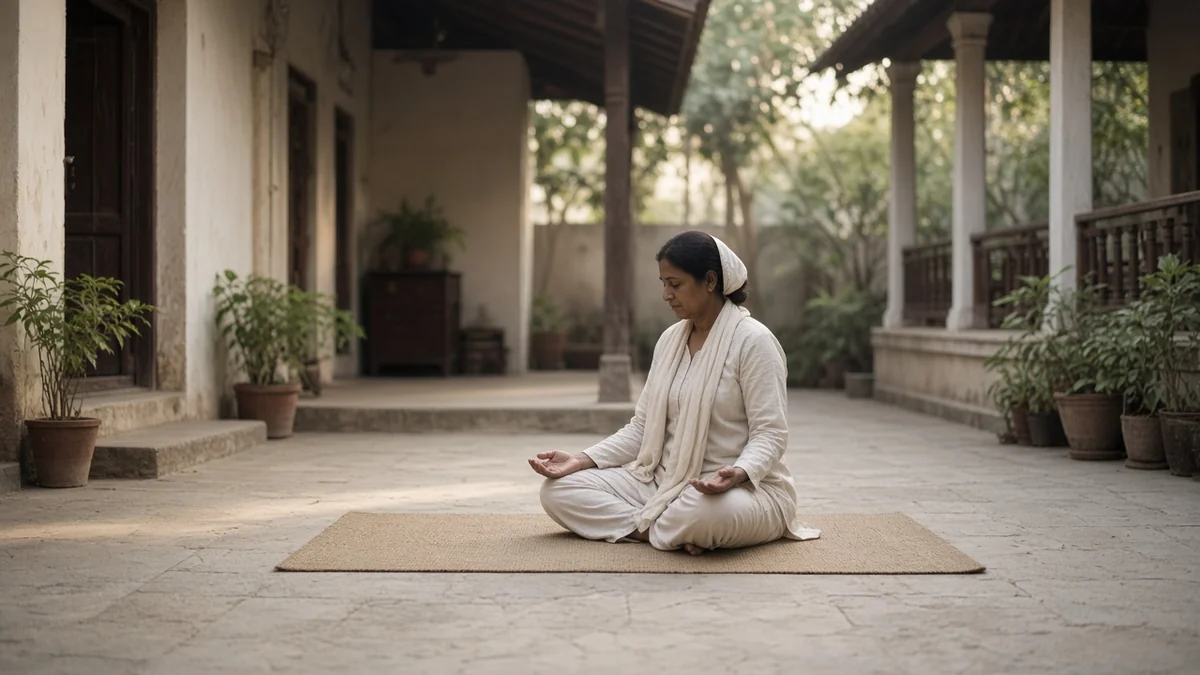
Ashwini Mudra is a hatha-yoga practice of rhythmically tightening and releasing the anal sphincter, usually while seated and breathing quietly. The name comes from ashwini, a mare: traditional teachers compared the pulse of the muscle to the way a horse can contract that part of the body. It is not a hand mudra. The picture on this page shows only the seated setting in which the practice is done. The muscular action itself cannot be shown accurately or decently in a photograph, so the steps are given in words.
For the wider idea of a mudra, see What are mudras. Hand gestures such as Gyan Mudra and Prana Mudra are a different class of practice.
How to practise Ashwini Mudra
- Sit. Choose a steady, comfortable seat — Sukhasana (a simple cross-legged pose), Siddhasana, or another asana in which the spine can stay tall without strain. The body should be fully and modestly at ease. If sitting on the floor is difficult, a firm chair with both feet on the ground is enough.
- Rest the hands. Place them on the knees or in the lap. There is no special finger position for this mudra.
- Breathe ordinarily for a few rounds, until the sitting feels quiet.
- Contract and release. Gently tighten the anal sphincter, as if closing it, without gripping the buttocks, belly or jaw. Hold for one or two seconds. Release completely. That pair — contract, release — is one round.
- Repeat in a slow pulse. Begin with ten to twenty rounds. A short daily sitting is better than a long, strained one. Some teachers coordinate the tightening with the exhale; if that confuses the breath, ignore the timing and keep the pulse slow and even.
Practise in private. There is nothing to display. Stop if you feel pain, numbness, dizziness or a need to strain.
Ashwini Mudra and mula bandha
The two practices are often named together and are easy to mix up.
- Ashwini Mudra is a pulse: the sphincter is tightened and then fully released, again and again.
- Mula bandha, the root lock, is a hold: a broader lift of the pelvic floor is taken and kept, usually in the context of pranayama or a still asana.
Some lineages use Ashwini first, so that a student can feel the muscles that mula bandha later holds. That is a teaching sequence, not a rule that the two are the same thing. This page does not teach mula bandha in detail.
Traditional claims, and their limits
Hatha-yoga manuals associate Ashwini Mudra with tone in the pelvic region, a sense of upward-moving prana, and support for ordinary elimination. Those are traditional descriptions. They are not clinical results, and they are not a reason to delay medical care.
Ashwini Mudra is not a treatment for constipation, hemorrhoids, incontinence, prostate trouble or sexual difficulty. It will not replace a physician, a pelvic-floor physiotherapist, or a medicine you have been prescribed. If you have a pelvic or bowel condition, ask a qualified clinician before you start.
Precautions
Do not practise Ashwini Mudra:
- during a flare of hemorrhoids, or with an anal fissure or active infection
- in the weeks after pelvic, abdominal or rectal surgery, unless a surgeon has said you may
- in pregnancy, unless a doctor and an experienced teacher have agreed
- if the practice causes pain, strain, dizziness or bleeding
Common mistakes are bearing down instead of a gentle lift and close, clenching the buttocks or the jaw, holding the breath, and doing too many rounds on the first day. The movement is small. If you cannot feel it at first, do fewer, slower rounds rather than forcing a larger contraction.
People with pelvic pain, nerve symptoms, or a recent delivery should get in-person advice. This article is a practice guide, not a diagnosis.
When and how long
A short sitting in the morning, or at the close of other yoga practice, is enough. Ten to twenty rounds may take only a minute or two. There is no benefit in adding large numbers. As with other mudras on this site, regularity matters more than intensity.
Related practices
- What are mudras — types of mudra, including hand and non-hand forms
- Gyan Mudra and Prana Mudra — common hand gestures used in meditation
- Apana Mudra — a hand mudra traditionally associated with elimination; it is not the same practice as Ashwini
- What is pranayama — breath practices that some teachers later combine with bandhas
Frequently Asked Questions
What is Ashwini Mudra?
Ashwini Mudra is a hatha-yoga practice of rhythmically contracting and releasing the anal sphincter, usually while sitting in a simple meditation asana. The name comes from ashwini, a mare, whose ability to contract that muscle the traditional texts use as a comparison. It is not a hand gesture.
How do you do Ashwini Mudra?
Sit comfortably with a tall spine, in Sukhasana, Siddhasana or another steady seat. Breathe naturally. Contract the anal sphincter as if gently closing it, hold for a second or two, and release. Repeat in a slow pulse, ten to twenty times to start. The hero image on this page shows the seated setting, not the muscular action itself, which cannot be photographed decently.
What is the difference between Ashwini Mudra and mula bandha?
Ashwini Mudra is a repeated pulse of the anal sphincter: contract, release, contract, release. Mula bandha, the root lock, is a sustained lift of a broader part of the pelvic floor and is held, often with the breath, in a pranayama or asana context. Some teachers use Ashwini as a way to find the muscles that mula bandha later holds. They are related, not identical.
What are the benefits of Ashwini Mudra?
Traditional hatha texts associate the practice with pelvic tone, a feeling of upward-moving prana, and support for ordinary elimination. Those are traditional claims, not medical results. Ashwini Mudra is not a treatment for constipation, piles, incontinence, or sexual difficulty. See a physician for those concerns.
Who should avoid Ashwini Mudra?
Do not practise during a flare of hemorrhoids or an anal fissure, just after pelvic or abdominal surgery, during an active infection, or if the practice causes pain. Pregnancy needs the agreement of a qualified doctor and teacher. Stop at once if you feel pain, dizziness or strain.
Is Ashwini Mudra a hand mudra?
No. Most mudras described on this site, such as Gyan Mudra and Prana Mudra, are hand gestures. Ashwini is a kriya-like contraction of a muscle. It belongs to the same broad family of yoga seals, but it is practised in the pelvic floor, not with the fingers.