
📚 Mythology
Indian Mythological Stories in English: A Beginner's Guide
A respectful starting point for Indian mythology in English, with stories organised by deity, theme, festival, and spiritual lesson.
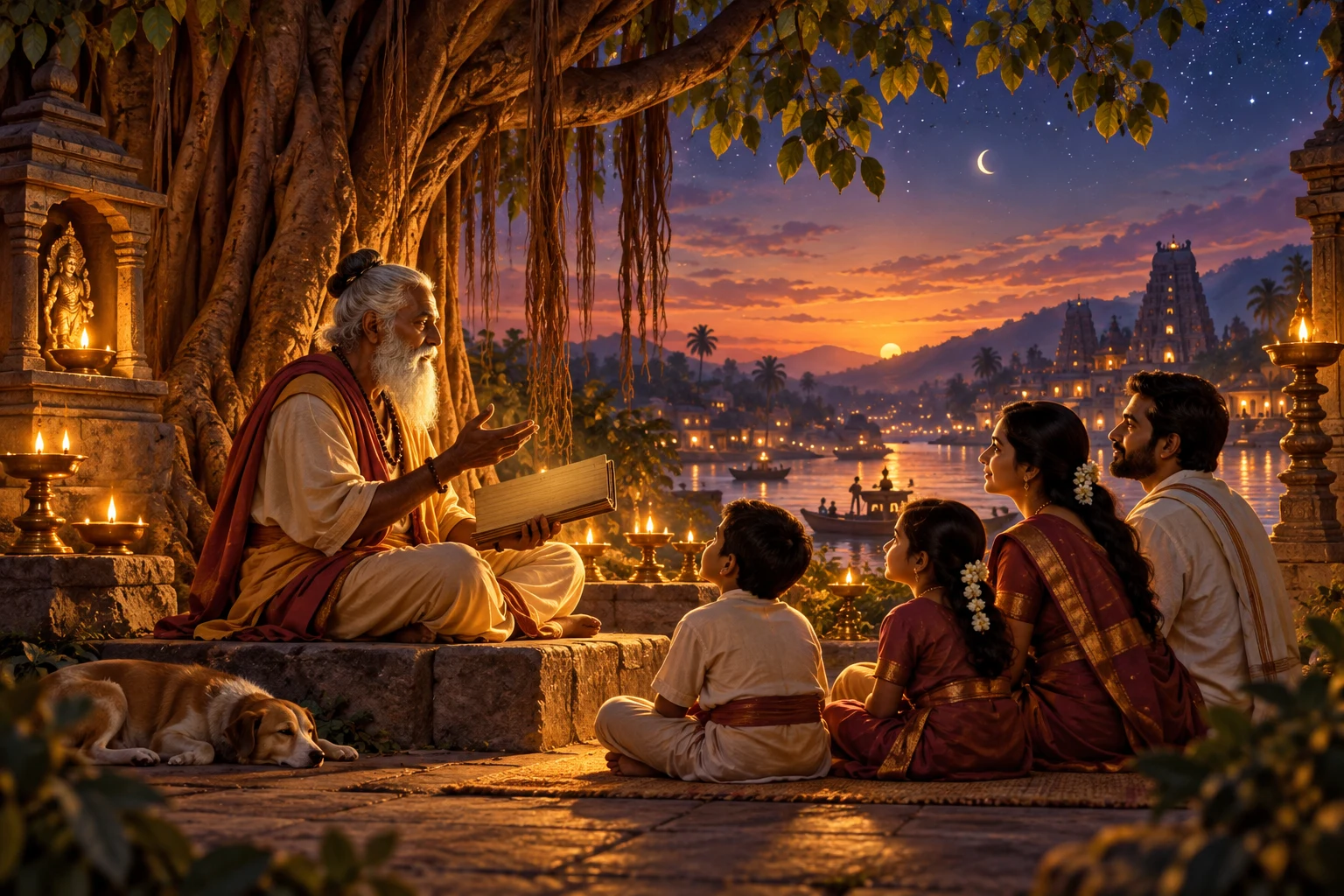
Indian mythological stories are not one single book or one uniform tradition. They come from the Vedas, Upanishads, Puranas, Ramayana, Mahabharata, regional traditions, temple histories, songs, and oral storytelling. This guide helps English readers choose a respectful starting point without treating a living tradition as a simple list of characters.
Stories of Krishna
Krishna’s stories move from playful childhood in Gokul and Vrindavan to the serious wisdom of the Bhagavad Gita. Read stories of Lord Krishna and the Janmashtami guide.
Stories of Shiva
Shiva’s stories bring together meditation, family life, compassion, transformation, and cosmic dance. Begin with stories of Lord Shiva or the 12 Jyotirlingas guide.
Stories of Durga and Shakti
The Durga tradition presents the Divine Mother as courage, protection, wisdom, and power directed toward restoring dharma. Read stories of Goddess Durga and the guide to the nine forms of Durga.
Stories of Rama and Hanuman
The Ramayana stories of Rama, Sita, Lakshmana, and Hanuman explore truth, loyalty, exile, service, courage, and difficult duty. Read the Hanuman and Rama story and the Hanuman Chalisa meaning guide.
Stories of Ganesha
Ganesha is associated with wisdom, beginnings, discernment, and the removal of obstacles. His stories are especially popular during Ganesh Chaturthi, when devotion is joined with community celebration and ritual. Read the Ganesh Chaturthi story.
How to read mythology thoughtfully
Ask three questions as you read: Which tradition or text is this version from? What values does the story emphasise? How do different regions tell it differently? This approach leaves room for devotion, symbolism, history, and regional diversity.
Avoid treating every story as a literal science lesson or using one version to dismiss another. Mythological narratives can carry theology, ethics, poetry, ritual memory, and cultural identity at the same time.
Mythology and daily practice
A story becomes more meaningful when it leads to reflection. After reading about Hanuman, practise service. After reading about Durga, notice where courage and protection are needed. After reading about Krishna, study one Gita verse. After reading about Shiva, make room for simplicity and awareness.
Explore the Hindu deities guide, Hindu festivals calendar, and VedicVani’s mantra collection.
Frequently asked questions
Where can I read Indian mythology in English?
VedicVani’s mythology guides connect English explanations with stories of Krishna, Shiva, Durga, Hanuman, Rama, Ganesha, and major Hindu festivals.
Are all Hindu mythological stories the same?
No. Stories change across texts, regions, languages, sects, temples, and oral traditions. Differences are part of the living history of Hindu storytelling.
Which story should a beginner read first?
The Hanuman and Rama story, a Krishna childhood story, or the Durga and Mahishasura story are accessible starting points. Choose one and then explore its related mantra or festival.