
🔱 Mythology
Shakti Peeth: The Story of Sati and the List of Major Shakti Peethas
The Shakti Peethas are the holiest shrines of the Goddess, born from the story of Sati. Here is the story, why the count varies, and a list of the most important peethas.
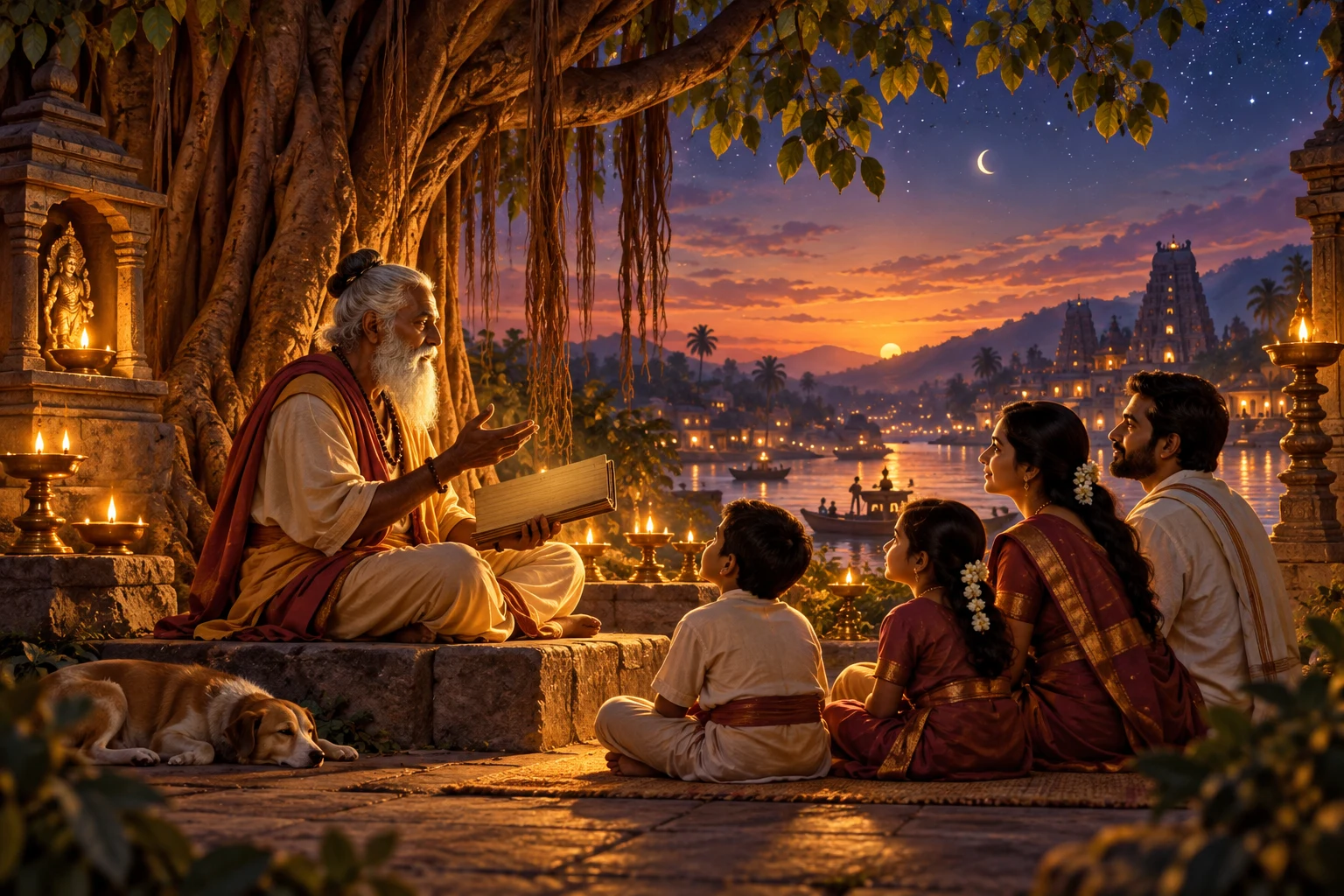
Shakti Peeth (शक्ति पीठ, “seat of the Goddess’s power”) is a sacred shrine of the Devi believed to mark a place where a part of Sati’s body or her ornaments fell after Shiva carried her through the worlds in grief. The best-known tradition counts 51 Shakti Peethas, while other lists name 4, 18, 52 or 108. Each peetha honours a form of the Goddess and her guardian Bhairava.
The Shakti Peethas are spread across India, Nepal, Pakistan, Bangladesh, Tibet and Sri Lanka, and are among the most important pilgrimage sites of the Shakta tradition.
The story of Sati and the Shakti Peethas
Sati was the daughter of Daksha Prajapati and the beloved wife of Shiva. Daksha disapproved of Shiva — the ash-smeared ascetic of the cremation grounds — and when he held a great sacrifice (yajna), he invited every god except Shiva.
Sati went anyway. When her father insulted her husband before the assembly, she gave up her body, choosing not to live as the daughter of a man who dishonoured Shiva. In fury, Shiva created Virabhadra, who destroyed the sacrifice. (The full episode is told among the stories of Lord Shiva.)
Then, overcome by grief, Shiva lifted Sati’s body and wandered the worlds, dancing the dance of destruction. Creation itself began to falter. To restore balance, Vishnu released his Sudarshana Chakra, which divided Sati’s body; wherever a part fell, the earth became charged with the Goddess’s presence. These became the Shakti Peethas. Shiva, it is said, stationed himself at each as Bhairava, the protector of the shrine.
Sati was later reborn as Parvati, who won Shiva again through her austerities — so the story moves from loss to reunion.
The dismemberment episode is told in later texts such as the Kalika Purana and Devi Bhagavata Purana, and the best-known peetha list comes from the tantric Peetha Nirnaya, often included in the Tantrachudamani.
Why do the numbers differ — 4, 18, 51, 52 or 108?
| Count | Source / tradition | Note |
|---|---|---|
| 4 Adi Shakti Peethas | Popular devotional tradition | Kamakhya, Kalighat, Vimala (Puri), Tara Tarini |
| 18 Maha Shakti Peethas | Ashtadasha Shakti Peetha Stotram, attributed to Adi Shankaracharya | Widely followed in South India |
| 51 Shakti Peethas | Peetha Nirnaya (Tantrachudamani) | Linked to the 51 letters of the Sanskrit alphabet |
| 52 | Some later lists | Adds one site to the 51 |
| 108 | Devi Bhagavata Purana | A broader list of sacred seats of the Devi |
The variations are not contradictions so much as different regional and textual traditions. Locations of a few peethas are also disputed, with more than one temple claiming the same peetha.
The 4 Adi Shakti Peethas
- Kamakhya — Nilachal hill, Guwahati, Assam. The foremost tantric peetha, associated with the yoni of Sati and celebrated during the Ambubachi Mela.
- Kalighat — Kolkata, West Bengal. Associated with the toes of the right foot; the Goddess is worshipped as Kali.
- Vimala — inside the Jagannath temple complex, Puri, Odisha.
- Tara Tarini — on the Kumari hills near Berhampur, Odisha.
The 18 Maha Shakti Peethas (Ashtadasha list)
| # | Goddess | Location |
|---|---|---|
| 1 | Shankari Devi | Trincomalee, Sri Lanka |
| 2 | Kamakshi | Kanchipuram, Tamil Nadu |
| 3 | Shrinkhala Devi | Pandua, West Bengal (location debated) |
| 4 | Chamundeshwari | Mysuru, Karnataka |
| 5 | Jogulamba | Alampur, Telangana |
| 6 | Bhramaramba | Srisailam, Andhra Pradesh |
| 7 | Mahalakshmi | Kolhapur, Maharashtra |
| 8 | Ekaveera (Renuka) | Mahur, Maharashtra |
| 9 | Mahakali | Ujjain, Madhya Pradesh |
| 10 | Puruhutika | Pithapuram, Andhra Pradesh |
| 11 | Girija (Biraja) | Jajpur, Odisha |
| 12 | Manikyamba | Draksharamam, Andhra Pradesh |
| 13 | Kamarupa (Kamakhya) | Guwahati, Assam |
| 14 | Madhaveshwari (Alopi Devi) | Prayagraj, Uttar Pradesh |
| 15 | Vaishnavi (Jwalamukhi) | Kangra, Himachal Pradesh |
| 16 | Mangala Gauri | Gaya, Bihar |
| 17 | Vishalakshi | Varanasi, Uttar Pradesh |
| 18 | Saraswati (Sharada) | Kashmir |
Several of these are paired with nearby Shiva temples — Srisailam’s Bhramaramba with Mallikarjuna, and Ujjain’s Mahakali with Mahakaleshwar, both among the 12 Jyotirlingas.
Other well-known Shakti Peethas
- Hinglaj Mata — Balochistan, Pakistan; associated with the head (brahmarandhra). Still visited by Hindu pilgrims.
- Jwalamukhi — Kangra, Himachal Pradesh; associated with the tongue, worshipped as natural flames that burn from the rock.
- Naina Devi — Bilaspur, Himachal Pradesh; associated with the eyes.
- Ambaji — Banaskantha, Gujarat; associated with the heart; worshipped through a sacred yantra rather than an idol.
- Guhyeshwari — Kathmandu, Nepal, near Pashupatinath.
- Vishalakshi — Varanasi; associated with the earrings.
- Jessoreshwari and Sugandha — Bangladesh.
Body-part attributions follow the commonly cited lists; different texts and temples sometimes give different parts for the same site.
Shakti and Bhairava: why each peetha has two deities
Every Shakti Peeth pairs a form of the Goddess with a form of Shiva as Bhairava. This expresses the Shakta teaching that Shiva and Shakti are inseparable: consciousness and power, stillness and movement. The same idea appears in the Sri Yantra, where Shiva and Shakti triangles interlock around one centre.
Visiting the Shakti Peethas
- Navratri is the most popular time for Shakti Peeth pilgrimages — see Navratri 2026 dates and puja vidhi and the nine forms of Durga.
- Devotees often recite the Durga Chalisa, the Durga Saptashati or a Durga mantra at each shrine.
- Temple customs differ, especially at tantric peethas such as Kamakhya; follow local rules on dress, offerings and photography.
Related reading
Frequently Asked Questions
What is a Shakti Peeth?
A Shakti Peeth (also Shakti Peetha or Shaktipeeth) is a shrine of the Goddess believed to mark a place where a part of Sati's body, or her ornament, fell after Shiva carried her body across the earth. Each peetha has a form of the Devi and a guardian form of Shiva called Bhairava.
How many Shakti Peeth are there?
Lists differ. The best-known tradition counts 51 Shakti Peethas, linked to the 51 letters of the Sanskrit alphabet; some lists count 52. There are also 18 Maha Shakti Peethas, 4 Adi Shakti Peethas, and a list of 108 sacred seats in the Devi Bhagavata Purana.
Which is the most powerful Shakti Peeth?
Devotees do not rank the Goddess's seats, but Kamakhya in Assam is widely regarded as the foremost, especially in tantric tradition. Kalighat, Vimala at Puri and Tara Tarini in Odisha are counted among the four Adi (original) Shakti Peethas.
Are there Shakti Peethas outside India?
Yes. Hinglaj Mata in Balochistan, Pakistan; Guhyeshwari near Pashupatinath in Kathmandu, Nepal; several sites in Bangladesh, such as Sugandha and Jessoreshwari; and Shankari Devi at Trincomalee in Sri Lanka are traditionally counted.
What is the story behind the Shakti Peethas?
Sati, daughter of Daksha and wife of Shiva, gave up her body at her father's sacrifice after he insulted Shiva. Grief-stricken, Shiva carried her body through the worlds. To end his grief, Vishnu used the Sudarshana Chakra to divide the body, and the places where the parts fell became the Shakti Peethas.
Is Vaishno Devi a Shakti Peeth?
Vaishno Devi is one of the most visited Devi shrines in India, and many devotees regard it as a Shakti Peeth. However, it does not appear in the classical 51-peetha lists or in the Ashtadasha (18) list, so its status depends on the tradition followed.