
🕉️ Practice Guides
Soundarya Lahari: Sanskrit, Transliteration and Meaning of All 100 Verses
Last updated: November 22, 2026
The Soundarya Lahari is a hundred-verse hymn to the Devi, traditionally attributed to Shankara. Here is the full text in Devanagari, IAST and original English, with Anandalahari 1–41 and verses 42–100 clearly marked.
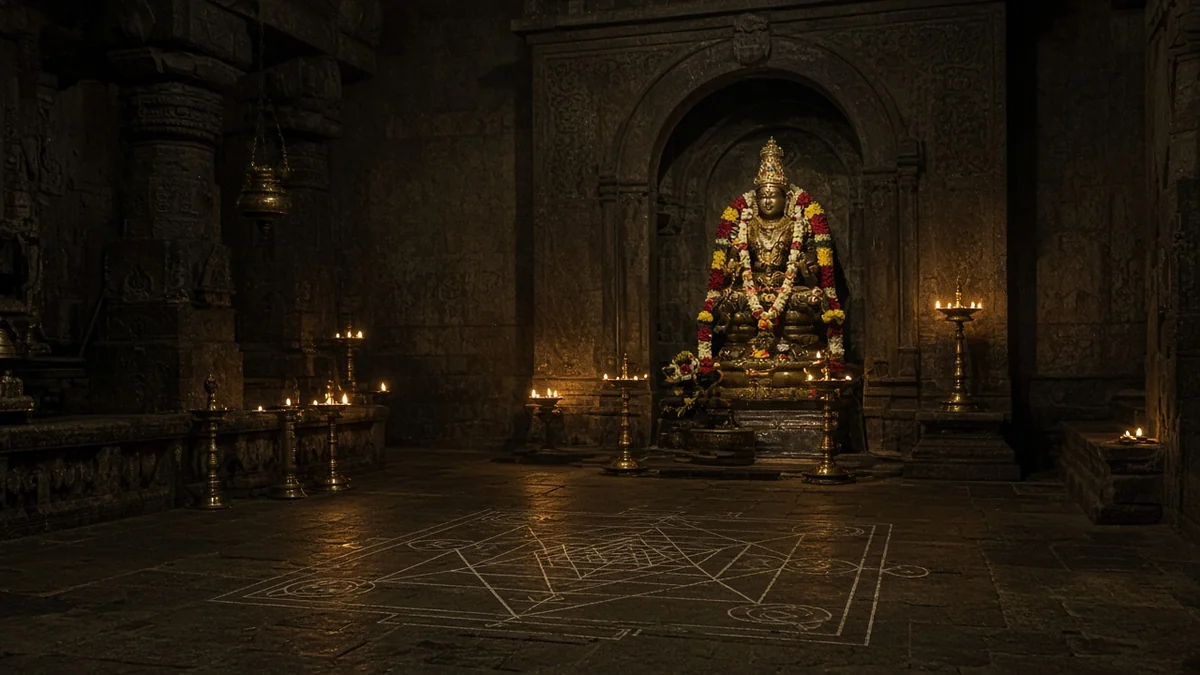
The Soundarya Lahari (Saundaryalaharī, “Wave of Beauty”) is a hundred-verse Sanskrit hymn to the Devi, traditionally attributed to Adi Shankara, in the śikhariṇī metre. In the recension followed here, verses 1–41 are the Anandalahari, the Wave of Bliss, and verses 42–100 are the Soundaryalahari proper. The first movement is about Shiva and Shakti, the Sri Yantra, the chakras and the life of mantra. The second praises the goddess from the crown down to the feet. The exact number and order of verses are debated; this page gives one complete, labelled 100, and does not treat later addenda as part of the core.
The English meanings are original to VedicVani. The Sanskrit was checked against the Sanskrit Documents edition (contributed and proofread by Anshuman Pandey and Sunder Hattangadi; last update 19 July 2024). That file’s own notes, and the heading that appears before verse 42, support the 1–41 / 42–100 division used here, even though one HTML heading in the same file still says Anandalahari 1–40. Some editions add an anubandha of verses 101–103; those extras are not printed below.
The image on this page is a Devi shrine seen from several metres: a bronze murti in a stone niche, lamps, flowers, and a faint yantra on the floor — the setting of the hymn, not a close study of any one verse’s imagery.
How the hymn is recited
A common practice is to bathe, sit before a Devi image or a Sri Yantra, light a lamp, and read slowly, a few verses at a time or the whole hundred, on a Friday or during navaratri. Some traditions treat 1–41 and 42–100 as two sittings. Stay with one recension. Companion Shankara hymns on this site include the Kanakadhara Stotram, the Annapurna Stotram, the Dakshinamurthy Stotram, Bhaja Govindam and the Nirvana Shatakam.
Anandalahari: verses 1–41
The Wave of Bliss opens with the dependence of Shiva on Shakti, and moves through the dust of the Devi’s feet, the Sri Yantra, the chakras, and the inner worship that turns every act into her service.
Verse 1
शिवः शक्त्या युक्तो यदि भवति शक्तः प्रभवितुं न चेदेवं देवो न खलु कुशलः स्पन्दितुमपि । अतस्त्वामाराध्यां हरिहरविरिञ्चादिभिरपि प्रणन्तुं स्तोतुं वा कथमकृतपुण्यः प्रभवति
śivaḥ śaktyā yukto yadi bhavati śaktaḥ prabhavituṃ na cedevaṃ devo na khalu kuśalaḥ spanditumapi | atastvāmārādhyāṃ hariharaviriñcādibhirapi praṇantuṃ stotuṃ vā kathamakṛtapuṇyaḥ prabhavati
Meaning. Shiva is able to create only when joined with Shakti; without her, the Lord is not even able to stir. How, then, can one who has done no good deeds succeed in bowing to or praising you, whom even Hari, Hara and Virinchi worship?
Verse 2
तनीयांसं पांसुं तव चरणपङ्केरुहभवं विरिञ्चिस्सञ्चिन्वन् विरचयति लोकानविकलम् । वहत्येनं शौरिः कथमपि सहस्रेण शिरसां हरस्संक्षुद्यैनं भजति भसितोद्धूलनविधिम्
tanīyāṃsaṃ pāṃsuṃ tava caraṇapaṅkeruhabhavaṃ viriñcissañcinvan viracayati lokānavikalam | vahatyenaṃ śauriḥ kathamapi sahasreṇa śirasāṃ harassaṃkṣudyainaṃ bhajati bhasitoddhūlanavidhim
Meaning. A mere speck of dust from your lotus feet: Virinchi gathers it and fashions the worlds without remainder; Shauri somehow bears it on his thousand heads; Hara grinds it and uses it in the rite of smearing ash.
Verse 3
अविद्यानामन्त-स्तिमिर-मिहिरद्वीपनगरी जडानां चैतन्य-स्तबक-मकरन्द-स्रुतिझरी । दरिद्राणां चिन्तामणिगुणनिका जन्मजलधौ निमग्नानां दंष्ट्रा मुररिपु-वराहस्य भवति
avidyānāmanta-stimira-mihiradvīpanagarī jaḍānāṃ caitanya-stabaka-makaranda-srutijharī | daridrāṇāṃ cintāmaṇiguṇanikā janmajaladhau nimagnānāṃ daṃṣṭrā muraripu-varāhasya bhavati
Meaning. That same dust becomes, for the ignorant, a sun-city that lights the inner dark; for the dull, a stream of honey from a cluster of consciousness; for the poor, a jewel-string of the wish-granting gem; for those sunk in the ocean of birth, the tusk of Vishnu as the boar.
Verse 4
त्वदन्यः पाणिभ्यामभयवरदो दैवतगणः त्वमेका नैवासि प्रकटितवराभीत्यभिनया । भयात् त्रातुं दातुं फलमपि च वाञ्छासमधिकं शरण्ये लोकानां तव हि चरणावेव निपुणौ
tvadanyaḥ pāṇibhyāmabhayavarado daivatagaṇaḥ tvamekā naivāsi prakaṭitavarābhītyabhinayā | bhayāt trātuṃ dātuṃ phalamapi ca vāñchāsamadhikaṃ śaraṇye lokānāṃ tava hi caraṇāveva nipuṇau
Meaning. Every other deity grants safety and boons with the hands. You alone do not need even to mime those two gestures: for those who come to you for refuge, O refuge of the worlds, your two feet themselves are skilled both to save from fear and to give a fruit greater than the wish.
Verse 5
हरिस्त्वामाराध्य प्रणतजनसौभाग्यजननीं पुरा नारी भूत्वा पुररिपुमपि क्षोभमनयत् । स्मरोऽपि त्वां नत्वा रतिनयनलेह्येन वपुषा मुनीनामप्यन्तः प्रभवति हि मोहाय महताम्
haristvāmārādhya praṇatajanasaubhāgyajananīṃ purā nārī bhūtvā puraripumapi kṣobhamanayat | smaro’pi tvāṃ natvā ratinayanalehyena vapuṣā munīnāmapyantaḥ prabhavati hi mohāya mahatām
Meaning. Worshipping you, the mother of good fortune for those who bow, Hari once took a woman’s form and shook even the foe of the Triple City. And Kama, having bowed to you, with a body that Rati’s eyes can drink, is able to bewilder even the great sages within.
Verse 6
धनुः पौष्पं मौर्वी मधुकरमयी पञ्च विशिखाः वसन्तः सामन्तो मलयमरुदायोधनरथः । तथाप्येकः सर्वं हिमगिरिसुते कामपि कृपाम् अपाङ्गात्ते लब्ध्वा जगदिद-मनङ्गो विजयते
dhanuḥ pauṣpaṃ maurvī madhukaramayī pañca viśikhāḥ vasantaḥ sāmanto malayamarudāyodhanarathaḥ | tathāpyekaḥ sarvaṃ himagirisute kāmapi kṛpām apāṅgātte labdhvā jagadida-manaṅgo vijayate
Meaning. His bow is of flowers, his string a line of bees, his arrows five, Spring his vassal, the Malaya breeze his chariot of war — and yet, O daughter of the snow mountain, the bodiless one conquers this whole world, having obtained some grace from your sidelong glance.
Verse 7
क्वणत्काञ्चीदामा करिकलभकुम्भस्तननता परिक्षीणा मध्ये परिणतशरच्चन्द्रवदना । धनुर्बाणान् पाशं सृणिमपि दधाना करतलैः पुरस्तादास्तां नः पुरमथितुराहोपुरुषिका
kvaṇatkāñcīdāmā karikalabhakumbhastananatā parikṣīṇā madhye pariṇataśaraccandravadanā | dhanurbāṇān pāśaṃ sṛṇimapi dadhānā karatalaiḥ purastādāstāṃ naḥ puramathiturāhopuruṣikā
Meaning. May she stand before us as the very pride of the Destroyer of Cities: a girdle sounding at her waist, her form slightly bowed by breasts like the temples of a young elephant, slender at the middle, her face the autumn moon come of age, holding in her hands a bow, arrows, a noose and a goad.
Verse 8
सुधासिन्धोर्मध्ये सुरविटपिवाटीपरिवृते मणिद्वीपे नीपोपवनवति चिन्तामणिगृहे । शिवाकारे मञ्चे परमशिवपर्यङ्कनिलयां भजन्ति त्वां धन्याः कतिचन चिदानन्दलहरीम्
sudhāsindhormadhye suraviṭapivāṭīparivṛte maṇidvīpe nīpopavanavati cintāmaṇigṛhe | śivākāre mañce paramaśivaparyaṅkanilayāṃ bhajanti tvāṃ dhanyāḥ katicana cidānandalaharīm
Meaning. Blessed are the few who worship you as a wave of consciousness-bliss, dwelling on the couch of supreme Shiva, on a dais that has Shiva’s form, in a house of wish-granting gems, on the jewel-island set in the midst of the nectar-ocean, among groves of heavenly trees and a garden of nipa.
Verse 9
महीं मूलाधारे कमपि मणिपूरे हुतवहं स्थितं स्वाधिष्ठाने हृदि मरुतमाकाशमुपरि । मनोऽपि भ्रूमध्ये सकलमपि भित्वा कुलपथं सहस्रारे पद्मे सह रहसि पत्या विहरसे
mahīṃ mūlādhāre kamapi maṇipūre hutavahaṃ sthitaṃ svādhiṣṭhāne hṛdi marutamākāśamupari | mano’pi bhrūmadhye sakalamapi bhitvā kulapathaṃ sahasrāre padme saha rahasi patyā viharase
Meaning. In the muladhara you are earth; in manipura, a certain fire; you abide in svadhisthana; in the heart, wind; above, space; and mind too, at the mid-brow. Having pierced the whole Kula path, you sport in secret with your lord in the thousand-petalled lotus.
Verse 10
सुधाधारासारैश्चरणयुगलान्तर्विगलितैः प्रपञ्चं सिञ्चन्ती पुनरपि रसाम्नायमहसः । अवाप्य स्वां भूमिं भुजगनिभमध्युष्टवलयं स्वमात्मानं कृत्वा स्वपिषि कुलकुण्डे कुहरिणि
sudhādhārāsāraiścaraṇayugalāntarvigalitaiḥ prapañcaṃ siñcantī punarapi rasāmnāyamahasaḥ | avāpya svāṃ bhūmiṃ bhujaganibhamadhyuṣṭavalayaṃ svamātmānaṃ kṛtvā svapiṣi kulakuṇḍe kuhariṇi
Meaning. Watering the universe with streams of nectar that fall from between your feet, then taking again the radiance of the nectar-tradition and reaching your own ground — a coiled ring like a serpent — you make yourself your Self and sleep in the hollow of the kula-kunda.
Verse 11
चतुर्भिः श्रीकण्ठैः शिवयुवतिभिः पञ्चभिरपि प्रभिन्नाभिः शम्भोर्नवभिरपि मूलप्रकृतिभिः । चतुश्चत्वारिंशद्वसुदलकलाश्रत्रिवलयत्रिरेखाभिः सार्धं तव शरणकोणाः परिणताः
caturbhiḥ śrīkaṇṭhaiḥ śivayuvatibhiḥ pañcabhirapi prabhinnābhiḥ śambhornavabhirapi mūlaprakṛtibhiḥ | catuścatvāriṃśadvasudalakalāśratrivalayatrirekhābhiḥ sārdhaṃ tava śaraṇakoṇāḥ pariṇatāḥ
Meaning. The angles of your shrine are complete with four Shrikanthas, five Shiva-maidens, nine distinct root-prakritis of Shambhu, and with the petals, kalas, shrines, three circles and three lines: forty-four in all. This is the traditional count of the Sri Yantra.
Verse 12
त्वदीयं सौन्दर्यं तुहिनगिरिकन्ये तुलयितुं कवीन्द्राः कल्पन्ते कथमपि विरिञ्चिप्रभृतयः । यदालोकौत्सुक्यादमरललना यान्ति मनसा तपोभिर्दुष्प्रापामपि गिरिशसायुज्यपदवीम्
tvadīyaṃ saundaryaṃ tuhinagirikanye tulayituṃ kavīndrāḥ kalpante kathamapi viriñciprabhṛtayaḥ | yadālokautsukyādamaralalanā yānti manasā tapobhirduṣprāpāmapi giriśasāyujyapadavīm
Meaning. O daughter of the snow mountain, how can even the great poets, beginning with Virinchi, somehow manage to weigh your beauty? From eagerness just to see it, the women of the gods go in the mind to the state of union with Girisha, which is hard to win even by austerities.
Verse 13
नरं वर्षीयांसं नयनविरसं नर्मसु जडं तवापाङ्गालोके पतितमनुधावन्ति शतशः । गलद्वेणीबन्धाः कुचकलशविस्रस्तसिचया हठात् त्रुट्यत्काञ्च्यो विगलितदुकूला युवतयः
naraṃ varṣīyāṃsaṃ nayanavirasaṃ narmasu jaḍaṃ tavāpāṅgāloke patitamanudhāvanti śataśaḥ | galadveṇībandhāḥ kucakalaśavisrastasicayā haṭhāt truṭyatkāñcyo vigalitadukūlā yuvatayaḥ
Meaning. When a man — older, unlovely to the eye, dull in play — has fallen under the look of your sidelong glance, young women run after him in hundreds: braids come loose, the cloth slips, the girdle snaps at once, the garment slides away. The verse is a hyperbole of the glance’s power.
Verse 14
क्षितौ षट्पञ्चाशद् द्विसमधिकपञ्चाशदुदके हुताशे द्वाषष्टिश्चतुरधिकपञ्चाशदनिले । दिवि द्विष्षट्त्रिंशन्मनसि च चतुष्षष्टिरिति ये मयूखास्तेषामप्युपरि तव पादाम्बुजयुगम्
kṣitau ṣaṭpañcāśad dvisamadhikapañcāśadudake hutāśe dvāṣaṣṭiścaturadhikapañcāśadanile | divi dviṣṣaṭtriṃśanmanasi ca catuṣṣaṣṭiriti ye mayūkhāsteṣāmapyupari tava pādāmbujayugam
Meaning. On earth the rays are fifty-six; in water, fifty-two; in fire, sixty-two; in wind, fifty-four; in the sky, seventy-two; and in the mind, sixty-four. Even above those rays stands the pair of your lotus feet.
Verse 15
शरज्ज्योत्स्नाशुद्धां शशियुतजटाजूटमकुटां वरत्रासत्राणस्फटिकघटिकापुस्तककराम् । सकृन्न त्वा नत्वा कथमिव सतां संन्निदधते मधुक्षीरद्राक्षामधुरिमधुरीणाः भणितयः
śarajjyotsnāśuddhāṃ śaśiyutajaṭājūṭamakuṭāṃ varatrāsatrāṇasphaṭikaghaṭikāpustakakarām | sakṛnna tvā natvā kathamiva satāṃ saṃnnidadhate madhukṣīradrākṣāmadhurimadhurīṇāḥ bhaṇitayaḥ
Meaning. White as autumn moonlight, a crown of matted hair joined with the moon, in your hands the gestures of boon and safety, a crystal rosary and a book: once they have bowed to you, how could the good not come to possess speech sweeter than the sweetness of honey, milk and grapes?
Verse 16
कवीन्द्राणां चेतःकमलवनबालातपरुचिं भजन्ते ये सन्तः कतिचिदरुणामेव भवतीम् । विरिञ्चिप्रेयस्यास्तरुणतरशृङ्गारलहरीगभीराभिर्वाग्भिर्विदधति सतां रञ्जनममी
kavīndrāṇāṃ cetaḥkamalavanabālātaparuciṃ bhajante ye santaḥ katicidaruṇāmeva bhavatīm | viriñcipreyasyāstaruṇataraśaṛṅgāralaharīgabhīrābhirvāgbhirvidadhati satāṃ rañjanamamī
Meaning. A few of the good worship you alone, the rosy one, who are the dawn-light for the lotus-forest of the minds of the great poets. These, with words deep as a younger wave of love belonging to Virinchi’s beloved, delight the good.
Verse 17
सवित्रीभिर्वाचां शशिमणिशिलाभङ्गरुचिभिः वशिन्याद्याभिस्त्वां सह जननि संचिन्तयति यः । स कर्ता काव्यानां भवति महतां भङ्गिरुचिभिः वचोभिर्वाग्देवीवदनकमलामोदमधुरैः
savitrībhirvācāṃ śaśimaṇiśilābhaṅgarucibhiḥ vaśinyādyābhistvāṃ saha janani saṃcintayati yaḥ | sa kartā kāvyānāṃ bhavati mahatāṃ bhaṅgirucibhiḥ vacobhirvāgdevīvadanakamalāmodamadhuraiḥ
Meaning. O mother, whoever contemplates you together with the Vasinis and the other goddesses who give birth to speech, bright as fragments of moonstone, becomes a maker of poems, with the cadences of the great, his words sweet with the fragrance of Vagdevi’s lotus mouth.
Verse 18
तनुच्छायाभिस्ते तरुणतरणिश्रीसरणिभिः दिवं सर्वामुर्वीमरुणिमनि मग्नां स्मरति यः । भवन्त्यस्य त्रस्यद्वनहरिणशालीननयनाः सहोर्वश्या वश्याः कति कति न गीर्वाणगणिकाः
tanucchāyābhiste taruṇataraṇiśrīsaraṇibhiḥ divaṃ sarvāmurvīmaruṇimani magnāṃ smarati yaḥ | bhavantyasya trasyadvanahariṇaśālīnanayanāḥ sahorvaśyā vaśyāḥ kati kati na gīrvāṇagaṇikāḥ
Meaning. Whoever remembers the whole heaven and the whole earth as sunk in the redness of your bodily radiance, which has the path of a younger sun’s beauty: how many heavenly courtesans, their eyes shy as a startled forest deer, do not come under his will, even along with Urvashi?
Verse 19
मुखं बिन्दुं कृत्वा कुचयुगमधस्तस्य तदधो हरार्धं ध्यायेद्यो हरमहिषि ते मन्मथकलाम् । स सद्यः संक्षोभं नयति वनिता इत्यतिलघु त्रिलोकीमप्याशु भ्रमयति रवीन्दुस्तनयुगाम्
mukhaṃ binduṃ kṛtvā kucayugamadhastasya tadadho harārdhaṃ dhyāyedyo haramahiṣi te manmathakalām | sa sadyaḥ saṃkṣobhaṃ nayati vanitā ityatilaghu trilokīmapyāśu bhramayati ravīndustanayugām
Meaning. O queen of Hara, whoever meditates on your art of Kama — the face as a bindu, the pair of breasts below it, and below that the half of Hara — it is too small a thing to say that he at once throws women into turmoil: he quickly sets spinning the three worlds themselves, whose ‘breasts’ are the sun and the moon.
Verse 20
किरन्तीमङ्गेभ्यः किरणनिकुरम्बामृतरसं हृदि त्वामाधत्ते हिमकरशिलामूर्तिमिव यः । स सर्पाणां दर्पं शमयति शकुन्ताधिप इव ज्वरप्लुष्टान् दृष्ट्या सुखयति सुधाधारसिरया
kirantīmaṅgebhyaḥ kiraṇanikurambāmṛtarasaṃ hṛdi tvāmādhatte himakaraśilāmūrtimiva yaḥ | sa sarpāṇāṃ darpaṃ śamayati śakuntādhipa iva jvarapluṣṭān dṛṣṭyā sukhayati sudhādhārasirayā
Meaning. Whoever places you in the heart as if you were an image of moonstone, pouring from your limbs a cluster of rays that are the taste of nectar: he stills the pride of serpents as the lord of birds does, and with a look that is a channel of the nectar-stream he comforts those burned by fever.
Verse 21
तटिल्लेखातन्वीं तपनशशिवैश्वानरमयीं निषण्णां षण्णामप्युपरि कमलानां तव कलाम् । महापद्माटव्यां मृदितमलमायेन मनसा महान्तः पश्यन्तो दधति परमाह्लादलहरीम्
taṭillekhātanvīṃ tapanaśaśivaiśvānaramayīṃ niṣaṇṇāṃ ṣaṇṇāmapyupari kamalānāṃ tava kalām | mahāpadmāṭavyāṃ mṛditamalamāyena manasā mahāntaḥ paśyanto dadhati paramāhlādalaharīm
Meaning. The great, seeing with a mind that has crushed impure maya, your slender kala like a line of lightning, made of sun, moon and fire, seated even above the six lotuses, in the forest of the great lotus, hold a wave of supreme delight.
Verse 22
भवानि त्वं दासे मयि वितर दृष्टिं सकरुणामिति स्तोतुं वाञ्छन् कथयति भवानि त्वमिति यः । तदैव त्वं तस्मै दिशसि निजसायुज्यपदवीं मुकुन्दब्रह्मेन्द्रस्फुटमकुटनीराजितपदाम्
bhavāni tvaṃ dāse mayi vitara dṛṣṭiṃ sakaruṇāmiti stotuṃ vāñchan kathayati bhavāni tvamiti yaḥ | tadaiva tvaṃ tasmai diśasi nijasāyujyapadavīṃ mukundabrahmendrasphuṭamakuṭanīrājitapadām
Meaning. Whoever, wishing to praise you, says, “O Bhavani, cast a compassionate glance on me, your servant,” and has only uttered the words “Bhavani, you” — at that very moment you grant him your own state of union, your feet honoured with the clearly offered crowns of Mukunda, Brahma and Indra.
Verse 23
त्वया हृत्वा वामं वपुरपरितृप्तेन मनसा शरीरार्धं शम्भोरपरमपि शङ्के हृतमभूत् । यदेतत्त्वद्रूपं सकलमरुणाभं त्रिनयनं कुचाभ्यामानम्रं कुटिलशशिचूडालमकुटम्
tvayā hṛtvā vāmaṃ vapuraparitṛptena manasā śarīrārdhaṃ śambhoraparamapi śaṅke hṛtamabhūt | yadetattvadrūpaṃ sakalamaruṇābhaṃ trinayanaṃ kucābhyāmānamraṃ kuṭilaśaśicūḍālamakuṭam
Meaning. Having taken the left half of the body with a mind not yet satisfied, I suspect the other half of Shambhu’s body was also taken: for this form of yours is all rosy, three-eyed, slightly bowed by the breasts, with a crown that bears a curved moon.
Verse 24
जगत्सूते धाता हरिरवति रुद्रः क्षपयते तिरस्कुर्वन्नेतत्स्वमपि वपुरीशस्तिरयति । सदापूर्वः सर्वं तदिदमनुगृह्णाति च शिवस्तवाज्ञामालम्ब्य क्षणचलितयोर्भ्रूलतिकयोः
jagatsūte dhātā hariravati rudraḥ kṣapayate tiraskurvannetatsvamapi vapurīśastirayati | sadāpūrvaḥ sarvaṃ tadidamanugṛhṇāti ca śivastavājñāmālambya kṣaṇacalitayorbhrūlatikayoḥ
Meaning. The Creator brings forth the world, Hari protects, Rudra destroys; the Lord, concealing even this, his own body, withdraws it. And Shiva, who is always prior, favours all this, taking his stand on the command of your two brow-creepers the moment they move.
Verse 25
त्रयाणां देवानां त्रिगुणजनितानां तव शिवे भवेत् पूजा पूजा तव चरणयोर्या विरचिता । तथा हि त्वत्पादोद्वहनमणिपीठस्य निकटे स्थिता ह्येते शश्वन्मुकुलितकरोत्तंसमकुटाः
trayāṇāṃ devānāṃ triguṇajanitānāṃ tava śive bhavet pūjā pūjā tava caraṇayoryā viracitā | tathā hi tvatpādodvahanamaṇipīṭhasya nikaṭe sthitā hyete śaśvanmukulitakarottaṃsamakuṭāḥ
Meaning. O Shiva, a worship done at your feet would itself be a worship of the three gods born of the three gunas. For they stand forever near the jewel-seat that bears your feet, their crowns bowed with folded hands.
Verse 26
विरिञ्चिः पञ्चत्वं व्रजति हरिराप्नोति विरतिं विनाशं कीनाशो भजति धनदो याति निधनम् । वितन्द्री माहेन्द्री विततिरपि संमीलितदृशा महासंहारेऽस्मिन् विहरति सति त्वत्पतिरसौ
viriñciḥ pañcatvaṃ vrajati harirāpnoti viratiṃ vināśaṃ kīnāśo bhajati dhanado yāti nidhanam | vitandrī māhendrī vitatirapi saṃmīlitadṛśā mahāsaṃhāre’smin viharati sati tvatpatirasau
Meaning. At that great dissolution Virinchi goes to the fivefold end, Hari comes to rest, Yama meets destruction, the giver of wealth goes to death, and even the wide host of Mahendra closes its eyes — and, O Sati, your lord sports.
Verse 27
जपो जल्पः शिल्पं सकलमपि मुद्राविरचना गतिः प्रादक्षिण्यक्रमणमशनाद्याहुतिविधिः । प्रणामस्संवेशस्सुखमखिलमात्मार्पणदृशा सपर्यापर्यायस्तव भवतु यन्मे विलसितम्
japo jalpaḥ śilpaṃ sakalamapi mudrāviracanā gatiḥ prādakṣiṇyakramaṇamaśanādyāhutividhiḥ | praṇāmassaṃveśassukhamakhilamātmārpaṇadṛśā saparyāparyāyastava bhavatu yanme vilasitam
Meaning. May my japa be only talk, all my craft the forming of mudras, my walking a circumambulation, my eating and the rest a rite of offering, my bow and my lying-down and all my ease a giving of the self: whatever I do, may it be a form of your worship, seen as an offering of the self.
Verse 28
सुधामप्यास्वाद्य प्रतिभयजरामृत्युहरिणीं विपद्यन्ते विश्वे विधिशतमखाद्या दिविषदः । करालं यत्क्ष्वेलं कबलितवतः कालकलना न शम्भोस्तन्मूलं तव जननि ताटङ्कमहिमा
sudhāmapyāsvādya pratibhayajarāmṛtyuhariṇīṃ vipadyante viśve vidhiśatamakhādyā diviṣadaḥ | karālaṃ yatkṣvelaṃ kabalitavataḥ kālakalanā na śambhostanmūlaṃ tava janani tāṭaṅkamahimā
Meaning. Even after tasting nectar, which steals terrible age and death, the gods of heaven, beginning with Brahma and Indra, still come to grief. That Shambhu, who has swallowed fierce poison, is not counted by Time, has its root, O mother, in the glory of your earrings.
Verse 29
किरीटं वैरिञ्चं परिहर पुरः कैटभभिदः कठोरे कोटीरे स्खलसि जहि जम्भारिमुकुटम् । प्रणम्रेष्वेतेषु प्रसभमुपयातस्य भवनं भवस्याभ्युत्थाने तव परिजनोक्तिर्विजयते
kirīṭaṃ vairiñcaṃ parihara puraḥ kaiṭabhabhidaḥ kaṭhore koṭīre skhalasi jahi jambhārimukuṭam | praṇamreṣveteṣu prasabhamupayātasya bhavanaṃ bhavasyābhyutthāne tava parijanoktirvijayate
Meaning. “Avoid Brahma’s crown in front; you will stumble on the hard diadem of the slayer of Kaitabha; leave Indra’s crown” — when these have bowed, and Shiva has risen suddenly as you enter the house, that cry of your attendants is the real victory.
Verse 30
स्वदेहोद्भूताभिर्घृणिभिरणिमाद्याभिरभितो निषेव्ये नित्ये त्वामहमिति सदा भावयति यः । किमाश्चर्यं तस्य त्रिनयनसमृद्धिं तृणयतो महासंवर्ताग्निर्विरचयति नीराजनविधिम्
svadehodbhūtābhirghṛṇibhiraṇimādyābhirabhito niṣevye nitye tvāmahamiti sadā bhāvayati yaḥ | kimāścaryaṃ tasya trinayanasamṛddhiṃ tṛṇayato mahāsaṃvartāgnirviracayati nīrājanavidhim
Meaning. Whoever always meditates on you, the eternal, the one to be served, as “I am you,” surrounded by the rays of animā and the other powers born of your own body: what wonder if, treating even the wealth of the three-eyed one as grass, the fire of the great dissolution performs a lamp-offering for him?
Verse 31
चतुष्षष्ट्या तन्त्रैः सकलमतिसंधाय भुवनं स्थितस्तत्तत्सिद्धिप्रसवपरतन्त्रैः पशुपतिः । पुनस्त्वन्निर्बन्धादखिलपुरुषार्थैकघटनास्वतन्त्रं ते तन्त्रं क्षितितलमवातीतरदिदम्
catuṣṣaṣṭyā tantraiḥ sakalamatisaṃdhāya bhuvanaṃ sthitastattatsiddhiprasavaparatantraiḥ paśupatiḥ | punastvannirbandhādakhilapuruṣārthaikaghaṭanāsvatantraṃ te tantraṃ kṣititalamavātītaradidam
Meaning. Having pervaded the whole world with the sixty-four tantras, each dependent on giving birth to this or that accomplishment, Pashupati stood. Then, at your urging, he brought down to the surface of the earth this tantra of yours, independent in the making of every human aim at once.
Verse 32
शिवः शक्तिः कामः क्षितिरथ रविः शीतकिरणः स्मरो हंसः शक्रस्तदनु च परामारहरयः । अमी हृल्लेखाभिस्तिसृभिरवसानेषु घटिता भजन्ते वर्णास्ते तव जननि नामावयवताम्
śivaḥ śaktiḥ kāmaḥ kṣitiratha raviḥ śītakiraṇaḥ smaro haṃsaḥ śakrastadanu ca parāmāraharayaḥ | amī hṛllekhābhistisṛbhiravasāneṣu ghaṭitā bhajante varṇāste tava janani nāmāvayavatām
Meaning. Shiva, Shakti, Kama, Earth, then the Sun, the cool-rayed Moon, Smara, the Swan, Indra, and after them Para, Mara and Hari: these, joined at the ends with the three heart-lines (hrillekha), O mother, become the syllables that are the limbs of your name.
Verse 33
स्मरं योनिं लक्ष्मीं त्रितयमिदमादौ तव मनोर्निधायैके नित्ये निरवधिमहाभोगरसिकाः । भजन्ति त्वां चिन्तामणिगुननिबद्धाक्षवलयाः शिवाग्नौ जुह्वन्तः सुरभिघृतधाराहुतिशतैः
smaraṃ yoniṃ lakṣmīṃ tritayamidamādau tava manornidhāyaike nitye niravadhimahābhogarasikāḥ | bhajanti tvāṃ cintāmaṇigunanibaddhākṣavalayāḥ śivāgnau juhvantaḥ surabhighṛtadhārāhutiśataiḥ
Meaning. Some, laying down at the start of your mantra this triad — Smara, the yoni, and Lakshmi — O eternal one, relishers of boundless great enjoyment, worship you with rosaries bound of wish-granting gems, offering into Shiva’s fire a hundred streams of fragrant ghee.
Verse 34
शरीरं त्वं शम्भोः शशिमिहिरवक्षोरुहयुगं तवात्मानं मन्ये भगवति नवात्मानमनघम् । अतश्शेषश्शेषीत्ययमुभयसाधारणतया स्थितः संबन्धो वां समरसपरानन्दपरयोः
śarīraṃ tvaṃ śambhoḥ śaśimihiravakṣoruhayugaṃ tavātmānaṃ manye bhagavati navātmānamanagham | ataśśeṣaśśeṣītyayamubhayasādhāraṇatayā sthitaḥ saṃbandho vāṃ samarasaparānandaparayoḥ
Meaning. You are Shambhu’s body, the pair of breasts the moon and the sun; I think your own self, O blessed one, the flawless nine-fold self. So this relation of ‘remainder’ and ‘owner of the remainder’ stands as common to you both, who are one in taste, supreme bliss and the far shore.
Verse 35
मनस्त्वं व्योम त्वं मरुदसि मरुत्सारथिरसि त्वमापस्त्वं भूमिस्त्वयि परिणतायां न हि परम् । त्वमेव स्वात्मानं परिणमयितुं विश्ववपुषा चिदानन्दाकारं शिवयुवति भावेन बिभृषे
manastvaṃ vyoma tvaṃ marudasi marutsārathirasi tvamāpastvaṃ bhūmistvayi pariṇatāyāṃ na hi param | tvameva svātmānaṃ pariṇamayituṃ viśvavapuṣā cidānandākāraṃ śivayuvati bhāvena bibhṛṣe
Meaning. You are mind, you are space, you are wind, you are fire (the charioteer of the winds), you are the waters, you are earth: when you have evolved, there is nothing beyond. To evolve your own Self into a universal body, O young bride of Shiva, you bear, in feeling, a form of consciousness-bliss.
Verse 36
तवाज्ञाचक्रस्थं तपनशशिकोटिद्युतिधरं परं शम्भुं वन्दे परिमिलितपार्श्वं परचिता । यमाराध्यन् भक्त्या रविशशिशुचीनामविषये निरालोकेऽलोके निवसति हि भालोकभुवने
tavājñācakrasthaṃ tapanaśaśikoṭidyutidharaṃ paraṃ śambhuṃ vande parimilitapārśvaṃ paracitā | yamārādhyan bhaktyā raviśaśiśucīnāmaviṣaye nirāloke’loke nivasati hi bhālokabhuvane
Meaning. I bow to the supreme Shambhu who stands in your ajna chakra, bearing the radiance of a crore of suns and moons, his side joined with the supreme consciousness. Worshipping him with devotion, one dwells in a world of light, a world without light and without world, beyond the reach of sun, moon and fire.
Verse 37
विशुद्धौ ते शुद्धस्फटिकविशदं व्योमजनकं शिवं सेवे देवीमपि शिवसमानव्यवसिताम् । ययोः कान्त्या यान्त्याः शशिकिरणसारूप्यसरणेविधूतान्तर्ध्वान्ता विलसति चकोरीव जगती
viśuddhau te śuddhasphaṭikaviśadaṃ vyomajanakaṃ śivaṃ seve devīmapi śivasamānavyavasitām | yayoḥ kāntyā yāntyāḥ śaśikiraṇasārūpyasaraṇevidhūtāntardhvāntā vilasati cakorīva jagatī
Meaning. In your vishuddha I serve Shiva, clear as pure crystal, the father of space, and the Devi too, equal in standing to Shiva. By their radiance, which goes along a path of likeness to moonlight, the inner dark is shaken off, and the world shines like a chakora bird.
Verse 38
समुन्मीलत् संवित् कमलमकरन्दैकरसिकं भजे हंसद्वन्द्वं किमपि महतां मानसचरम् । यदालापादष्टादशगुणितविद्यापरिणतिर्यदादत्ते दोषाद् गुणमखिलमद्भ्यः पय इव
samunmīlat saṃvit kamalamakarandaikarasikaṃ bhaje haṃsadvandvaṃ kimapi mahatāṃ mānasacaram | yadālāpādaṣṭādaśaguṇitavidyāpariṇatiryadādatte doṣād guṇamakhilamadbhyaḥ paya iva
Meaning. I worship a certain pair of swans, moving on the mind-lake of the great, who relish only the honey of the opening lotus of awareness. From their conversation comes the maturing of the eighteenfold learning; from water they take every quality and leave the fault, as one takes milk from water.
Verse 39
तव स्वाधिष्ठाने हुतवहमधिष्ठाय निरतं तमीडे संवर्तं जननि महतीं तां च समयाम् । यदालोके लोकान् दहति महति क्रोधकलिते दयार्द्रा या दृष्टिः शिशिरमुपचारं रचयति
tava svādhiṣṭhāne hutavahamadhiṣṭhāya nirataṃ tamīḍe saṃvartaṃ janani mahatīṃ tāṃ ca samayām | yadāloke lokān dahati mahati krodhakalite dayārdrā yā dṛṣṭiḥ śiśiramupacāraṃ racayati
Meaning. I praise, O mother, that Samvarta who is ever intent, having taken his place as fire in your svadhisthana, and that great Samaya too. When his look, roused with great anger, would burn the worlds, her glance, wet with compassion, makes a cooling rite.
Verse 40
तटित्त्वन्तं शक्त्या तिमिरपरिपन्थिस्फुरणया स्फुरन्नानारत्नाभरणपरिणद्धेन्द्रधनुषम् । तव श्यामं मेघं कमपि मणिपूरैकशरणं निषेवे वर्षन्तं हरमिहिरतप्तं त्रिभुवनम्
taṭittvantaṃ śaktyā timiraparipanthisphuraṇayā sphurannānāratnābharaṇapariṇaddhendradhanuṣam | tava śyāmaṃ meghaṃ kamapi maṇipūraikaśaraṇaṃ niṣeve varṣantaṃ haramihirataptaṃ tribhuvanam
Meaning. I serve that dark cloud of yours, whose only refuge is the manipura, flashing with a lightning that is Shakti, a flash that is the foe of darkness, bound with a rainbow of many sparkling jewel-ornaments, raining on the three worlds that have been burned by Hara, the sun.
Verse 41
तवाधारे मूले सह समयया लास्यपरया नवात्मानं मन्ये नवरसमहाताण्डवनटम् । उभाभ्यामेताभ्यामुदयविधिमुद्दिश्य दयया सनाथाभ्यां जज्ञे जनकजननीमज्जगदिदम्
tavādhāre mūle saha samayayā lāsyaparayā navātmānaṃ manye navarasamahātāṇḍavanaṭam | ubhābhyāmetābhyāmudayavidhimuddiśya dayayā sanāthābhyāṃ jajñe janakajananīmajjagadidam
Meaning. In your root support I think of the nine-fold Self as a dancer of the great tandava of the nine rasas, together with Samaya, who is given to the lasya. From these two, who in compassion became parents for the rite of arising, this world was born, with a father and a mother.
Soundaryalahari: verses 42–100
From here the hymn becomes a Wave of Beauty: a descent from the crown and hair to the feet, and a closing confession that even this praise is made of the mother’s own words. Descriptions of the body are translated in full, in modest English, as worship, not as display.
Verse 42
गतैर्माणिक्यत्वं गगनमणिभिः सान्द्रघटितं किरीटं ते हैमं हिमगिरिसुते कीर्तयति यः । स नीडेयच्छायाच्छुरणशबलं चन्द्रशकलं धनुः शौनासीरं किमिति न निबध्नाति धिषणाम्
gatairmāṇikyatvaṃ gaganamaṇibhiḥ sāndraghaṭitaṃ kirīṭaṃ te haimaṃ himagirisute kīrtayati yaḥ | sa nīḍeyacchāyācchuraṇaśabalaṃ candraśakalaṃ dhanuḥ śaunāsīraṃ kimiti na nibadhnāti dhiṣaṇām
Meaning. Whoever praises your golden crown, O daughter of the snow mountain, densely set with the gems of the sky that have become rubies: why should he not also fix his thought on the moon’s sliver, mottled with the play of nest-like shadow, as if it were Indra’s bow?
Verse 43
धुनोतु ध्वान्तं नस्तुलितदलितेन्दीवरवनं घनस्निग्धश्लक्ष्णं चिकुरनिकुरुम्बं तव शिवे । यदीयं सौरभ्यं सहजमुपलब्धुं सुमनसो वसन्त्यस्मिन् मन्ये वलमथनवाटीविटपिनाम्
dhunotu dhvāntaṃ nastulitadalitendīvaravanaṃ ghanasnigdhaślakṣṇaṃ cikuranikurumbaṃ tava śive | yadīyaṃ saurabhyaṃ sahajamupalabdhuṃ sumanaso vasantyasmin manye valamathanavāṭīviṭapinām
Meaning. O Shiva, may that thick, smooth, glossy mass of your hair, like a grove of crushed dark lotuses, shake the dark away from us. To obtain its natural fragrance, I think, the good-minded ones — the trees of Indra’s garden — have come to live in it as flowers.
Verse 44
तनोतु क्षेमं नस्तव वदनसौन्दर्यलहरीपरीवाहस्रोतःसरणिरिव सीमन्तसरणिः । वहन्ती सिन्दूरं प्रबलकबरीभारतिमिरद्विषां वृन्दैर्बन्दीकृतमिव नवीनार्ककिरणम्
tanotu kṣemaṃ nastava vadanasaundaryalaharīparīvāhasrotaḥsaraṇiriva sīmantasaraṇiḥ | vahantī sindūraṃ prabalakabarībhāratimiradviṣāṃ vṛndairbandīkṛtamiva navīnārkakiraṇam
Meaning. May that parting in your hair, like a channel for the overflowing stream of the wave of beauty in your face, grant us welfare. It bears vermilion like a young sun’s ray taken prisoner by the hosts of dark, the foes of the heavy braid.
Verse 45
अरालैः स्वाभाव्यादलिकलभसश्रीभिरलकैः परीतं ते वक्त्रं परिहसति पङ्केरुहरुचिम् । दरस्मेरे यस्मिन् दशनरुचिकिञ्जल्करुचिरे सुगन्धौ माद्यन्ति स्मरदहनचक्षुर्मधुलिहः
arālaiḥ svābhāvyādalikalabhasaśrībhiralakaiḥ parītaṃ te vaktraṃ parihasati paṅkeruharucim | darasmere yasmin daśanarucikiñjalkarucire sugandhau mādyanti smaradahanacakṣurmadhulihaḥ
Meaning. Your face, surrounded by naturally curling locks that have the beauty of young bees, laughs at the lotus’s radiance. In its soft smile, bright with the filament-light of the teeth, and fragrant, the honey-drinkers of the eyes of the burner of Kama grow drunk.
Verse 46
ललाटं लावण्यद्युतिविमलमाभाति तव यद्द्वितीयं तन्मन्ये मकुटघटितं चन्द्रशकलम् । विपर्यासन्यासादुभयमपि संभूय च मिथः सुधालेपस्यूतिः परिणमति राकाहिमकरः
lalāṭaṃ lāvaṇyadyutivimalamābhāti tava yaddvitīyaṃ tanmanye makuṭaghaṭitaṃ candraśakalam | viparyāsanyāsādubhayamapi saṃbhūya ca mithaḥ sudhālepasyūtiḥ pariṇamati rākāhimakaraḥ
Meaning. Your forehead, clear with the light of loveliness, shines as if it were a second sliver of moon set in the crown. By a reversed placing, the two, joining one another, ripen into the full moon of the bright fortnight, a stitching of nectar-unguent.
Verse 47
भ्रुवौ भुग्ने किंचिद्भुवनभयभङ्गव्यसनिनि त्वदीये नेत्राभ्यां मधुकररुचिभ्यां धृतगुणम् । धनुर्मन्ये सव्येतरकरगृहीतं रतिपतेः प्रकोष्ठे मुष्टौ च स्थगयति निगूढान्तरमुमे
bhruvau bhugne kiṃcidbhuvanabhayabhaṅgavyasanini tvadīye netrābhyāṃ madhukararucibhyāṃ dhṛtaguṇam | dhanurmanye savyetarakaragṛhītaṃ ratipateḥ prakoṣṭhe muṣṭau ca sthagayati nigūḍhāntaramume
Meaning. O Uma, I think your brows, a little bent and intent on breaking the world’s fear, form the bow of the lord of Rati, its string your two eyes that have a bee’s colour, held in the right hand; at the forearm and in the fist they hide the concealed middle.
Verse 48
अहः सूते सव्यं तव नयनमर्कात्मकतया त्रियामां वामं ते सृजति रजनीनायकतया । तृतीया ते दृष्टिर्दरदलितहेमाम्बुजरुचिः समाधत्ते संध्यां दिवसनिशयोरन्तरचरीम्
ahaḥ sūte savyaṃ tava nayanamarkātmakatayā triyāmāṃ vāmaṃ te sṛjati rajanīnāyakatayā | tṛtīyā te dṛṣṭirdaradalitahemāmbujaruciḥ samādhatte saṃdhyāṃ divasaniśayorantaracarīm
Meaning. Your right eye, being of the nature of the sun, gives birth to day; your left, being of the nature of the night’s lord, creates the three watches of the night. Your third look, with the radiance of a slightly opened golden lotus, composes the twilight that moves between day and night.
Verse 49
विशाला कल्याणी स्फुटरुचिरयोध्या कुवलयैः कृपाधाराधारा किमपि मधुराभोगवतिका । अवन्ती दृष्टिस्ते बहुनगरविस्तारविजया ध्रुवं तत्तन्नामव्यवहरणयोग्या विजयते
viśālā kalyāṇī sphuṭarucirayodhyā kuvalayaiḥ kṛpādhārādhārā kimapi madhurābhogavatikā | avantī dṛṣṭiste bahunagaravistāravijayā dhruvaṃ tattannāmavyavaharaṇayogyā vijayate
Meaning. Your look is broad, auspicious, clearly bright Ayodhya with its water-lilies, a stream of the stream of compassion, somehow sweet and abundant, Avanti — victorious in spreading over many cities. It surely deserves to be called by each of those names.
Verse 50
कवीनां संदर्भस्तबकमकरन्दैकरसिकं कटाक्षव्याक्षेपभ्रमरकलभौ कर्णयुगलम् । अमुञ्चन्तौ दृष्ट्वा तव नवरसास्वादतरलावसूयासंसर्गादलिकनयनं किंचिदरुणम्
kavīnāṃ saṃdarbhastabakamakarandaikarasikaṃ kaṭākṣavyākṣepabhramarakalabhau karṇayugalam | amuñcantau dṛṣṭvā tava navarasāsvādataralāvasūyāsaṃsargādalikanayanaṃ kiṃcidaruṇam
Meaning. Your two ears, like young bees, relish only the honey of the clustered verses of the poets, thrown out by a sidelong glance. Seeing them not leaving that taste, restless for the nine rasas, the third eye on the forehead has grown a little red from a touch of envy.
Verse 51
शिवे शृङ्गारार्द्रा तदितरजने कुत्सनपरा सरोषा गङ्गायां गिरिशचरिते विस्मयवती । हराहिभ्यो भीता सरसिरुहसौभाग्यजननी सखीषु स्मेरा ते मयि जननी दृष्टिः सकरुणा
śive śaṛṅgārārdrā taditarajane kutsanaparā saroṣā gaṅgāyāṃ giriśacarite vismayavatī | harāhibhyo bhītā sarasiruhasaubhāgyajananī sakhīṣu smerā te mayi jananī dṛṣṭiḥ sakaruṇā
Meaning. O mother, your look is wet with love for Shiva, scornful toward anyone else, angry at Ganga, full of wonder at Girisha’s deeds, afraid of Hara’s serpents, a mother of lotus-beauty, smiling among friends — and, for me, compassionate.
Verse 52
गते कर्णाभ्यर्णं गरुत इव पक्ष्माणि दधती पुरां भेत्तुश्चित्तप्रशमरसविद्रावणफले । इमे नेत्रे गोत्राधरपतिकुलोत्तंसकलिके तवाकर्णाकृष्टस्मरशरविलासं कलयतः
gate karṇābhyarṇaṃ garuta iva pakṣmāṇi dadhatī purāṃ bhettuścittapraśamarasavidrāvaṇaphale | ime netre gotrādharapatikulottaṃsakalike tavākarṇākṛṣṭasmaraśaravilāsaṃ kalayataḥ
Meaning. These two eyes of yours, O bud of the family of the lord of the mountains, wearing lashes like feathers when they come near the ear, and having the fruit of melting the flavour of quiet in the Destroyer of Cities’ mind, play the play of Kama’s arrows drawn to the ear.
Verse 53
विभक्तत्रैवर्ण्यं व्यतिकरितलीलाञ्जनतया विभाति त्वन्नेत्रत्रितयमिदमीशानदयिते । पुनः स्रष्टुं देवान् द्रुहिणहरिरुद्रानुपरतान् रजः सत्त्वं बिभ्रत्तम इति गुणानां त्रयमिव
vibhaktatraivarṇyaṃ vyatikaritalīlāñjanatayā vibhāti tvannetratritayamidamīśānadayite | punaḥ sraṣṭuṃ devān druhiṇaharirudrānuparatān rajaḥ sattvaṃ bibhrattama iti guṇānāṃ trayamiva
Meaning. This triad of your eyes, O beloved of Ishana, shines with a threefold colour, mixed by the play of collyrium. It is as if, to create again the gods Brahma, Hari and Rudra who had ceased, it bears the three gunas: rajas, sattva and tamas.
Verse 54
पवित्रीकर्तुं नः पशुपतिपराधीनहृदये दयामित्रैर्नेत्रैररुणधवलश्यामरुचिभिः । नदः शोणो गङ्गा तपनतनयेति ध्रुवममुं त्रयाणां तीर्थानामुपनयसि संभेदमनघम्
pavitrīkartuṃ naḥ paśupatiparādhīnahṛdaye dayāmitrairnetrairaruṇadhavalaśyāmarucibhiḥ | nadaḥ śoṇo gaṅgā tapanatanayeti dhruvamamuṃ trayāṇāṃ tīrthānāmupanayasi saṃbhedamanagham
Meaning. To purify us, in a heart that is dependent on Pashupati, with eyes that are friends of compassion, red, white and dark in radiance, you surely bring together, unstained, the meeting of three fords: the Shona, the Ganga, and the Daughter of the Sun (Yamuna).
Verse 55
निमेषोन्मेषाभ्यां प्रलयमुदयं याति जगती तवेत्याहुः सन्तो धरणिधरराजन्यतनये । त्वदुन्मेषाज्जातं जगदिदमशेषं प्रलयतः परित्रातुं शङ्के परिहृतनिमेषास्तव दृशः
nimeṣonmeṣābhyāṃ pralayamudayaṃ yāti jagatī tavetyāhuḥ santo dharaṇidhararājanyatanaye | tvadunmeṣājjātaṃ jagadidamaśeṣaṃ pralayataḥ paritrātuṃ śaṅke parihṛtanimeṣāstava dṛśaḥ
Meaning. The good say, O princess of the kings of the mountains, that the world goes to dissolution and to arising by the closing and opening of your eyes. I suspect your looks have given up blinking, in order to protect this whole world, once born from your opening, from dissolution.
Verse 56
तवापर्णे कर्णेजपनयनपैशुन्यचकिता निलीयन्ते तोये नियतमनिमेषाः शफरिकाः । इयं च श्रीर्बद्धच्छदपुटकवाटं कुवलयम् जहाति प्रत्यूषे निशि च विघटय्य प्रविशति
tavāparṇe karṇejapanayanapaiśunyacakitā nilīyante toye niyatamanimeṣāḥ śapharikāḥ | iyaṃ ca śrīrbaddhacchadapuṭakavāṭaṃ kuvalayam jahāti pratyūṣe niśi ca vighaṭayya praviśati
Meaning. O Aparna, the little shiners, unblinking, hide in the water, frightened by the tale-bearing of your long-eyed? of the eyes that reach the ears. And this Fortune, at dawn, leaves the water-lily whose petal-doors she had shut, and at night opens them and enters again.
Verse 57
दृशा द्राघीयस्या दरदलितनीलोत्पलरुचा दवीयांसं दीनं स्नपय कृपया मामपि शिवे । अनेनायं धन्यो भवति न च ते हानिरियता वने वा हर्म्ये वा समकरनिपातो हिमकरः
dṛśā drāghīyasyā daradalitanīlotpalarucā davīyāṃsaṃ dīnaṃ snapaya kṛpayā māmapi śive | anenāyaṃ dhanyo bhavati na ca te hāniriyatā vane vā harmye vā samakaranipāto himakaraḥ
Meaning. O Shiva, bathe me too, who am far off and poor, with compassion, in that longer look which has the radiance of a slightly opened blue lotus. By this, this one becomes blessed, and there is no loss to you in so little: the moon’s rays fall the same in a forest or in a palace.
Verse 58
अरालं ते पालीयुगलमगराजन्यतनये न केषामाधत्ते कुसुमशरकोदण्डकुतुकम् । तिरश्चीनो यत्र श्रवणपथमुल्लङ्घ्य विलसन्नपाङ्गव्यासङ्गो दिशति शरसंधानधिषणाम्
arālaṃ te pālīyugalamagarājanyatanaye na keṣāmādhatte kusumaśarakodaṇḍakutukam | tiraścīno yatra śravaṇapathamullaṅghya vilasannapāṅgavyāsaṅgo diśati śarasaṃdhānadhiṣaṇām
Meaning. O daughter of the mountain-king, your two curved ear-rims — whose mind do they not fill with the delight of Kama’s bow? There the sidelong glance, playing aslant, having crossed the path of hearing, suggests the thought of setting an arrow to the string.
Verse 59
स्फुरद्गण्डाभोगप्रतिफलितताटङ्कयुगलं चतुश्चक्रं मन्ये तव मुखमिदं मन्मथरथम् । यमारुह्य द्रुह्यत्यवनिरथमर्केन्दुचरणं महावीरो मारः प्रमथपतये सज्जितवते
sphuradgaṇḍābhogapratiphalitatāṭaṅkayugalaṃ catuścakraṃ manye tava mukhamidaṃ manmatharatham | yamāruhya druhyatyavanirathamarkenducaraṇaṃ mahāvīro māraḥ pramathapataye sajjitavate
Meaning. I think this face of yours, with the pair of earrings reflected in the spreading cheeks, is Manmatha’s four-wheeled chariot. Mounting it, the great hero Mara wages war on the lord of the pramathas, who has made himself ready — he whose chariot is the earth and whose wheels are the sun and the moon.
Verse 60
सरस्वत्याः सूक्तीरमृतलहरीकौशलहरीः पिबन्त्याः शर्वाणि श्रवणचुलुकाभ्यामविरलम् । चमत्कारश्लाघाचलितशिरसः कुण्डलगणो झणत्कारैस्तारैः प्रतिवचनमाचष्ट इव ते
sarasvatyāḥ sūktīramṛtalaharīkauśalaharīḥ pibantyāḥ śarvāṇi śravaṇaculukābhyāmaviralam | camatkāraślāghācalitaśirasaḥ kuṇḍalagaṇo jhaṇatkāraistāraiḥ prativacanamācaṣṭa iva te
Meaning. O Sharvani, as you drink without pause, in the hollowed palms of your ears, Saraswati’s sayings, waves of nectar, waves of skill, the troop of your earrings, with your head moving in wonder and praise, seems to give an answer in their clear jingling.
Verse 61
असौ नासावंशस्तुहिनगिरिवंशध्वजपटि त्वदीयो नेदीयः फलतु फलमस्माकमुचितम् । वहन्नन्तर्मुक्ताः शिशिरतरनिश्वासगलितं समृद्ध्या यत्तासां बहिरपि च मुक्तामणिधरः
asau nāsāvaṃśastuhinagirivaṃśadhvajapaṭi tvadīyo nedīyaḥ phalatu phalamasmākamucitam | vahannantarmuktāḥ śiśirataraniśvāsagalitaṃ samṛddhyā yattāsāṃ bahirapi ca muktāmaṇidharaḥ
Meaning. O banner of the line of the snow-mountain, may this staff of your nose, close at hand, bear us a fruit that is fit for us. It carries pearls within, and, by the wealth of those that have slipped out on a cooler breath, it is also a wearer of pearl-gems without.
Verse 62
प्रकृत्या रक्तायास्तव सुदति दन्तच्छदरुचेः प्रवक्ष्ये सादृश्यं जनयतु फलं विद्रुमलता । न बिम्बं तद्बिम्बप्रतिफलनरागादरुणितं तुलामध्यारोढुं कथमिव विलज्जेत कलया
prakṛtyā raktāyāstava sudati dantacchadaruceḥ pravakṣye sādṛśyaṃ janayatu phalaṃ vidrumalatā | na bimbaṃ tadbimbapratiphalanarāgādaruṇitaṃ tulāmadhyāroḍhuṃ kathamiva vilajjeta kalayā
Meaning. O you of fair teeth, I shall name a likeness for the radiance of your naturally red lips: may the coral vine bear fruit. How could the bimba fruit, reddened by the passion of your lips’ reflection, not be ashamed to mount the scale even in a small way?
Verse 63
स्मितज्योत्स्नाजालं तव वदनचन्द्रस्य पिबतां चकोराणामासीदतिरसतया चञ्चुजडिमा । अतस्ते शीतांशोरमृतलहरीमम्लरुचयः पिबन्ति स्वच्छन्दं निशि निशि भृशं काञ्जिकधिया
smitajyotsnājālaṃ tava vadanacandrasya pibatāṃ cakorāṇāmāsīdatirasatayā cañcujaḍimā | ataste śītāṃśoramṛtalaharīmamlarucayaḥ pibanti svacchandaṃ niśi niśi bhṛśaṃ kāñjikadhiyā
Meaning. Drinking the net of smile-moonlight from the moon of your face, the chakora birds grew a dullness of the beak from too much sweetness. So now, thinking it sour gruel, they drink at will, night after night, the wave of nectar of the cool-rayed moon, which has a sour taste to them.
Verse 64
अविश्रान्तं पत्युर्गुणगणकथाम्रेडनजपा जपापुष्पच्छाया तव जननि जिह्वा जयति सा । यदग्रासीनायाः स्फटिकदृषदच्छच्छविमयी सरस्वत्या मूर्तिः परिणमति माणिक्यवपुषा
aviśrāntaṃ patyurguṇagaṇakathāmreḍanajapā japāpuṣpacchāyā tava janani jihvā jayati sā | yadagrāsīnāyāḥ sphaṭikadṛṣadacchacchavimayī sarasvatyā mūrtiḥ pariṇamati māṇikyavapuṣā
Meaning. That tongue of yours is victorious, O mother, with the colour of the china-rose, a ceaseless japa that repeats the telling of your lord’s hosts of qualities. The form of Saraswati, clear as crystal stone, seated at its tip, ripens into a body of ruby.
Verse 65
रणे जित्वा दैत्यानपहृतशिरस्त्रैः कवचिभिर्निवृत्तैश्चण्डांशत्रिपुरहरनिर्माल्यविमुखैः । विशाखेन्द्रोपेन्द्रैः शशिविशदकर्पूरशकला विलीयन्ते मातस्तव वदनताम्बूलकबलाः
raṇe jitvā daityānapahṛtaśirastraiḥ kavacibhirnivṛttaiścaṇḍāṃśatripuraharanirmālyavimukhaiḥ | viśākhendropendraiḥ śaśiviśadakarpūraśakalā vilīyante mātastava vadanatāmbūlakabalāḥ
Meaning. O mother, the chewed betel of your mouth, like fragments of camphor bright as the moon, is dissolved by Skanda, Indra and Upendra, returned from battle after defeating the daityas, their helmets taken, still in armour, and turning away from the leftover offerings of the fierce Destroyer of the Triple City.
Verse 66
विपञ्च्या गायन्ती विविधमपदानं पशुपतेः त्वयारब्धे वक्तुं चलितशिरसा साधुवचने । तदीयैर्माधुर्यैरपलपिततन्त्रीकलरवां निजां वीणां वाणी निचुलयति चोलेन निभृतम्
vipañcyā gāyantī vividhamapadānaṃ paśupateḥ tvayārabdhe vaktuṃ calitaśirasā sādhuvacane | tadīyairmādhuryairapalapitatantrīkalaravāṃ nijāṃ vīṇāṃ vāṇī niculayati colena nibhṛtam
Meaning. When you have begun to speak, with a slight nod, a word of praise of the many exploits of Pashupati, Vani, who was singing them on the vina, quietly covers her own instrument with its cloth, her strings’ soft sound put to shame by the sweetness of your words.
Verse 67
कराग्रेण स्पृष्टं तुहिनगिरिणा वत्सलतया गिरीशेनोदस्तं मुहुरधरपानाकुलतया । करग्राह्यं शम्भोर्मुखमुकुरवृन्तं गिरिसुते कथङ्कारं ब्रूमस्तव चिबुकमौपम्यरहितम्
karāgreṇa spṛṣṭaṃ tuhinagiriṇā vatsalatayā girīśenodastaṃ muhuradharapānākulatayā | karagrāhyaṃ śambhormukhamukuravṛntaṃ girisute kathaṅkāraṃ brūmastava cibukamaupamyarahitam
Meaning. Touched by the snow-mountain with the tip of his hand, out of tenderness, and lifted again and again by Girisha, restless to drink the lower lip: O daughter of the mountain, how can we speak of your chin, the stalk of the mirror of Shambhu’s face, which can be taken in the hand, and which has no comparison?
Verse 68
भुजाश्लेषान्नित्यं पुरदमयितुः कण्टकवती तव ग्रीवा धत्ते मुखकमलनालश्रियमियम् । स्वतः श्वेता कालागुरुबहुलजम्बालमलिना मृणालीलालित्यम् वहति यदधो हारलतिका
bhujāśleṣānnityaṃ puradamayituḥ kaṇṭakavatī tava grīvā dhatte mukhakamalanālaśriyamiyam | svataḥ śvetā kālāgurubahulajambālamalinā mṛṇālīlālityam vahati yadadho hāralatikā
Meaning. From the constant embrace of the arms of the tamer of Cities, this neck of yours, a little roughened, has the beauty of the stalk of your lotus face. The creeper of a necklace below it, white by nature, darkened by a thick paste of black agaru, has the grace of a lotus fibre.
Verse 69
गले रेखास्तिस्रो गतिगमकगीतैकनिपुणे विवाहव्यानद्धप्रगुणगुणसंख्याप्रतिभुवः । विराजन्ते नानाविधमधुररागाकरभुवां त्रयाणां ग्रामाणां स्थितिनियमसीमान इव ते
gale rekhāstisro gatigamakagītaikanipuṇe vivāhavyānaddhapraguṇaguṇasaṃkhyāpratibhuvaḥ | virājante nānāvidhamadhurarāgākarabhuvāṃ trayāṇāṃ grāmāṇāṃ sthitiniyamasīmāna iva te
Meaning. Three lines on your throat, O you who are skilled in gait, ornament and song alone, stand as pledges of the number of auspicious strings tied at the wedding, and as if they were the boundary-lines of the standing-rules of the three gramas, the source of many sweet ragas.
Verse 70
मृणालीमृद्वीनां तव भुजलतानां चतसृणां चतुर्भिः सौन्दर्यं सरसिजभवः स्तौति वदनैः । नखेभ्यः सन्त्रस्यन् प्रथममथनादन्धकरिपोश्चतुर्णां शीर्षाणां सममभयहस्तार्पणधिया
mṛṇālīmṛdvīnāṃ tava bhujalatānāṃ catasṛṇāṃ caturbhiḥ saundaryaṃ sarasijabhavaḥ stauti vadanaiḥ | nakhebhyaḥ santrasyan prathamamathanādandhakaripoścaturṇāṃ śīrṣāṇāṃ samamabhayahastārpaṇadhiyā
Meaning. The lotus-born one praises with his four faces the beauty of the four creepers of your arms, soft as lotus fibres. Fearing their nails, from the first churning, he offers at once, with the thought of a gesture of safety, the four heads of the foe of Andhaka (who also has heads to spare).
Verse 71
नखानामुद्द्योतैर्नवनलिनरागं विहसतां कराणां ते कान्तिं कथय कथयामः कथमुमे । कयाचिद्वा साम्यं भजतु कलया हन्त कमलं यदि क्रीडल्लक्ष्मीचरणतललाक्षारुणदलम्
nakhānāmuddyotairnavanalinarāgaṃ vihasatāṃ karāṇāṃ te kāntiṃ kathaya kathayāmaḥ kathamume | kayācidvā sāmyaṃ bhajatu kalayā hanta kamalaṃ yadi krīḍallakṣmīcaraṇatalalākṣāruṇadalam
Meaning. O Uma, how can we tell, or tell of, the radiance of your hands, whose nails’ light laughs at the colour of a young lotus? Or let a lotus, alas, find a little likeness — if it be a petal reddened by the lac on the sole of Lakshmi’s foot as she plays.
Verse 72
समं देवि स्कन्दद्विपवदनपीतं स्तनयुगं तवेदं नः खेदं हरतु सततं प्रस्नुतमुखम् । यदालोक्याशङ्काकुलितहृदयो हासजनकः स्वकुम्भौ हेरम्बः परिमृशति हस्तेन झडिति
samaṃ devi skandadvipavadanapītaṃ stanayugaṃ tavedaṃ naḥ khedaṃ haratu satataṃ prasnutamukham | yadālokyāśaṅkākulitahṛdayo hāsajanakaḥ svakumbhau herambaḥ parimṛśati hastena jhaḍiti
Meaning. O Devi, may this pair of your breasts, from which Skanda and the elephant-faced one have drunk, their faces always wet with milk, take our weariness away. Seeing them, Heramba, his heart troubled with doubt, and making us laugh, at once feels his own temples with his hand.
Verse 73
अमू ते वक्षोजावमृतरसमाणिक्यकुतुपौ न संदेहस्पन्दो नगपतिपताके मनसि नः । पिबन्तौ तौ यस्मादविदितवधूसङ्गरसिकौ कुमारावद्यापि द्विरदवदनक्रौञ्चदलनौ
amū te vakṣojāvamṛtarasamāṇikyakutupau na saṃdehaspando nagapatipatāke manasi naḥ | pibantau tau yasmādaviditavadhūsaṅgarasikau kumārāvadyāpi dviradavadanakrauñcadalanau
Meaning. These two breasts of yours are ruby jars of the taste of nectar: of that there is not even a tremor of doubt in our mind, O banner of the lord of mountains. For from them still drink, not yet knowing the pleasure of union with wives, the two youths: the elephant-faced one and the splitter of Krauncha.
Verse 74
वहत्यम्ब स्तम्बेरमदनुजकुम्भप्रकृतिभिः समारब्धां मुक्तामणिभिरमलां हारलतिकाम् । कुचाभोगो बिम्बाधररुचिभिरन्तः शबलितां प्रतापव्यामिश्रां पुरदमयितुः कीर्तिमिव ते
vahatyamba stamberamadanujakumbhaprakṛtibhiḥ samārabdhāṃ muktāmaṇibhiramalāṃ hāralatikām | kucābhogo bimbādhararucibhirantaḥ śabalitāṃ pratāpavyāmiśrāṃ puradamayituḥ kīrtimiva te
Meaning. O mother, the curve of your breast wears a spotless creeper of a pearl necklace, begun with pearls of the nature of the temples of the elephant-demon, and mottled within by the radiance of your bimba-coloured lower lip — like the fame of the tamer of Cities, mixed with his valour.
Verse 75
तव स्तन्यं मन्ये धरणिधरकन्ये हृदयतः पयःपारावारः परिवहति सारस्वतमिव । दयावत्या दत्तं द्रविडशिशुरास्वाद्य तव यत् कवीनां प्रौढानामजनि कमनीयः कवयिता
tava stanyaṃ manye dharaṇidharakanye hṛdayataḥ payaḥpārāvāraḥ parivahati sārasvatamiva | dayāvatyā dattaṃ draviḍaśiśurāsvādya tava yat kavīnāṃ prauḍhānāmajani kamanīyaḥ kavayitā
Meaning. I think your breast-milk, O daughter of the mountain, is a milk-ocean of Saraswati flowing from the heart. A Dravida child, having tasted what you, the compassionate one, gave, became the lovely poet among accomplished poets. Tradition often reads this as a memory of the hymn’s own childhood, or of a Tamil child-saint; the verse itself names only a Dravida child.
Verse 76
हरक्रोधज्वालावलिभिरवलीढेन वपुषा गभीरे ते नाभीसरसि कृतसङ्गो मनसिजः । समुत्तस्थौ तस्मादचलतनये धूमलतिका जनस्तां जानीते तव जननि रोमावलिरिति
harakrodhajvālāvalibhiravalīḍhena vapuṣā gabhīre te nābhīsarasi kṛtasaṅgo manasijaḥ | samuttasthau tasmādacalatanaye dhūmalatikā janastāṃ jānīte tava janani romāvaliriti
Meaning. With a body licked by the wreaths of flame of Hara’s anger, the mind-born one took refuge in the deep lake of your navel, O daughter of the mountain, and from it a creeper of smoke rose up. People, O mother, know that creeper as the line of hair on your body.
Verse 77
यदेतत् कालिन्दीतनुतरतरङ्गाकृति शिवे कृशे मध्ये किंचिज्जननि तव यद्भाति सुधियाम् । विमर्दादन्योऽन्यं कुचकलशयोरन्तरगतं तनूभूतं व्योम प्रविशदिव नाभिं कुहरिणीम्
yadetat kālindītanutarataraṅgākṛti śive kṛśe madhye kiṃcijjanani tava yadbhāti sudhiyām | vimardādanyo’nyaṃ kucakalaśayorantaragataṃ tanūbhūtaṃ vyoma praviśadiva nābhiṃ kuhariṇīm
Meaning. This that appears, O Shiva, like a very thin wave of the Kalindi, in your slender middle: the wise think it is the space, thinned, that had gone between the pitcher-breasts as they pressed one another, and has as if entered the hollow navel.
Verse 78
स्थिरो गङ्गावर्तः स्तनमुकुलरोमावलिलताकलावालं कुण्डं कुसुमशरतेजोहुतभुजः । रतेर्लीलागारं किमपि तव नाभिर्गिरिसुते बिलद्वारं सिद्धेर्गिरिशनयनानां विजयते
sthiro gaṅgāvartaḥ stanamukularomāvalilatākalāvālaṃ kuṇḍaṃ kusumaśaratejohutabhujaḥ | raterlīlāgāraṃ kimapi tava nābhirgirisute biladvāraṃ siddhergiriśanayanānāṃ vijayate
Meaning. A still whirl of the Ganga; a basin for the creeper of hair that is the line below the buds of the breasts; a fire-pit for the brilliance of the flower-arrowed one; a play-house of Rati; a door of a cave for the accomplishment of Girisha’s eyes: your navel, O daughter of the mountain, is victorious, a something beyond speech.
Verse 79
निसर्गक्षीणस्य स्तनतटभरेण क्लमजुषो नमन्मूर्तेर्नारीतिलक शनकैस्त्रुट्यत इव । चिरं ते मध्यस्य त्रुटिततटिनीतीरतरुणा समावस्थास्थेम्नो भवतु कुशलं शैलतनये
nisargakṣīṇasya stanataṭabhareṇa klamajuṣo namanmūrternārītilaka śanakaistruṭyata iva | ciraṃ te madhyasya truṭitataṭinītīrataruṇā samāvasthāsthemno bhavatu kuśalaṃ śailatanaye
Meaning. O mark of women, your middle, thin by nature, wearied by the weight of the slopes of the breasts, the form bending, seems slowly to be breaking, like a young tree on the bank of a river whose banks have given way. O daughter of the mountain, may that middle long have the safety of a firm, even standing.
Verse 80
कुचौ सद्यःस्विद्यत्तटघटितकूर्पासभिदुरौ कषन्तौ दोर्मूले कनककलशाभौ कलयता । तव त्रातुं भङ्गादलमिति वलग्नं तनुभुवा त्रिधा नद्धं देवि त्रिवलि लवलीवल्लिभिरिव
kucau sadyaḥsvidyattaṭaghaṭitakūrpāsabhidurau kaṣantau dormūle kanakakalaśābhau kalayatā | tava trātuṃ bhaṅgādalamiti valagnaṃ tanubhuvā tridhā naddhaṃ devi trivali lavalīvallibhiriva
Meaning. O Devi, the threefold fold at your waist, as if of lavali vines, has been bound by the bodiless one to save the waist from breaking, as you bear a pair of breasts like golden jars, rubbing at the roots of the arms, hard on a bodice fitted to already-moistened slopes.
Verse 81
गुरुत्वं विस्तारं क्षितिधरपतिः पार्वति निजान्नितम्बादाच्छिद्य त्वयि हरणरूपेण निदधे । अतस्ते विस्तीर्णो गुरुरयमशेषां वसुमतीं नितम्बप्राग्भारः स्थगयति लघुत्वं नयति च
gurutvaṃ vistāraṃ kṣitidharapatiḥ pārvati nijānnitambādācchidya tvayi haraṇarūpeṇa nidadhe | ataste vistīrṇo gururayamaśeṣāṃ vasumatīṃ nitambaprāgbhāraḥ sthagayati laghutvaṃ nayati ca
Meaning. O Parvati, the lord of mountains, taking the heaviness and the breadth from his own hips, placed them in you in the form of a gift. So this wide, heavy burden of your hips covers the whole earth and makes it light.
Verse 82
करीन्द्राणां शुण्डान् कनककदलीकाण्डपटलीमुभाभ्यामूरुभ्यामुभयमपि निर्जित्य भवती । सुवृत्ताभ्यां पत्युः प्रणतिकठिनाभ्यां गिरिसुते विजिग्ये जानुभ्यां विबुधकरिकुम्भद्वयमसि
karīndrāṇāṃ śuṇḍān kanakakadalīkāṇḍapaṭalīmubhābhyāmūrubhyāmubhayamapi nirjitya bhavatī | suvṛttābhyāṃ patyuḥ praṇatikaṭhinābhyāṃ girisute vijigye jānubhyāṃ vibudhakarikumbhadvayamasi
Meaning. O daughter of the mountain, with both thighs you have outdone both the trunks of lordly elephants and a mass of golden plantain-stems; and with both rounded knees, hardened by bowing to your lord, you have conquered the pair of temples of the elephants of the gods.
Verse 83
पराजेतुं रुद्रं द्विगुणशरगर्भौ गिरिसुते निषङ्गौ जङ्घे ते विषमविशिखो बाढमकृत । यदग्रे दृश्यन्ते दशशरफलाः पादयुगलीनखाग्रच्छद्मानः सुरमकुटशाणैकनिशिताः
parājetuṃ rudraṃ dviguṇaśaragarbhau girisute niṣaṅgau jaṅghe te viṣamaviśikho bāḍhamakṛta | yadagre dṛśyante daśaśaraphalāḥ pādayugalīnakhāgracchadmānaḥ suramakuṭaśāṇaikaniśitāḥ
Meaning. O daughter of the mountain, the uneven-arrowed one surely made your two shanks into double quivers, filled with twice the arrows, in order to conquer Rudra. For at their ends are seen ten arrow-heads — the nails of the pair of feet — sharpened only on the whetstone of the gods’ crowns.
Verse 84
श्रुतीनां मूर्धानो दधति तव यौ शेखरतया ममाप्येतौ मातः शिरसि दयया धेहि चरणौ । ययोः पाद्यं पाथः पशुपतिजटाजूटतटिनी ययोर्लाक्षालक्ष्मीररुणहरिचूडामणिरुचिः
śrutīnāṃ mūrdhāno dadhati tava yau śekharatayā mamāpyetau mātaḥ śirasi dayayā dhehi caraṇau | yayoḥ pādyaṃ pāthaḥ paśupatijaṭājūṭataṭinī yayorlākṣālakṣmīraruṇaharicūḍāmaṇiruciḥ
Meaning. O mother, in compassion place on my head also those two feet of yours which the crests of the shrutis wear as a diadem. The water of their foot-wash is the river in Pashupati’s matted hair; the grace of their lac has the radiance of Hari’s red crest-jewel.
Verse 85
नमोवाकं ब्रूमो नयनरमणीयाय पदयोस्तवास्मै द्वन्द्वाय स्फुटरुचिरसालक्तकवते । असूयत्यत्यन्तं यदभिहननाय स्पृहयते पशूनामीशानः प्रमदवनकङ्केलितरवे
namovākaṃ brūmo nayanaramaṇīyāya padayostavāsmai dvandvāya sphuṭarucirasālaktakavate | asūyatyatyantaṃ yadabhihananāya spṛhayate paśūnāmīśānaḥ pramadavanakaṅkelitarave
Meaning. We speak a word of namas to this pair of your feet, delightful to the eye, which has the clear radiance of liquid lac. Ishana, lord of creatures, is greatly envious, and longs to strike, for their sake, at the asoka tree in the pleasure-garden.
Verse 86
मृषा कृत्वा गोत्रस्खलनमथ वैलक्ष्यनमितं ललाटे भर्तारं चरणकमले ताडयति ते । चिरादन्तःशल्यं दहनकृतमुन्मूलितवता तुलाकोटिक्वाणैः किलिकिलितमीशानरिपुणा
mṛṣā kṛtvā gotraskhalanamatha vailakṣyanamitaṃ lalāṭe bhartāraṃ caraṇakamale tāḍayati te | cirādantaḥśalyaṃ dahanakṛtamunmūlitavatā tulākoṭikvāṇaiḥ kilikilitamīśānaripuṇā
Meaning. Having feigned a slip of a name in the family, and then bowed in embarrassment, your husband is struck on the forehead by these lotus feet. With the tinkling of the anklets, the foe of Ishana, who has at last pulled out the inner dart that the burning made, seems to crow in triumph.
Verse 87
हिमानीहन्तव्यं हिमगिरिनिवासैकचतुरौ निशायां निद्राणं निशि चरमभागे च विशदौ । वरं लक्ष्मीपात्रं श्रियमतिसृजन्तौ समयिनां सरोजं त्वत्पादौ जननि जयतश्चित्रमिह किम्
himānīhantavyaṃ himagirinivāsaikacaturau niśāyāṃ nidrāṇaṃ niśi caramabhāge ca viśadau | varaṃ lakṣmīpātraṃ śriyamatisṛjantau samayināṃ sarojaṃ tvatpādau janani jayataścitramiha kim
Meaning. What wonder is it, O mother, that your two feet defeat the lotus? The lotus is killed by snow; they are uniquely skilled at living on the snow-mountain. The lotus sleeps at night and is pale toward dawn; they are bright then. They are a better vessel of Lakshmi, pouring fortune on those who keep the appointed practice.
Verse 88
पदं ते कीर्तीनां प्रपदमपदं देवि विपदां कथं नीतं सद्भिः कठिनकमठीकर्परतुलाम् । कथं वा बाहुभ्यामुपयमनकाले पुरभिदा यदादाय न्यस्तं दृषदि दयमानेन मनसा
padaṃ te kīrtīnāṃ prapadamapadaṃ devi vipadāṃ kathaṃ nītaṃ sadbhiḥ kaṭhinakamaṭhīkarparatulām | kathaṃ vā bāhubhyāmupayamanakāle purabhidā yadādāya nyastaṃ dṛṣadi dayamānena manasā
Meaning. Your foot, O Devi, is a place of glories, a near-place? prapadam (the forefoot) is a non-place of misfortunes. How did the good bring it to a likeness with a hard tortoise-shell? And how, at the time of marriage, did the splitter of Cities, with a compassionate mind, take it in both hands and set it on a stone?
Verse 89
नखैर्नाकस्त्रीणां करकमलसंकोचशशिभिस्तरूणां दिव्यानां हसत इव ते चण्डि चरणौ । फलानि स्वःस्थेभ्यः किसलयकराग्रेण ददतां दरिद्रेभ्यो भद्रां श्रियमनिशमह्नाय ददतौ
nakhairnākastrīṇāṃ karakamalasaṃkocaśaśibhistarūṇāṃ divyānāṃ hasata iva te caṇḍi caraṇau | phalāni svaḥsthebhyaḥ kisalayakarāgreṇa dadatāṃ daridrebhyo bhadrāṃ śriyamaniśamahnāya dadatau
Meaning. O Chandi, your two feet seem to laugh, with nails that are moons making the lotus-hands of the women of heaven close, at the divine trees that give fruits to those who already live in heaven, their tender-leaf hands outstretched — while your feet at once, and without pause, give a fair fortune to the poor.
Verse 90
ददाने दीनेभ्यः श्रियमनिशमाशानुसदृशीममन्दं सौन्दर्यप्रकरमकरन्दम् विकिरति । तवास्मिन् मन्दारस्तबकसुभगे यातु चरणे निमज्जन्मज्जीवः करणचरणः षट्चरणताम्
dadāne dīnebhyaḥ śriyamaniśamāśānusadṛśīmamandaṃ saundaryaprakaramakarandam vikirati | tavāsmin mandārastabakasubhage yātu caraṇe nimajjanmajjīvaḥ karaṇacaraṇaḥ ṣaṭcaraṇatām
Meaning. May my life, with its six senses as feet, sink in this foot of yours, lovely as a cluster of mandara, which gives the poor a fortune ever like their hope, and pours unstintingly a honey of a mass of beauty — and so become a six-footed bee.
Verse 91
पदन्यासक्रीडापरिचयमिवारब्धुमनसः स्खलन्तस्ते खेलं भवनकलहंसा न जहति । अतस्तेषां शिक्षां सुभगमणिमञ्जीररणितच्छलादाचक्षाणं चरणकमलं चारुचरिते
padanyāsakrīḍāparicayamivārabdhumanasaḥ skhalantaste khelaṃ bhavanakalahaṃsā na jahati | atasteṣāṃ śikṣāṃ subhagamaṇimañjīraraṇitacchalādācakṣāṇaṃ caraṇakamalaṃ cārucarite
Meaning. The graceful swans of your house do not give up stumbling in their play, as if they had set their minds on beginning a practice of the play of your footsteps. So this lotus foot, O you of lovely conduct, seems to teach them, under the pretext of the charming sound of jewelled anklets.
Verse 92
गतास्ते मञ्चत्वं द्रुहिणहरिरुद्रेश्वरभृतः शिवः स्वच्छच्छायाघटितकपटप्रच्छदपटः । त्वदीयानां भासां प्रतिफलनरागारुणतया शरीरी शृङ्गारो रस इव दृशां दोग्धि कुतुकम्
gatāste mañcatvaṃ druhiṇaharirudreśvarabhṛtaḥ śivaḥ svacchacchāyāghaṭitakapaṭapracchadapaṭaḥ | tvadīyānāṃ bhāsāṃ pratiphalanarāgāruṇatayā śarīrī śaṛṅgāro rasa iva dṛśāṃ dogdhi kutukam
Meaning. Brahma, Hari, Rudra and Ishvara have become the legs of the couch; Shiva is a curtain of a door made of pure shadow. By the redness of the reflected passion of your lights, embodied shringara-rasa, as it were, milks a wonder for the eyes.
Verse 93
अराला केशेषु प्रकृतिसरला मन्दहसिते शिरीषाभा चित्ते दृषदुपलशोभा कुचतटे । भृशं तन्वी मध्ये पृथुरुरसिजारोहविषये जगत्त्रातुं शम्भोर्जयति करुणा काचिदरुणा
arālā keśeṣu prakṛtisaralā mandahasite śirīṣābhā citte dṛṣadupalaśobhā kucataṭe | bhṛśaṃ tanvī madhye pṛthururasijārohaviṣaye jagattrātuṃ śambhorjayati karuṇā kācidaruṇā
Meaning. Curled in the hair, naturally straight in a slight smile, like a shirisha in the mind, with the beauty of a stone-jewel at the slope of the breasts, very thin at the middle, broad in the region of the bosom and the hips: some rosy compassion of Shambhu, to protect the world, is victorious.
Verse 94
कलङ्कः कस्तूरी रजनिकरबिम्बं जलमयं कलाभिः कर्पूरैर्मरकतकरण्डं निबिडितम् । अतस्त्वद्भोगेन प्रतिदिनमिदं रिक्तकुहरं विधिर्भूयो भूयो निबिडयति नूनं तव कृते
kalaṅkaḥ kastūrī rajanikarabimbaṃ jalamayaṃ kalābhiḥ karpūrairmarakatakaraṇḍaṃ nibiḍitam | atastvadbhogena pratidinamidaṃ riktakuharaṃ vidhirbhūyo bhūyo nibiḍayati nūnaṃ tava kṛte
Meaning. The moon’s mark is musk; the orb of the night-maker is made of water; it is packed with camphor in its kalas, like an emerald box. So, by your enjoyment, this cavity is emptied every day, and the Creator surely packs it again and again for your sake.
Verse 95
पुरारातेरन्तःपुरमसि ततस्त्वच्चरणयोः सपर्यामर्यादा तरलकरणानामसुलभा । तथा ह्येते नीताः शतमखमुखाः सिद्धिमतुलां तव द्वारोपान्तस्थितिभिरणिमाद्याभिरमराः
purārāterantaḥpuramasi tatastvaccaraṇayoḥ saparyāmaryādā taralakaraṇānāmasulabhā | tathā hyete nītāḥ śatamakhamukhāḥ siddhimatulāṃ tava dvāropāntasthitibhiraṇimādyābhiramarāḥ
Meaning. You are the inner apartment of the Foe of Cities; therefore a regular service at your feet is not easy for those of restless senses. So these gods, beginning with Indra, have been brought to an unequalled accomplishment by standing at the edge of your door as Anima and the other powers.
Verse 96
कलत्रं वैधात्रं कतिकति भजन्ते न कवयः श्रियो देव्याः को वा न भवति पतिः कैरपि धनैः । महादेवं हित्वा तव सति सतीनामचरमे कुचाभ्यामासङ्गः कुरवकतरोरप्यसुलभः
kalatraṃ vaidhātraṃ katikati bhajante na kavayaḥ śriyo devyāḥ ko vā na bhavati patiḥ kairapi dhanaiḥ | mahādevaṃ hitvā tava sati satīnāmacarame kucābhyāmāsaṅgaḥ kuravakatarorapyasulabhaḥ
Meaning. How many poets have not obtained Brahma’s wife? Who does not become the husband of the goddess Shri by some wealth or other? But, O Sati, last of the true wives, leaving Mahadeva aside, even a close contact with your breasts is hard for a kuravaka tree to obtain.
Verse 97
गिरामाहुर्देवीं द्रुहिणगृहिणीमागमविदो हरेः पत्नीं पद्मां हरसहचरीमद्रितनयाम् । तुरीया कापि त्वं दुरधिगमनिःसीममहिमा महामाया विश्वं भ्रमयसि परब्रह्ममहिषि
girāmāhurdevīṃ druhiṇagṛhiṇīmāgamavido hareḥ patnīṃ padmāṃ harasahacarīmadritanayām | turīyā kāpi tvaṃ duradhigamaniḥsīmamahimā mahāmāyā viśvaṃ bhramayasi parabrahmamahiṣi
Meaning. Knowers of the agamas call you the goddess of speech, the wife of Druhina; Hari’s wife Padma; Hara’s companion, the daughter of the mountain. You are a certain fourth, whose glory is hard to reach and without limit, great Maya, queen of the supreme Brahman: you send the universe spinning.
Verse 98
कदा काले मातः कथय कलितालक्तकरसं पिबेयं विद्यार्थी तव चरणनिर्णेजनजलम् । प्रकृत्या मूकानामपि च कविताकारणतया कदा धत्ते वाणीमुखकमलताम्बूलरसताम्
kadā kāle mātaḥ kathaya kalitālaktakarasaṃ pibeyaṃ vidyārthī tava caraṇanirṇejanajalam | prakṛtyā mūkānāmapi ca kavitākāraṇatayā kadā dhatte vāṇīmukhakamalatāmbūlarasatām
Meaning. O mother, tell me at what time I, a seeker of learning, may drink the water that has washed your feet, mixed with the juice of lac. And when will it take on, even for those who are mute by nature, the flavour of the betel of Vani’s lotus mouth, as a cause of poetry?
Verse 99
सरस्वत्या लक्ष्म्या विधिहरिसपत्नो विहरते रतेः पातिव्रत्यं शिथिलयति रम्येण वपुषा । चिरं जीवन्नेव क्षपितपशुपाशव्यतिकरः परानन्दाभिख्यम् रसयति रसं त्वद्भजनवान्
sarasvatyā lakṣmyā vidhiharisapatno viharate rateḥ pātivratyaṃ śithilayati ramyeṇa vapuṣā | ciraṃ jīvanneva kṣapitapaśupāśavyatikaraḥ parānandābhikhyam rasayati rasaṃ tvadbhajanavān
Meaning. One who worships you sports as a rival to Vidhi and Hari with Saraswati and Lakshmi; he loosens Rati’s wifely vow with a lovely body; and, living long, having worn away the tangle of the bonds of the creature, he tastes the flavour called supreme bliss.
Verse 100
प्रदीपज्वालाभिर्दिवसकरनीराजनविधिः सुधासूतेश्चन्द्रोपलजललवैरर्घ्यरचना । स्वकीयैरम्भोभिः सलिलनिधिसौहित्यकरणं त्वदीयाभिर्वाग्भिस्तव जननि वाचां स्तुतिरियम्
pradīpajvālābhirdivasakaranīrājanavidhiḥ sudhāsūteścandropalajalalavairarghyaracanā | svakīyairambhobhiḥ salilanidhisauhityakaraṇaṃ tvadīyābhirvāgbhistava janani vācāṃ stutiriyam
Meaning. A lamp-waving to the day-maker with the flames of a lamp; a preparation of arghya with drops of water from the moon-stone of the nectar-giver’s child; a satisfying of the ocean with its own waters: this praise of you, O mother of speech, is made with words that are already yours.
Text notes
- This page follows the Sanskrit Documents text of the Saundaryalaharī. In that recension the core is 100 verses. The heading saundaryalaharī stands before verse 42; the file’s notes treat 1–41 as Anandalahari and 42–100 as the Wave of Beauty. One HTML heading in the same file still says Anandalahari 1–40; the verse numbering and the heading before verse 42 are followed here.
- The exact number and order of verses are debated across manuscripts and printed editions. Some books add an anubandha of verses 101–103. Those are extras, not part of the 100 printed on this page.
- Verse 16: some prints record a variant phaṇitayaḥ for bhaṇitayaḥ at the end of verse 15. That variant tag in the source file is not part of verse 16 and has been left out of the Sanskrit here.
- Verse 11 gives a traditional count of the angles of the Devi’s shrine, the Sri Yantra. Counts of triangles and corners differ slightly in later manuals; the verse itself speaks of forty-four.
- Verse 75 speaks of a “Dravida child” who tasted the Devi’s milk and became a poet. Tradition often reads this as a memory of the hymn’s own childhood, or of a Tamil child-saint. The verse itself names only a Dravida child, and that is how it is translated here.
- Many later verses describe the Devi’s body. They are kept and translated in full, in plain and modest English, neither sensationalised nor stripped of their sense.
- The English meanings are original. They do not reproduce any published English translation of the hymn.
Related reading
Other Shankara hymns on this site include the Kanakadhara Stotram, the Annapurna Stotram, the Dakshinamurthy Stotram, Bhaja Govindam and the Nirvana Shatakam. For Devi in the festival year, see Vasant Panchami 2027 and Pausha Purnima 2027, which is also Shakambhari Purnima. A wider starting point is the beginner’s guide to Hindu mantras.
Frequently Asked Questions
How many verses are in the Soundarya Lahari?
The core hymn is 100 verses in the sikharini metre. A common division treats verses 1–41 as the Anandalahari, the Wave of Bliss, and verses 42–100 as the Soundaryalahari proper, the Wave of Beauty. The exact number and order are debated; this page follows one labelled recension of those 100 verses. Some editions add a short anubandha of verses 101–103, which are extras and are not included here.
Who composed the Soundarya Lahari?
Tradition ascribes the hymn to Adi Shankara. Like other works in his name, the attribution is traditional rather than a modern critical proof. The poem itself is a public-domain Sanskrit stotra.
What is the difference between Anandalahari and Soundarya Lahari?
In the recension used here, verses 1–41 (Anandalahari) praise the Devi through Shiva-Shakti, the Sri Yantra, the chakras and the life of mantra. Verses 42–100 (the Wave of Beauty) describe her from the crown down to the feet, and close with a confession that the praise is made of her own words.
Is the Soundarya Lahari only a hymn of beauty?
No. The later verses do linger on the Devi's form, but the first movement is philosophical and yogic, and even the descriptions are a form of worship. The body-verses are translated here in full, in plain and modest English, neither sensationalised nor stripped of their sense.
How is the Soundarya Lahari recited?
Many devotees recite a few verses daily, or the whole hymn on Fridays, on navaratri days, or before a Devi or Sri Yantra shrine. Stay with one printed recension so small differences of wording do not unsettle the recitation.