
🔱 Practice Guides
Lingashtakam: Sanskrit Lyrics, Transliteration and Meaning
The Lingashtakam is an eight-verse Sanskrit hymn to the Shiva Linga. Here is the widely recited text, a clear transliteration, and an original English meaning of each verse.
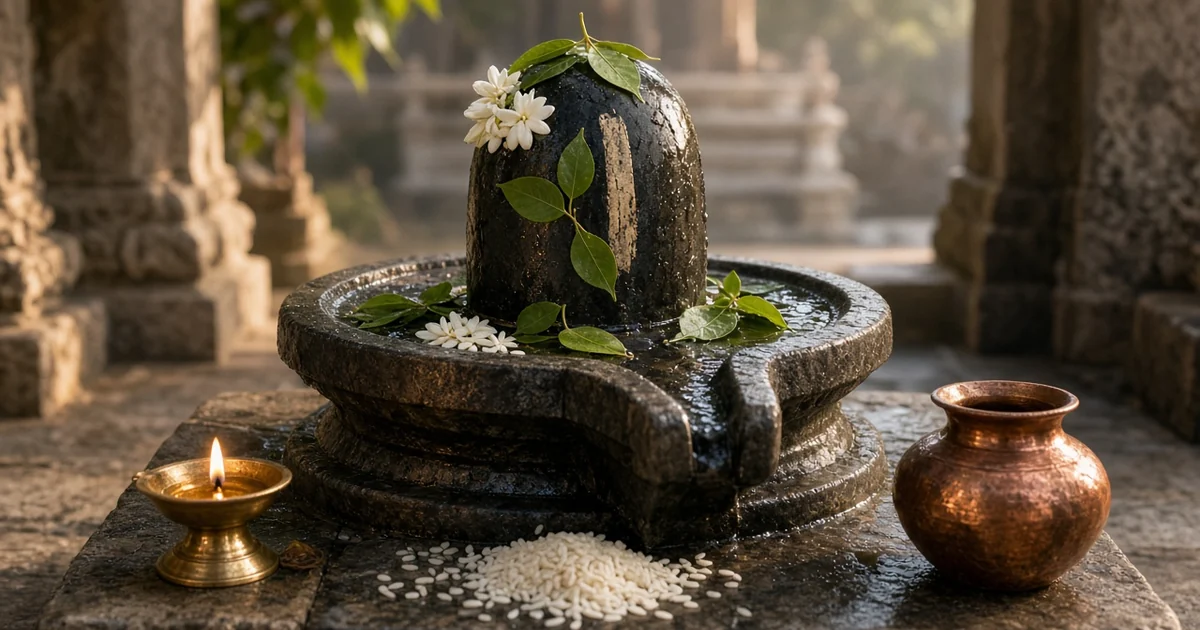
The Lingashtakam is an eight-verse Sanskrit hymn of praise to the Shiva Linga. Each verse names a quality of the lingam — who worships it, how it is adorned, what it is said to destroy — and ends with the same bow: tat praṇamāmi sadāśivalingam, “I bow to that Linga of Sadashiva.”
The author is not named in the recension followed here. Popular prints often attribute the hymn to Adi Shankaracharya; that is a traditional ascription, not a modern historical proof, and this page does not treat the authorship as settled. What is settled is the use: the hymn is widely recited in Shiva puja, especially when water, milk or bilva leaves are offered to a lingam, and on Mondays, Pradosh and Maha Shivratri.
This page gives the widely recited Sanskrit, a letter-by-letter transliteration, and an original English meaning of each verse, written from the Sanskrit rather than copied from another translation.
How the hymn is traditionally recited
Sit or stand before a lingam if you have one, or recite facing a clean, quiet place. Many people offer water or a few bilva leaves and then read the eight verses slowly, ending with the phalashruti. The hymn is short enough to learn by heart. There is no required count; one clear recitation is complete.
The five-syllable mantra Om Namah Shivaya and the Shiva Panchakshara Stotram are natural companions to this hymn, because both belong to the same daily Shaiva practice.
The eight verses
Verse 1
ब्रह्ममुरारिसुरार्चितलिङ्गं निर्मलभासितशोभितलिङ्गम् । जन्मजदुःखविनाशकलिङ्गं तत् प्रणमामि सदाशिवलिङ्गम् ॥ १॥
Transliteration: brahmamurārisurārcitaliṅgaṃ nirmalabhāsitaśobhitaliṅgam | janmajaduḥkhavināśakaliṅgaṃ tat praṇamāmi sadāśivaliṅgam || 1||
Meaning: I bow to that Linga of Sadashiva which Brahma, Vishnu (Murari) and the gods worship; the Linga that is pure, shining and beautiful; the Linga that destroys the sorrow that comes with birth.
Verse 2
देवमुनिप्रवरार्चितलिङ्गं कामदहं करुणाकरलिङ्गम् । रावणदर्पविनाशनलिङ्गं तत् प्रणमामि सदाशिवलिङ्गम् ॥ २॥
Transliteration: devamunipravarārcitaliṅgaṃ kāmadahaṃ karuṇākaraliṅgam | rāvaṇadarpavināśanaliṅgaṃ tat praṇamāmi sadāśivaliṅgam || 2||
Meaning: I bow to that Linga of Sadashiva which the foremost of gods and sages worship; the Linga that burned Kama and is a mine of compassion; the Linga that broke the pride of Ravana.
Verse 3
सर्वसुगन्धिसुलेपितलिङ्गं बुद्धिविवर्धनकारणलिङ्गम् । सिद्धसुरासुरवन्दितलिङ्गं तत् प्रणमामि सदाशिवलिङ्गम् ॥ ३॥
Transliteration: sarvasugandhisulepitaliṅgaṃ buddhivivardhanakāraṇaliṅgam | siddhasurāsuravanditaliṅgaṃ tat praṇamāmi sadāśivaliṅgam || 3||
Meaning: I bow to that Linga of Sadashiva, well anointed with every fragrance; the Linga that is a cause of the growth of understanding; the Linga praised by siddhas, by the gods and by the asuras.
Verse 4
कनकमहामणिभूषितलिङ्गं फणिपतिवेष्टितशोभितलिङ्गम् । दक्षसुयज्ञविनाशनलिङ्गं तत् प्रणमामि सदाशिवलिङ्गम् ॥ ४॥
Transliteration: kanakamahāmaṇibhūṣitaliṅgaṃ phaṇipativeṣṭitaśobhitaliṅgam | dakṣasuyajñavināśanaliṅgaṃ tat praṇamāmi sadāśivaliṅgam || 4||
Meaning: I bow to that Linga of Sadashiva, adorned with gold and great jewels; the Linga made beautiful by the lord of serpents coiled about it; the Linga that destroyed Daksha’s well-appointed sacrifice.
Verse 5
कुङ्कुमचन्दनलेपितलिङ्गं पङ्कजहारसुशोभितलिङ्गम् । सञ्चितपापविनाशनलिङ्गं तत् प्रणमामि सदाशिवलिङ्गम् ॥ ५॥
Transliteration: kuṅkumacandanalepitaliṅgaṃ paṅkajahārasuśobhitaliṅgam | sañcitapāpavināśanaliṅgaṃ tat praṇamāmi sadāśivaliṅgam || 5||
Meaning: I bow to that Linga of Sadashiva, anointed with kumkuma and sandal paste; the Linga made beautiful by a garland of lotuses; the Linga that destroys accumulated sin.
Verse 6
देवगणार्चितसेवितलिङ्गं भावैर्भक्तिभिरेव च लिङ्गम् । दिनकरकोटिप्रभाकरलिङ्गं तत् प्रणमामि सदाशिवलिङ्गम् ॥ ६॥
Transliteration: devagaṇārcitasevitaliṅgaṃ bhāvairbhaktibhireva ca liṅgam | dinakarakoṭiprabhākaraliṅgaṃ tat praṇamāmi sadāśivaliṅgam || 6||
Meaning: I bow to that Linga of Sadashiva, worshipped and served by the hosts of the gods; the Linga approached with feeling and with devotion; the Linga that shines with the radiance of a crore of suns.
Verse 7
अष्टदलोपरिवेष्टितलिङ्गं सर्वसमुद्भवकारणलिङ्गम् । अष्टदरिद्रविनाशनलिङ्गं तत् प्रणमामि सदाशिवलिङ्गम् ॥ ७॥
Transliteration: aṣṭadalopariveṣṭitaliṅgaṃ sarvasamudbhavakāraṇaliṅgam | aṣṭadaridravināśanaliṅgaṃ tat praṇamāmi sadāśivaliṅgam || 7||
Meaning: I bow to that Linga of Sadashiva, encircled upon the eight-petalled form; the Linga that is the cause of the arising of all things; the Linga that destroys the eight poverties.
Verse 8
सुरगुरुसुरवरपूजितलिङ्गं सुरवनपुष्पसदार्चितलिङ्गम् । परात्परं परमात्मक लिङ्गं तत् प्रणमामि सदाशिवलिङ्गम् ॥ ८॥
Transliteration: suragurusuravarapūjitaliṅgaṃ suravanapuṣpasadārcitaliṅgam | parātparaṃ paramātmaka liṅgaṃ tat praṇamāmi sadāśivaliṅgam || 8||
Meaning: I bow to that Linga of Sadashiva, worshipped by the preceptor of the gods and by the foremost among them; the Linga always worshipped with the flowers of the heavenly garden; the Linga that is higher than the high, of the nature of the Supreme Self.
Phalashruti
लिङ्गाष्टकमिदं पुण्यं यः पठेत् शिवसन्निधौ । शिवलोकमवाप्नोति शिवेन सह मोदते ॥
Transliteration: liṅgāṣṭakamidaṃ puṇyaṃ yaḥ paṭhet śivasannidhau | śivalokamavāpnoti śivena saha modate ||
Meaning: This Lingashtakam is a sacred hymn. One who recites it in the presence of Shiva attains Shiva’s world and rejoices there with Shiva.
Text notes
The Sanskrit follows the recension at Sanskrit Documents, liṅgāṣṭakam, encoded and proofread by Srinivas Sunder (latest update 3 December 2022). A few compounds are printed in that file with a space (for example karuṇākara liṅgam, sadāśiva liṅgam in some lines). The wording above joins those compounds in the usual way; the words themselves are unchanged.
Common variants noted in that edition, and not used as the main reading here, include nirmalabhāṣita for nirmalabhāsita in verse 1, and vināśita for vināśana in verse 7. Some prints also write a final anusvāra or a ṃ at the end of each line slightly differently. None of these changes the sense of the hymn in a material way.
The “eight poverties” (aṣṭa-daridra) of verse 7 is a traditional list of wants — not only lack of money, but also wants such as food, clothing, and other forms of destitution named in later commentarial lists. This page does not invent a numbered catalogue that the verse itself does not give.
Related reading
For the five-syllable mantra that often accompanies this hymn, see the Shiva Panchakshara Stotram and Om Namah Shivaya: meaning and practice. Other Shiva hymns on this site include the Rudrashtakam, the Shiva Tandava Stotram, the Kalabhairava Ashtakam and powerful Shiva mantras. The twelve jyotirlingas are listed in the Jyotirlinga guide. Maha Shivratri 2027 falls on 6 March.
Frequently Asked Questions
Who composed the Lingashtakam?
The hymn is a popular Shaiva stotra whose author is not named in the recension used here. Many modern prints attribute it to Adi Shankaracharya, but that ascription is traditional rather than a historical proof, and it is not claimed by the Sanskrit Documents edition cited on this page.
How many verses are in the Lingashtakam?
Eight verses, each ending with the refrain tat praṇamāmi sadāśivalingam, 'I bow to that Linga of Sadashiva,' followed by a short phalashruti.
When should I recite the Lingashtakam?
It is commonly recited during Shiva puja, especially when offering water, milk or bilva leaves to a lingam, and on Mondays, Pradosh and Maha Shivratri. There is no single required hour. A slow, clear recitation in front of the lingam is the usual setting.
What does the refrain of the Lingashtakam mean?
Each verse ends with tat praṇamāmi sadāśivalingam: 'I bow to that Linga of Sadashiva.' Sadashiva names Shiva as the ever-auspicious, eternal Lord, and the lingam is the form to which the bow is made.
Are there different versions of the Lingashtakam?
Printed editions differ in a few words and in whether some compounds are written as one word or two. The text on this page follows the widely recited recension on Sanskrit Documents; common variants are noted in the text notes.