
🤲 Practice Guides
Varun Mudra: How to Do It, Meaning, Benefits and Precautions
Varun mudra is the water mudra of yoga, formed by touching the little finger to the thumb. Here is how to do it step by step, what it is said to do, and what the evidence says.
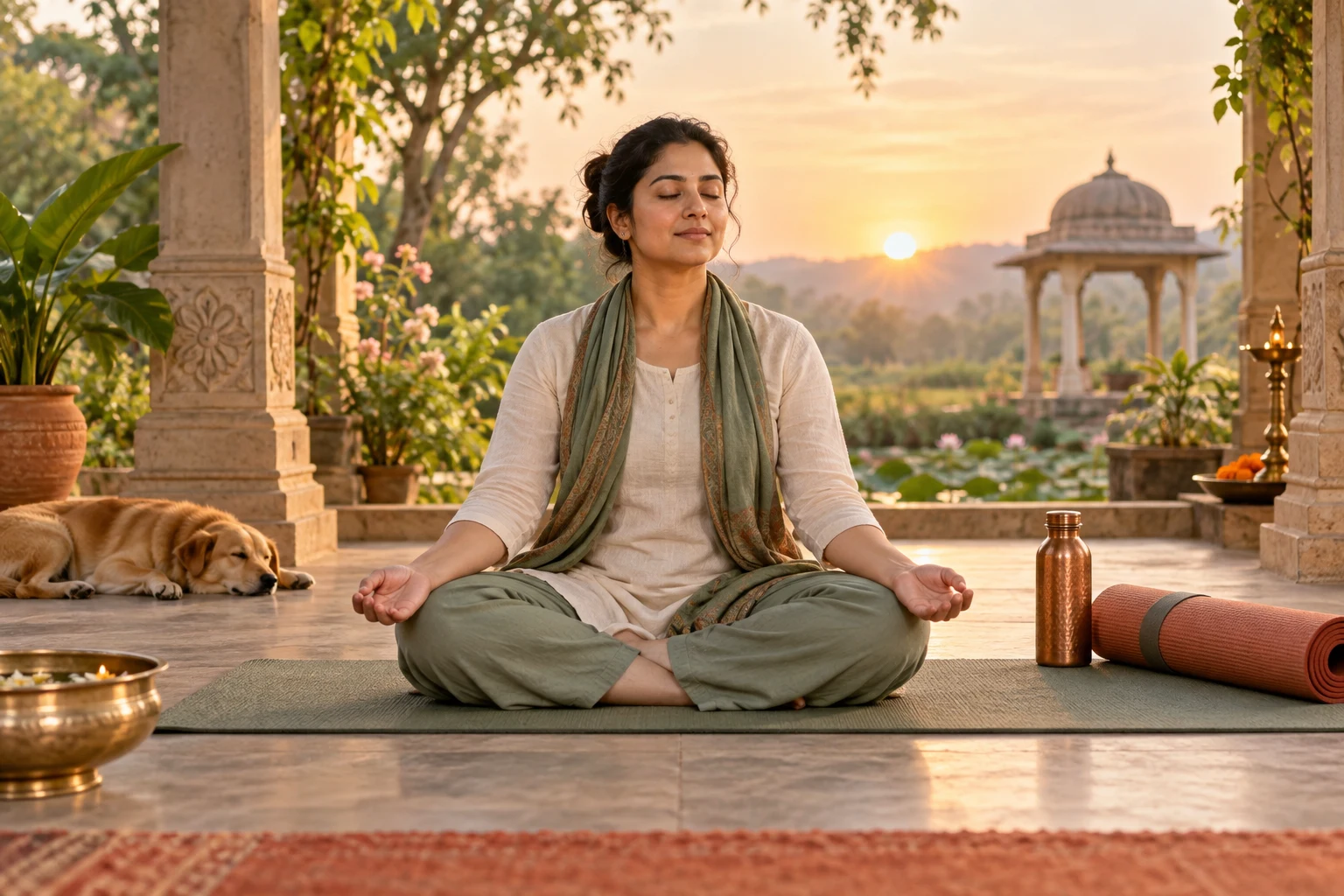
Varun mudra (also Varuna or Jal mudra) is a yoga hand gesture in which the tip of the little finger touches the tip of the thumb while the other fingers stay extended. Named after Varuna, the Vedic god of waters, it is traditionally linked with the water element and used to counter dryness, with a calm, steady breath during meditation.
It is easy to form and can be held seated, standing or even lying down. For the wider tradition of hand gestures, see what are mudras.
Varun mudra at a glance
| Sanskrit | Varuṇa Mudrā (वरुण मुद्रा); also Jal or Jala mudra |
| Named after | Varuna, Vedic god of the waters and cosmic order |
| Fingers | Little finger tip to thumb tip; index, middle and ring fingers extended |
| Element | Water (jala), joined with fire (thumb) |
| Traditional focus | Moisture, fluidity, calm |
| Duration | 10–15 minutes, up to three times a day |
| Opposite gesture | Jal Shamak mudra (little finger folded under the thumb) |
Who is Varuna?
In the Rig Veda, Varuna is one of the most important gods: guardian of rita, the cosmic order, who sees all and binds wrongdoers with his noose. In later Hinduism he becomes the lord of oceans and waters and one of the dikpalas, guardians of the directions, presiding over the west. His mount is the makara, a sea creature. In the Bhagavad Gita (10.29) Krishna says, “Among aquatic beings I am Varuna.” The mudra borrows his name for its connection with water.
How to do Varun mudra step by step
- Sit comfortably with a straight spine — on a cushion, a chair, or in Vajrasana.
- Rest the hands on the thighs or knees, palms facing up.
- Bring the tip of the little finger to touch the tip of the thumb.
- Press lightly. The touch should be gentle — enough to feel contact, not to whiten the fingertips.
- Extend the other three fingers naturally without stiffening them.
- Do the same with both hands.
- Close the eyes and breathe slowly through the nose. A long, even breath pairs well with the gesture.
- Hold for 10–15 minutes, then release and gently shake out the hands.
The meaning of the fingers
In the elemental interpretation of mudras used in yoga and Ayurveda-based teaching, each finger relates to an element: thumb to fire, index to air, middle to space, ring to earth and little finger to water. Touching a finger to the thumb is said to strengthen that element; folding it under the thumb is said to reduce it.
So Varun mudra “brings fire to water” to activate it. In Ayurvedic terms, it is often recommended for vata dryness — dry skin, dry eyes, cracked lips — and avoided in excess for people with a kapha tendency to heaviness and fluid retention. See Vata, Pitta and Kapha explained. These are symbolic associations from tradition, not anatomical findings.
When and how often to practise
Varun mudra needs no special time, but many teachers suggest:
- Morning practice, after waking and drinking a glass of water, for 10–15 minutes.
- Short sessions through the day — three sessions of 10–15 minutes, or about 45 minutes in total, is the commonly quoted maximum.
- During meditation or pranayama, held quietly with slow nasal breathing.
- In dry weather or air-conditioned rooms, when skin and eyes feel dry, alongside drinking enough water.
Consistency matters more than length. Many people pair it with a few minutes of gentle breathing and then sit quietly. In some teaching it is alternated with Prithvi mudra for a grounded, nourished feeling. If you notice heaviness, sluggishness or congestion, shorten the practice; in the tradition, that is a sign the water element is already high.
Traditional uses
Popular mudra books describe Varun mudra as helpful for:
- dry skin, lips or eyes,
- a dry mouth or feeling of dehydration,
- stiffness and a sense of “dryness” in the joints,
- emotional rigidity — the water element is linked with fluidity and flow.
Practised with slow breathing, it can also be a simple, calming anchor for meditation.
What the evidence says
There are no well-designed studies showing that Varun mudra changes hydration, skin moisture or any medical condition. Short periods of still sitting and slow breathing do help many people relax, and that is a real benefit. But a mudra is not a treatment: if you have persistent dry eyes, skin problems or signs of dehydration, drink enough water and see a doctor. Dryness can be a symptom of conditions such as thyroid disease, diabetes or Sjögren’s syndrome, which need proper care.
Varun mudra compared with other mudras
| Mudra | Fingers | Traditional emphasis |
|---|---|---|
| Varun Mudra | Little finger tip to thumb tip | Water element, moisture |
| Prithvi Mudra | Ring finger tip to thumb tip | Earth, grounding |
| Surya Mudra | Ring finger folded under thumb | Fire, metabolism |
| Vayu Mudra | Index finger folded under thumb | Calming excess air |
| Gyan Mudra | Index tip to thumb tip | Knowledge, focus |
| Prana Mudra | Ring and little tips to thumb | Vitality |
Precautions
- Keep the pressure light; stop if you feel strain, numbness or cramping, especially with arthritis or hand injuries.
- If you tend toward swelling, water retention, colds or congestion, keep sessions short.
- Do not stop any medicine or treatment in favour of a mudra.
- If you are unsure, learn from a qualified yoga teacher.
Frequently Asked Questions
How do you do Varun mudra?
Touch the tip of the little finger to the tip of the thumb with light pressure, keeping the index, middle and ring fingers relaxed and extended. Do this with both hands, rest them on the knees with palms up, and breathe slowly for 10 to 15 minutes.
What is Varun mudra good for?
In traditional teaching it is said to balance the water element, and is used for dry skin, dry eyes and mouth, and a feeling of dryness or stiffness. These are traditional associations. There is no strong scientific evidence that it changes hydration or treats any condition, so drink water and see a doctor for symptoms.
Which finger is used in Varun mudra?
The little finger, which represents the water element (jala) in the elemental reading of the hand. Its tip touches the tip of the thumb, which represents fire. The other three fingers stay extended.
How long should Varun mudra be held?
A common recommendation is 10 to 15 minutes, up to three times a day, or a total of about 45 minutes. Beginners can start with five minutes. Many teachers advise practising it consistently for some weeks rather than for long sessions.
Who should avoid Varun mudra?
Traditional teachers advise people who tend toward water retention, swelling, heavy congestion or a 'kapha' constitution to practise it only briefly. Anyone with a medical condition should not use it as a substitute for treatment. Stop if the hands feel strained.
What is the difference between Varun mudra and Jal Shamak mudra?
In Varun mudra the little fingertip touches the thumb tip and is meant to increase the water element. In Jal Shamak mudra the little finger is folded under the thumb, which is said to reduce excess water. Some books use the name Varuna mudra for other gestures, so check the finger position given by your teacher.