
🌸 Festivals
Spring Hindu Festivals 2026: Dates From Sankranti to Akshaya Tritiya
Last updated: September 26, 2026
A date-led guide to the major Hindu festivals from January through April 2026.
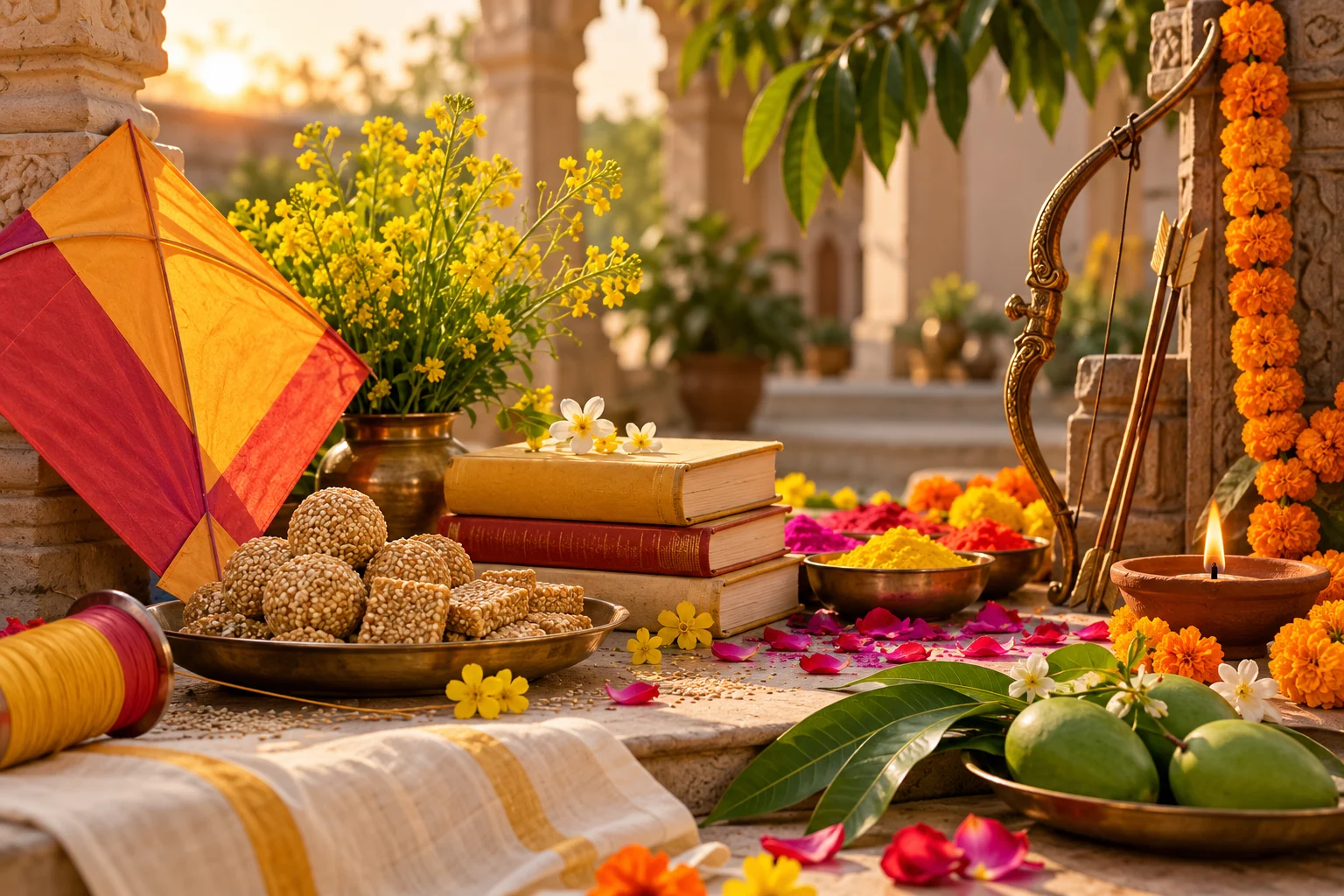
Spring in the 2026 Hindu calendar moves from harvest and learning festivals into Shiva worship, Holi, regional new years, Chaitra Navratri, and the birth celebrations of Rama and Hanuman. The season does not have one uniform ritual sequence: each region and family gives different weight to its festivals.
The dates below are planning references for India. A Hindu observance can depend on the local relationship between a lunar tithi and sunrise, sunset, noon, or midnight. Confirm the date and muhurat with your family tradition, temple, or a location-specific panchang before undertaking a formal vrat or puja.
January and February 2026
| Date | Festival | Planning note |
|---|---|---|
| 14 January | Makar Sankranti / Pongal | A solar-transition and harvest season; names and customs vary by region. |
| 23 January | Vasant Panchami | A day associated with Saraswati, learning, music, and the arrival of spring. |
| 15 February | Maha Shivratri | Check local night-puja and fasting timings. |
Makar Sankranti marks the Sun’s transition into Makara in the traditional solar calendar. The broader harvest season includes Pongal in Tamil communities and customs such as kite flying, bathing, charity, sesame sweets, and gratitude for land and cattle. Read the Makar Sankranti story and significance and Pongal guide without assuming that the two celebrations are identical.
Vasant Panchami welcomes the spring season and is widely associated with Saraswati, learning, music, and the color yellow. Maha Shivratri is an evening and night of Shiva worship for many devotees. For a simple observance, use the Maha Shivratri puja guide or read its story and significance.
March and April 2026
| Date | Festival | Planning note |
|---|---|---|
| 3 March | Holika Dahan | Evening timing depends on local sunset and badhra considerations. |
| 4 March | Holi | The colour celebration follows Holika Dahan. |
| 19 March | Ugadi / Gudi Padwa / Chaitra Navratri begins | Regional new-year observances share this season but have distinct customs. |
| 26 March | Ram Navami (Smarta) | Some calendars list an ISKCON observance on 27 March. |
| 2 April | Hanuman Jayanti | A major day for Hanuman worship; regional observance dates can differ. |
| 19 April | Akshaya Tritiya | A Vaishakha bright-half third-day observance associated with Lakshmi and Vishnu traditions. |
Holika Dahan and Holi fall on consecutive days but have distinct forms. The first commonly centers on an evening bonfire and the Prahlada narrative; the second is the color celebration. Celebrate with consent, use skin-safe colors, conserve water, and keep animals and unwilling participants away from thrown colors. The Holi story and significance adds context.
The Chaitra season includes Ugadi, Gudi Padwa, and other regional new-year observances. Chaitra Navratri begins a nine-night period of Devi worship for many communities. Ram Navami follows, honoring the birth of Rama, and Hanuman Jayanti is observed soon afterward in many North Indian calendars. Customs and even Hanuman Jayanti dates vary regionally. Use the Ram Navami puja guide and explore the nine forms of Durga.
Akshaya Tritiya closes this planning window. It is associated with auspicious beginnings, charity, Lakshmi and Vishnu worship, and several regional narratives. It is often marketed as a day to buy gold, but purchasing is optional; prayer, giving, or beginning a constructive project are equally meaningful ways to observe it.
How to plan the season
First, list only the observances important in your household. Check work and school schedules, then verify local timings a few days before each event. Prepare reusable decorations, simple offerings, and any dietary plan without turning the season into an exhausting checklist.
If fasting is part of your tradition, adapt it for age, pregnancy, medication, health needs, or demanding work. A vrat should not require ignoring medical guidance. Children can participate through stories, music, flowers, art, or a small act of generosity.
A respectful spring plan
Choose the few observances meaningful to your home rather than attempting every ritual. The 2026 Hindu festival calendar provides the whole year at a glance, while the monsoon festival guide continues the seasonal sequence.
Why dates vary
The dates here were checked against Drik Panchang’s India 2026 listings as a planning reference. Hindu calendar dates can change by city because sunrise, sunset, and tithi boundaries are location-dependent. Some traditions also apply different rules for which part of the day must contain the relevant tithi. Your temple or family panchang remains the appropriate authority for a formal observance.
Frequently asked questions
When does the spring Hindu festival season begin in 2026?
For this guide, it begins with Makar Sankranti and Pongal on 14 January and continues through Akshaya Tritiya on 19 April. “Spring” here is a practical seasonal grouping, not a single traditional festival period.
Why can a festival have two dates online?
Calendars may use different locations, time zones, traditions, or rules about when a tithi overlaps sunrise, sunset, noon, or midnight. Always set the calendar to your city.
Are fasting rules the same for every family?
No. Rules vary by lineage, region, and personal capacity. Follow a trusted family or temple practice and adapt safely when health, age, or medication requires it.
Do I need elaborate items for a home puja?
No. A clean place, a lamp used safely, water, flowers or fruit, and attentive prayer can be sufficient. Use the customs of your own tradition rather than buying a large checklist.